

Should You Choose In House or Outsourced Embroidery?
- October 4, 2026
- 2:45 am
A new employee uniform program can look polished in a digital proof and still fall apart at production. Thread colors may shift, placement may vary from piece to piece, or a question about a cap seam may sit unanswered while an event date gets closer. The choice between in house or outsourced embroidery has a direct effect on how much control you have over those details.
For business buyers, embroidery is not simply a logo added to a shirt or cap. It is part of the way employees represent your company, how customers recognize your team, and whether a uniform program feels organized from one order to the next. The right production model depends on your order volume, timeline, artwork, product mix, and tolerance for risk.
In House or Outsourced Embroidery: The Core Difference
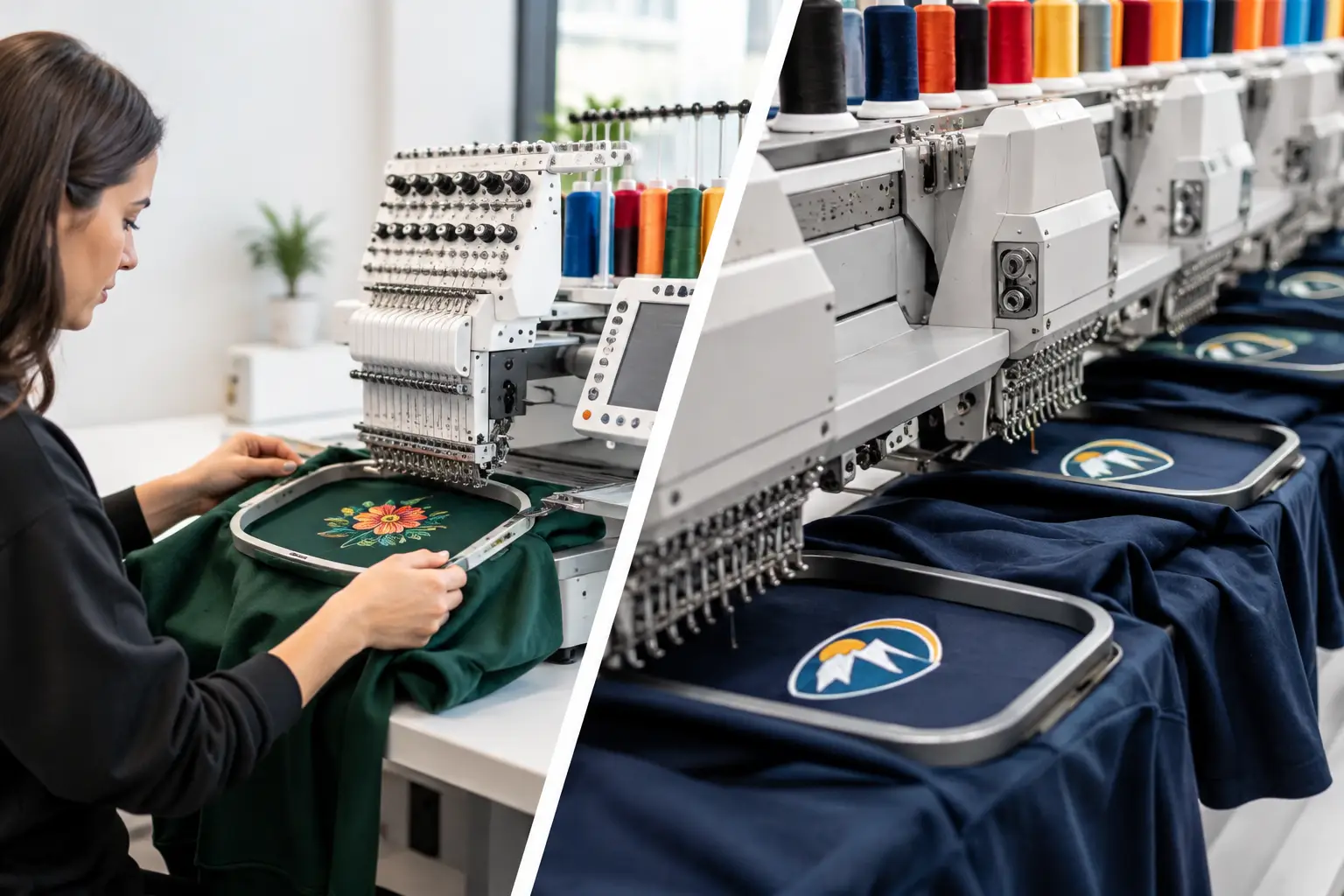
In-house embroidery means the company taking your order controls the digitizing, machine production, quality checks, and often the packing process at its own facility. When a production team works under one roof, it can see the order from art approval through finished goods.
Outsourced embroidery means your order is accepted by one provider, then sent to a separate decorator or production partner for some or all of the work. This can be a sensible operating model, particularly when a supplier needs specialized equipment, regional capacity, or a decoration method it does not offer directly. But it adds another handoff to the process.
Neither model is automatically right for every project. The practical question is whether the provider can reliably manage the details that matter to your brand. For a company ordering polos for a sales team, safetywear for a field crew, or embroidered outerwear for an executive gift program, those details are rarely minor.
Why Production Control Matters for Branded Apparel
Embroidery combines digital art, thread, fabric, backing, machine settings, and skilled operators. A logo that stitches cleanly on a structured cap may need different treatment on a lightweight polo or a soft fleece jacket. Small adjustments in density, underlay, thread tension, or placement can change the finished appearance.
With in-house production, the team reviewing your logo can work closely with the team running the machines. If an embroidered design needs a small edit to preserve readable text, reduce puckering, or improve coverage on a performance fabric, that conversation can happen quickly. There is less need to relay technical instructions through multiple companies.
That level of oversight is especially valuable when consistency matters across a larger program. Many organizations need the same logo reproduced on polos, caps, work shirts, bags, quarter-zips, and outerwear over several months or years. A provider that retains the approved digitized design and production specifications can help make reorders more predictable.
Outsourced production can still produce excellent results, but the customer should understand who owns the quality process. Ask whether the selling company reviews sew-outs, confirms placement, inspects finished apparel, and remains accountable if the embroidery does not meet the approved standard.
Digitizing Is Not a One-Time Checkbox
Every embroidered logo begins with digitizing, the process of translating artwork into a stitch file a commercial embroidery machine can read. It is not the same as converting a file format. A skilled digitizer determines stitch types, stitch direction, density, trims, sequence, and compensation for the fabric.
A good digitized file protects your logo’s character. Fine lines may need to be simplified, small text may need to be enlarged, and gradients may need a different visual solution. These are not shortcuts. They are necessary adjustments that help your logo remain clear and professional in thread.
When digitizing and embroidery are handled in-house, the people creating the stitch file can see how it performs on the final garment. That feedback loop can be useful for detailed corporate marks, multicolor logos, and designs that will appear on several product types.
Turnaround Time Depends on More Than Machine Speed
Businesses often compare embroidery providers based on the promised ship date. That matters, especially when apparel is needed for a trade show, onboarding date, store opening, or company event. Still, a dependable timeline is built on more than the number of machines available.
The process includes apparel availability, artwork review, digitizing, proof approval, scheduling, production, inspection, and shipping. Every additional handoff can create another opportunity for delay. If an outsourced partner identifies a thread issue or inventory problem late in the process, information must travel back through the supplier before a decision reaches you.
An in-house operation can often respond faster because the customer service, art, and production teams have direct visibility into the order. That does not mean every order can be rushed without planning. Complex logos, large quantities, and specialty garments still require appropriate production time. It does mean a provider can give clearer updates and address issues before they become deadline problems.
For recurring programs, ask how quickly approved reorders can move into production. Once your logo, placement, and garment selections are established, a reliable domestic decorator should be able to make repeat ordering simpler and more consistent.
Cost: Look Beyond the Initial Quote
Outsourced embroidery may appear less expensive at first, particularly on a straightforward order. A provider using outside capacity may avoid the fixed costs of equipment and production labor, and those savings can sometimes be reflected in the quote.
However, the lowest unit price is not always the lowest total cost. Consider the expense of a delayed event shipment, inconsistent uniforms, a logo that must be redone, or staff time spent chasing updates. If branded apparel is customer-facing, a poor-quality result can also affect the impression your business makes long after the invoice is paid.
In-house production can provide better value when you need ongoing support, clear accountability, and reliable reorders. It is also worth asking how pricing changes with stitch count, logo locations, thread colors, garment type, and quantity. A transparent quote helps procurement teams compare options accurately.
When Outsourced Embroidery Can Make Sense
Outsourcing is not inherently a warning sign. It can be a reasonable choice when a supplier is transparent and has a well-managed network of specialty partners. A small local shop may outsource unusually large quantities. A promotional distributor may use a trusted decorator located closer to your event. A provider may also outsource a specialty technique outside its standard capabilities.
The key is communication. You should know whether your order is being decorated by the company you are working with or by a partner, who is responsible for quality control, and how problems are handled. A supplier that cannot answer those questions clearly may not be the right fit for a brand-critical order.
Outsourcing can work best when the artwork is simple, the product is standard, the timeline allows room for coordination, and the supplier has proven processes. It becomes riskier when your program involves multiple garments, detailed logos, strict brand standards, or a hard in-hand date.
Questions to Ask Before You Place an Order
Before choosing a partner, ask practical questions that reveal how the work will be managed. Who digitizes the logo? Will you receive a digital proof before production? Is embroidery completed at the provider’s facility? How is placement checked across different garment styles? What happens if there is an issue with inventory, artwork, or finished quality?
Also ask whether the provider can support future needs. Your first order might be 24 polos for a new office, but the next may include caps for an event, jackets for managers, or a company store for employees nationwide. A capable partner should be able to help you select appropriate products and maintain your brand standards as the program grows.
At LOGO USA, in-house digitizing and embroidery give business customers a direct path from approved artwork to finished branded apparel. That production control supports detailed review, consistent execution, and dependable turnaround for everything from team polos to workwear and outerwear.
Choose the Partner That Owns the Outcome
The best embroidery provider is not simply the one with the most attractive quote or the fastest advertised turnaround. It is the one that understands your logo, recommends the right decoration approach for the garment, communicates clearly, and takes responsibility for the finished product.
When your apparel represents your people and your brand, choose a production partner that treats every stitch as part of the finished impression.
Popular Blogs
Should You Choose In House or Outsourced Embroidery?
October 4, 2026