Screen Print Versus DTG for Your Next Apparel Order
- October 14, 2026
- 2:52 am
A 24-piece new-hire order and a 2,400-shirt event order may carry the same logo, but they should not automatically use the same decoration method. The screen print versus DTG decision affects unit cost, print feel, color accuracy, garment compatibility, and how professionally your brand appears after repeated wear.
For business apparel, there is no single method that wins every time. Screen printing is a proven choice for bold, consistent branding at volume. Direct-to-garment printing, commonly called DTG, is especially useful for smaller runs and detailed, full-color artwork. The right answer starts with the job in front of you: the garment, the design, the quantity, and the purpose of the order.
Screen Print Versus DTG: The Business Difference
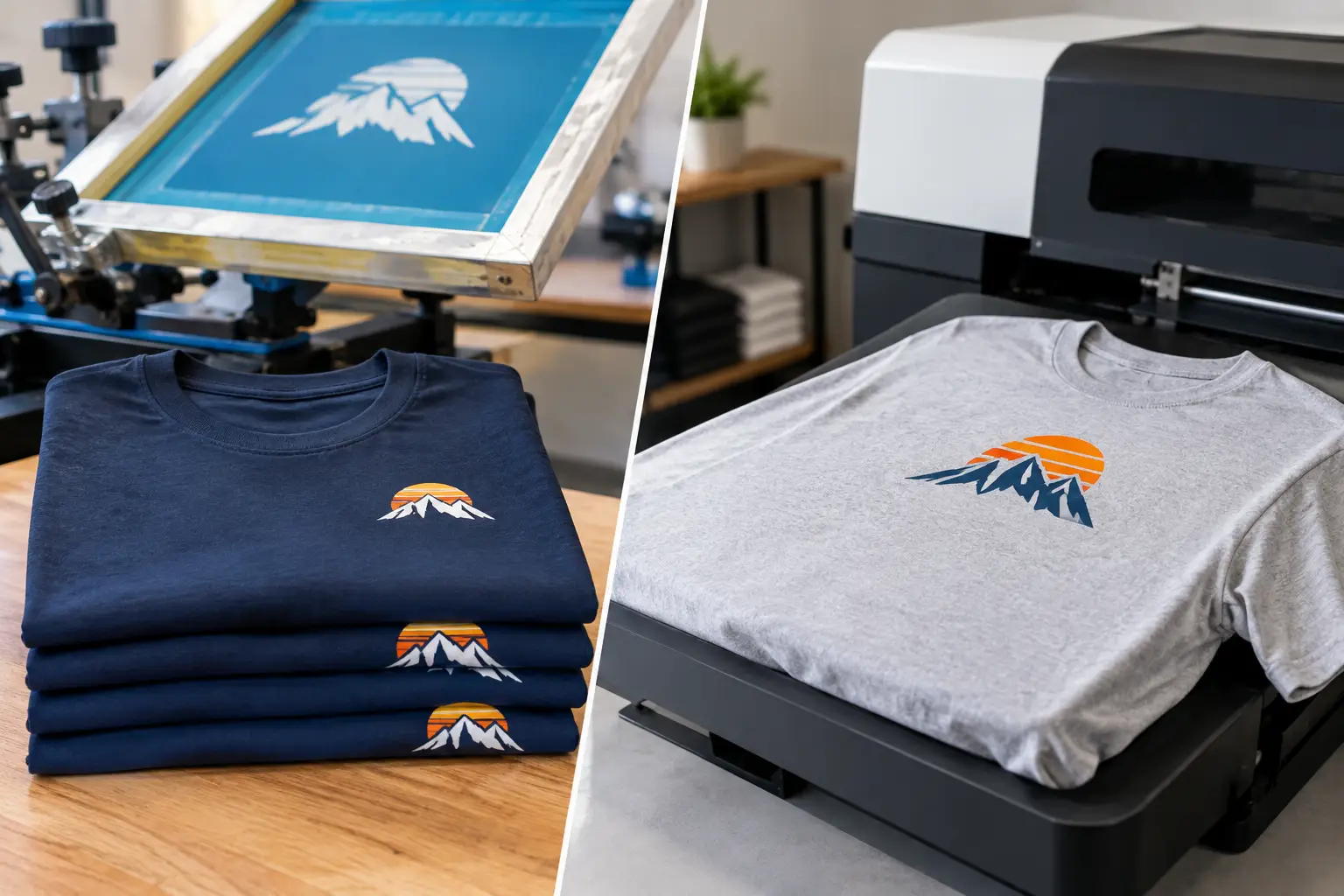
Screen printing applies ink to a garment through individual mesh screens. Each ink color generally requires its own screen, then the inks are pressed through the screens and cured. The process has been a dependable standard for branded apparel because it produces vivid color, strong coverage, and a durable print that holds up well on team shirts, uniforms, promotional tees, and event apparel.
DTG printing works more like a specialized inkjet printer for apparel. The artwork is printed directly onto the garment, usually after pretreatment, then cured to set the ink. Because there are no individual color screens to build, DTG can reproduce detailed art, gradients, photographic elements, and designs with many colors without adding setup for every color.
That fundamental difference creates the practical trade-off. Screen printing rewards larger quantities and straightforward artwork. DTG gives smaller orders and complex artwork more flexibility. Neither method is simply “better.” Each is better suited to a particular production need.
When Screen Printing Is the Better Choice
Screen printing is often the strongest value for organizations ordering dozens, hundreds, or thousands of garments with the same design. While screen setup creates an upfront production cost, that cost is spread across the order as quantity increases. For a company outfitting multiple locations, a charity planning a run, or a construction crew standardizing work shirts, the cost per piece can become very attractive.
It also performs exceptionally well with clean logo art. A one-color chest print, a two-color event graphic, or a bold mascot design benefits from screen printing’s opacity and color saturation. Spot-color inks can be matched closely to brand standards, which matters when your logo needs to look consistent across shirts, sweatshirts, safetywear, and future reorders.
Screen printing is not limited to simple art. Skilled production can use halftones and process techniques to create shading and detail. Still, designs with many photographic colors or subtle tonal transitions may require more screens, more setup, and more careful art preparation. At a certain point, DTG may be the more efficient route.
Print feel is another consideration. Traditional screen prints can have a noticeable ink layer, particularly when bright colors are printed on dark garments with an underbase. For many corporate and promotional applications, that substantial feel communicates durability and makes logos stand out. Softer ink options are also available for designs where a lighter hand is preferred.
Best uses for screen printing
Screen printing is a natural fit for high-quantity event shirts, employee uniform programs, spirit wear, promotional giveaways, trade show apparel, and recurring orders with consistent logos. It is also a dependable option when brand colors need to remain controlled from one production run to the next.
When DTG Is the Better Choice
DTG is built for flexibility. Since the process does not require a separate screen for each color, a 12-color illustration does not create the same setup burden it would with traditional screen printing. That makes DTG especially practical for small orders, artwork with many colors, and designs that include fine lines, gradients, or photo-quality detail.
Consider a marketing team ordering 18 limited-edition shirts for a product launch. Or a company creating a small run of employee appreciation tees featuring a detailed illustrated design. DTG can handle those applications without forcing the artwork into a limited color palette simply to control screen charges.
DTG prints are often softer to the touch than a heavily inked screen print, particularly on light-colored garments. The inks absorb into the fibers rather than sitting as prominently on top of the fabric. This can be a strong advantage for retail-style tees and comfort-focused apparel where the design covers a larger area.
The garment itself matters, however. DTG is typically best on cotton-rich apparel. It can produce excellent results on many cotton and cotton-blend shirts, but it is not always the ideal answer for polyester performance wear, outerwear, structured workwear, or every specialty fabric. Those products may call for screen printing, embroidery, or another decoration method based on the fabric and the intended use.
Best uses for DTG
DTG works well for smaller branded shirt orders, designs with full-color art, event graphics that need visual detail, and projects where artwork may change from version to version. It is also useful when an organization wants a polished print without the setup requirements that can make a short-run screen print order less economical.
Compare Cost by Quantity, Not Just Price Per Shirt
A common mistake is comparing decoration methods by looking only at the first quoted per-shirt price. The more useful comparison is total order value at your actual quantity.
For a small order, DTG may be more cost-effective because there are no screens to create for each color. A detailed six-color design for 12 shirts can be handled directly, without charging for six separate screens. For a larger order, that same design may become a better candidate for screen printing because the setup cost is divided across more garments.
Artwork changes also affect the calculation. If every department needs a different name, location, or version of a graphic, DTG may offer practical flexibility. If every shirt carries the same approved logo, screen printing creates an efficient, repeatable production path.
Budget conversations should also include garment quality. A well-decorated shirt on a reliable blank often delivers more value than a low-cost garment that fades, loses its shape, or makes the print look less refined. Corporate apparel represents your company long after the first event or workday.
Artwork and Color: Where Each Method Shines
Screen printing gives business buyers strong control over solid brand colors. If a logo relies on a specific blue, red, or green, spot-color screen printing can deliver a clean, consistent appearance. This is one reason it remains a preferred method for recognizable company marks and ongoing uniform programs.
DTG is excellent when color complexity is part of the design. A sunset gradient, an illustrated scene, or a full-color photograph can be reproduced without separating every visible shade into individual screens. That said, fabric color influences every print process. Artwork created for a white shirt may need adjustment for a black, navy, or heather garment to preserve contrast and legibility.
A production-ready proof is essential regardless of method. It confirms placement, size, garment color, spelling, and art treatment before production begins. This step is especially valuable for large orders, where a small approval oversight can affect hundreds of pieces.
Durability, Garment Use, and Professional Presentation
Both screen printing and DTG can produce durable results when the garment is appropriate, the artwork is prepared correctly, and production follows proper curing procedures. Care still matters. Washing inside out in cold water and avoiding excessive heat helps protect decorated apparel over time.
For high-use work shirts, team apparel, and uniforms that will face frequent laundering, screen printing has a long track record of performance. For softer lifestyle apparel and detail-heavy promotional shirts, DTG can provide an excellent finished look. The choice should reflect how often the apparel will be worn, washed, and exposed to demanding conditions.
Placement matters as much as the print method. A left-chest logo creates a polished uniform appearance, while a large back print can improve visibility for field teams or event staff. A well-planned decoration program considers the wearer’s role, the viewing distance, and what the garment needs to communicate.
Choose a Production Partner, Not Just a Print Method
The best result comes from matching your art and garments to the right production process before the order is released. A reliable apparel partner should ask about your quantity, desired delivery date, fabric, logo colors, placement, and whether you expect to reorder. Those details prevent a technically possible print from becoming a disappointing finished product.
LOGO USA helps businesses make that decision with in-house decoration, graphic support, digital proofing, and USA-based production control. Whether your program needs polished screen-printed uniforms or a detailed short-run DTG design, the goal is the same: branded apparel that looks intentional, wears well, and supports your organization’s image.
Start with the job your apparel needs to do, then choose the method that supports it. When the garment, artwork, quantity, and production plan are aligned, your logo has a better chance of becoming a shirt people are proud to wear again.
Popular Blogs
What File Formats Does Embroidery Accept?
October 12, 2026