
What Shirts Work for Embroidery? A Buyer’s Guide
- September 4, 2026
- 11:07 am
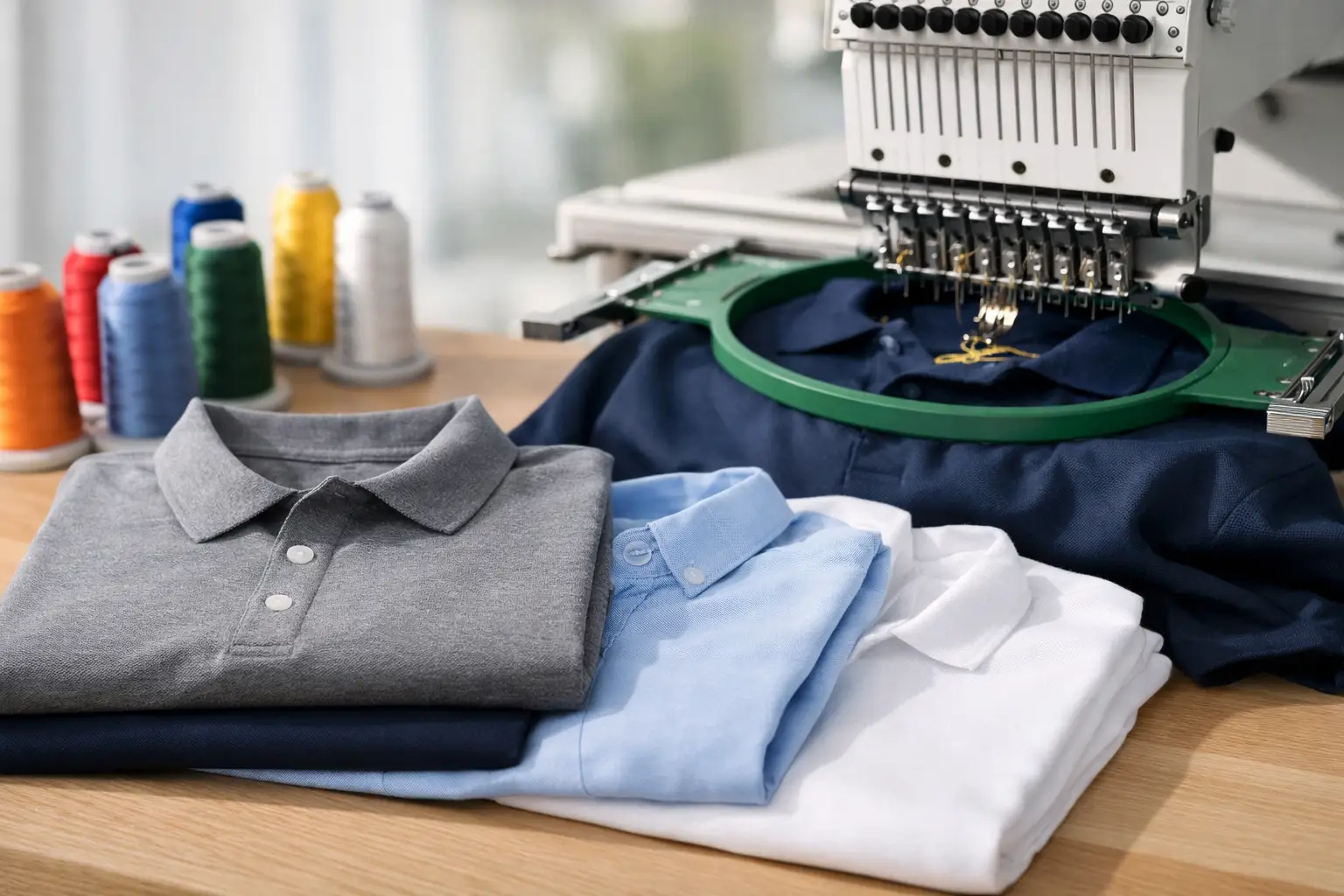
A shirt can look excellent on a product page and still be the wrong choice for a stitched logo. When business buyers ask what shirts work for embroidery, the answer starts with the fabric, construction, logo size, and how the garment will be worn on the job. The right pairing gives your team a clean, professional look that holds up through repeat wear and laundering.
Embroidery adds texture, dimension, and long-term brand visibility. It also places real weight and tension on the garment. That is why a lightweight fashion tee, a heavily textured knit, or a shirt with an awkward seam can produce a result that feels less polished than expected. Choosing the shirt first, with the decoration method in mind, protects both your brand presentation and your budget.
What Shirts Work for Embroidery Best?
For most company uniforms, employee apparel, and client-facing teams, pique polos, performance polos with stable fabric, woven button-downs, work shirts, and heavier cotton-blend tees are dependable embroidery choices. These garments provide enough body to support stitches without puckering, stretching, or distorting the logo.
A medium-weight fabric is often the sweet spot. It feels substantial enough for a left-chest logo while remaining comfortable for day-to-day wear. Fabric weight alone is not the whole story, though. The weave, stretch level, backing requirement, and garment details all affect the finished result.
Polos are the go-to choice for corporate embroidery
Polo shirts remain a leading choice because their collars and structured bodies naturally read as professional. Cotton pique polos offer a classic, textured appearance and typically support embroidery well. Cotton-poly blends are especially practical for teams because they balance comfort, color retention, and easier care.
Performance polos also work well, but quality matters. A stable performance fabric with a tighter knit will generally embroider more cleanly than an ultra-thin, highly stretchy athletic fabric. If your staff works outdoors, travels, attends events, or spends long days on the move, moisture-wicking polos can be a strong choice when paired with an appropriately sized logo and proper stabilizer.
Woven shirts create a polished office or service uniform
Button-down shirts in cotton, cotton-rich blends, or durable easy-care polyester blends are excellent for embroidery. Their smooth surface makes small lettering and detailed logo elements easier to read. They are a natural fit for sales teams, hospitality staff, property management, financial services, front-desk personnel, and executive events.
The trade-off is that very lightweight woven shirts can show needle marks or slight puckering, particularly with dense logos. A professional decorator will adjust stabilizer and machine settings, but selecting a quality shirt with enough fabric weight remains the best starting point.
Work shirts are built for repeat wear
For field crews, manufacturing teams, transportation staff, maintenance departments, and tradespeople, work shirts are among the strongest embroidery options. Twill, canvas, duck cloth, and sturdy poly-cotton workwear provide a stable base for stitching. They also match the expectations of a uniform that needs to perform, not just look good on day one.
Brands known for durable workwear are particularly useful when your program calls for long service life. A left-chest logo on a structured work shirt or jacket helps employees look consistent while giving your company name a visible place on the job site.
Heavier tees can work, with realistic expectations
T-shirts are often associated with screen printing, but heavyweight cotton and cotton-blend tees can be embroidered successfully. They are best for simple, moderately sized logos with limited stitch density. A chest logo, sleeve mark, or small emblem may look sharp on a substantial tee intended for retail staff, casual company events, volunteer groups, or promotional programs.
Thin, soft, or highly stretchy tees require more caution. The embroidery can pull the fabric inward, creating puckering around the design. If a soft tee is essential to your program, consider a smaller, simpler embroidered mark or use screen printing for the main design instead.
Fabric and Construction Matter as Much as Style
Embroidery works by driving thread through fabric thousands of times. That process makes a stable garment easier to decorate. The best fabrics for many corporate programs are cotton-poly blends, pique knits, twill, canvas, and firm woven fabrics. These materials resist shifting during production and help the design sit flat.
Stretch fabric is not off-limits, but it needs thoughtful handling. Spandex-rich performance apparel, fitted women’s styles, and very flexible athletic shirts can stretch after decoration, which may make the logo appear wavy or compressed. A skilled embroidery team can use cutaway backing and techniques suited to stretch fabrics, yet a simplified logo is usually the smarter design decision.
Texture also changes the equation. Fine pique is embroidery-friendly, while bulky waffle knits, ribbed fabrics, and thick seams can interfere with small details. Fleece and sweatshirts work well for larger logos, but small lettering may sink into the pile. For these garments, slightly larger text and bolder shapes produce a clearer result.
Match the Logo to the Shirt
A logo that looks good on a smooth woven shirt may need adjustment for a textured polo or fleece quarter-zip. Fine lines, tiny type, gradients, and intricate photographic elements are not always ideal for embroidery. Thread has physical thickness, so details must be translated into stitches that are visible and durable.
This is where digitizing matters. Digitizing is not simply converting a logo file into an embroidery file. It is the process of planning stitch direction, density, underlay, color changes, and compensation for the fabric. A well-digitized logo can make a major difference in clarity and appearance, especially on performance fabric or textured apparel.
For most left-chest placements, a design around 3 to 4 inches wide is common. That size is large enough to establish brand recognition without overwhelming the shirt. Large back embroidery is possible on jackets and outerwear, but it adds cost, weight, and production time. Consider where employees will wear the garment and how close people will be when reading the logo.
Choose Placement Based on How the Shirt Will Be Worn
The left chest is the standard for a reason: it is visible, balanced, and appropriate across polos, button-downs, work shirts, and outerwear. It gives a uniform program a consistent look even when employees choose different garment styles.
Other placements can be useful when they serve a purpose. A sleeve logo works well for event apparel or an added brand mark. A yoke or upper-back placement can add visibility on workwear. A centered chest design can be effective on casual tees, but it should be planned carefully because embroidery in this area is more noticeable and can affect drape.
Pay attention to pockets, plackets, seams, and zippers. A pocket can limit where the embroidery sits, while a polo placket may force the logo farther to one side. These are normal production considerations, not problems, as long as they are addressed before approval.
Consider the End Use Before You Order
The best shirt is different for a client meeting than for a warehouse shift. Office teams often benefit from polished polos, quarter-zips, and woven shirts. Field employees may need durable work shirts, safetywear, insulated outerwear, or rugged layers. Event teams may prioritize comfort, color options, and value at higher quantities.
Think about laundering, too. If the garments will be washed frequently, choose fabrics and brands designed for repeat care. Cotton-rich options feel familiar and comfortable, while polyester blends often hold color and shape well. For uniforms shared across shifts or used in demanding environments, durability should lead the decision.
Color selection deserves the same attention. A thread color that stands out on a navy shirt may disappear on black or charcoal. Contrast is usually more important than matching a logo color perfectly. If your logo has multiple colors, a simplified one-color or two-color embroidered version can sometimes look more refined across a broader range of garments.
A Better Way to Build an Embroidered Shirt Program
Start with the role of the garment, then narrow the choices by fabric, fit, color, and budget. Once you have selected a few suitable shirt styles, review how your logo will look at actual embroidery size. A digital proof is the right time to check placement, thread colors, spelling, and scale before production begins.
For recurring company apparel, consistency pays off. Using approved garment styles, colors, and logo files makes reorders easier and keeps departments, locations, and new hires aligned. LOGO USA can help businesses match the right apparel to their logo, then manage digitizing, proofing, and domestic production with the attention a professional uniform program requires.
The best embroidered shirt is not necessarily the most expensive one. It is the one that supports your logo cleanly, fits the work your people do, and still looks like a confident extension of your company after repeated wear.
Popular Blogs
Richardson Caps for Professional Team Branding
October 22, 2026