Embroidery Versus Heat Transfer for Workwear
- July 12, 2026
- 3:57 am
A left-chest logo on a polo has a different job than a full-color event graphic on a T-shirt. That is why embroidery versus heat transfer is not simply a question of appearance. The right choice affects how long the decoration lasts, how the garment feels, how accurately your logo reproduces, and how polished your team looks when representing your business.
For business uniforms, employee gifts, trade show apparel, and recurring company orders, decoration method should be selected alongside the garment itself. A heavy canvas work jacket, a lightweight performance polo, and a promotional tee each respond differently to thread and applied graphics. Understanding the trade-offs before approval helps prevent a logo that looks great in a proof but does not fit the real-world use of the garment.
Embroidery versus heat transfer: the practical difference
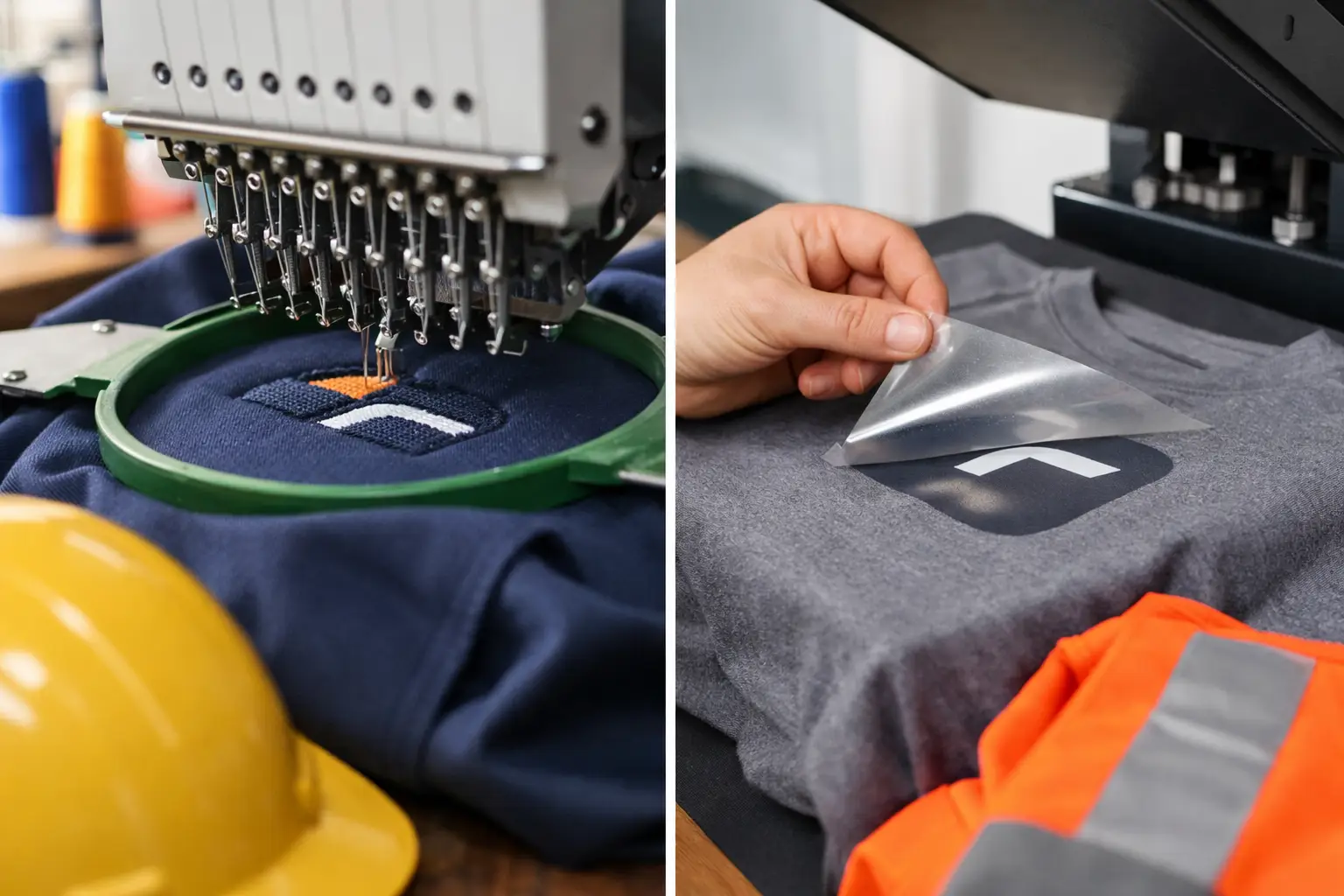
Embroidery creates a design with stitched thread. Your artwork is converted into a stitch file through a process called digitizing, then sewn directly into the garment or cap using commercial embroidery equipment. The result has texture, dimension, and a premium finish that is strongly associated with uniforms, corporate apparel, and team headwear.
Heat transfer applies a printed or cut design to the garment with heat and pressure. Depending on the artwork and fabric, the transfer may be vinyl, digitally printed film, or another heat-applied material. It sits on the surface of the garment rather than becoming part of the fabric through stitching.
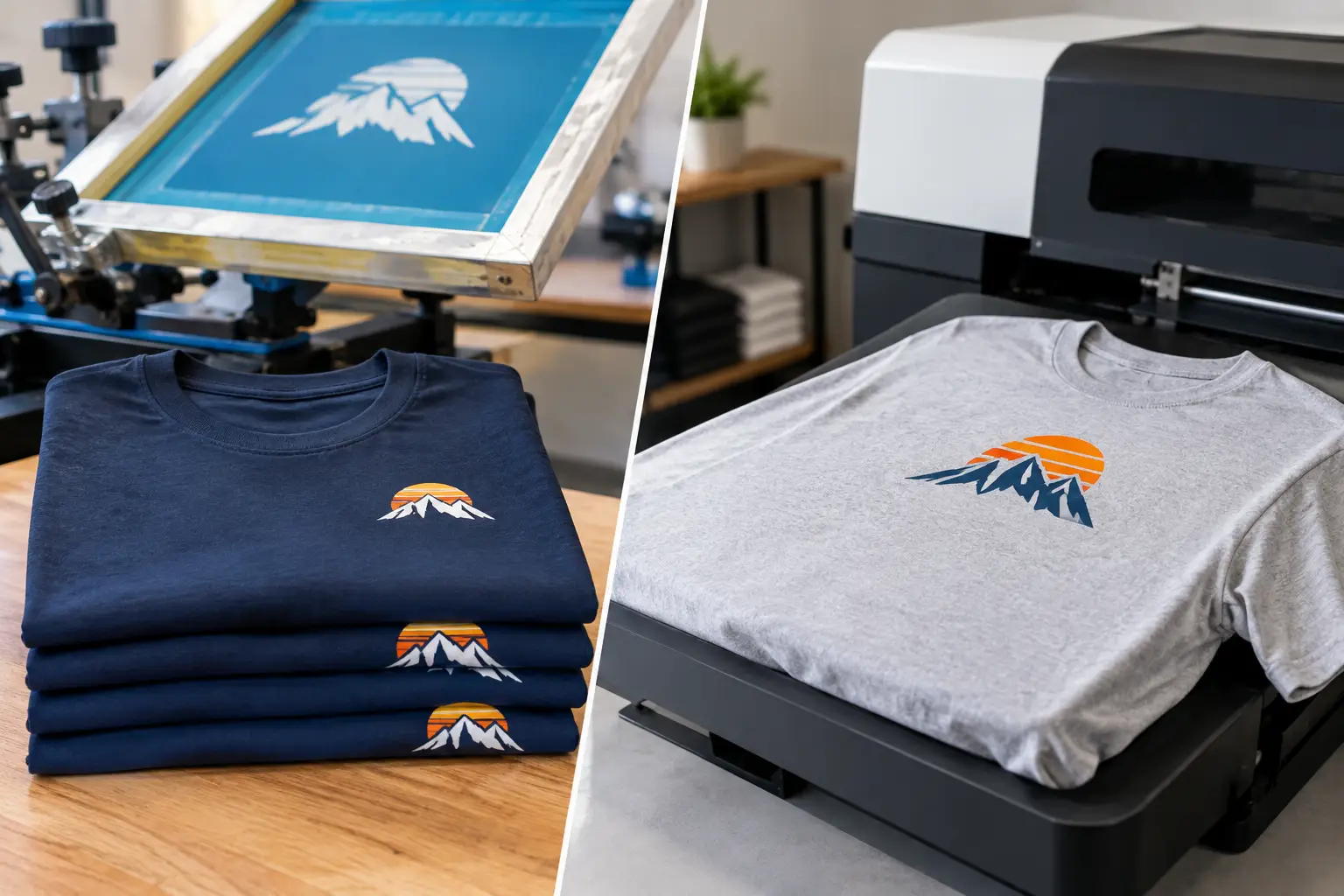
Neither method wins in every situation. Embroidery is often the first choice for durable, professional-looking uniforms, especially on polos, outerwear, caps, button-downs, and bags. Heat transfer is often the better fit for detailed artwork, vibrant multicolor designs, names and numbers, or short-run event apparel.
When embroidery is the stronger choice
Embroidery gives branded apparel a tactile, established look. It works especially well when your logo is relatively simple, has clear shapes, and will be viewed at a normal conversational distance. A stitched left-chest logo on a polo or jacket communicates permanence in a way that many businesses want from employee uniforms.
Durability is a major advantage. Quality embroidery holds up well through repeated wear and laundering because the thread is sewn into the garment. For field teams, hospitality staff, construction crews, sales teams, and employees who wear company apparel every week, that durability can justify the higher upfront cost.
Embroidery also performs well on structured products that are difficult to decorate with a flat graphic. Caps are the clearest example. The panels, seams, and curved construction of a hat make embroidery the standard choice for most corporate cap programs. It is also a natural match for fleece, quarter-zips, backpacks, canvas bags, work shirts, and many outerwear styles.
The limitation is detail. Thread has physical width, so very small text, thin lines, tiny registration marks, and intricate gradients may not reproduce cleanly. A design that looks crisp on a business card can become crowded when reduced to a three-inch chest logo. Experienced digitizing matters here: stitch direction, density, underlay, and pull compensation all influence the finished result.
Embroidery can also feel too heavy on thin or highly stretchy garments. On a lightweight performance polo, dense stitching may cause puckering or make the logo area less flexible. The garment weight, fabric blend, and logo size should all be considered before deciding that embroidery is automatic.
Best uses for embroidered apparel
Embroidery is generally the best fit for long-term uniform programs, executive apparel, customer-facing teams, branded outerwear, headwear, and durable workwear. It is particularly effective when the goal is a refined logo treatment rather than a large promotional graphic.
It can be less suitable for oversized designs, highly detailed illustrations, photographic artwork, and temporary-use apparel where cost efficiency is the priority.
When heat transfer makes more sense
Heat transfer gives you greater freedom with color and detail. Fine lettering, small graphic elements, color transitions, and artwork with many colors can be reproduced more faithfully than they can with thread. If your event logo includes a detailed illustration or your design depends on exact brand colors, heat transfer may provide the cleaner result.
It is also useful for personalization. Adding individual names, job titles, jersey numbers, or small quantities of unique garments is often more practical with heat transfer than embroidery. This makes it a strong option for sports teams, volunteer groups, event staff, seasonal promotions, and employee recognition apparel.
For large designs, heat transfer can be a better visual and financial choice. A full-back graphic on a T-shirt would require a high stitch count if embroidered, adding weight and cost while limiting detail. A well-produced transfer can cover a larger area with a smooth finish and clearer artwork.
Modern heat-applied graphics can be durable when the right transfer is matched to the garment and applied correctly. Still, they require appropriate care. Excessive dryer heat, harsh washing practices, and abrasion can shorten the life of any surface-applied decoration. For apparel that will be washed heavily over several years, embroidery often remains the more dependable choice.
Heat transfer also has fabric considerations. It is frequently a good solution for moisture-wicking performance wear and garments where needle penetrations are not ideal. On some waterproof or water-resistant outerwear, however, stitching can affect the garment’s protective properties, while certain transfers may be better suited to the fabric. The garment manufacturer’s decoration guidelines should guide the decision.
Compare the cost beyond the unit price
Cost is not just the price shown for one shirt. It includes setup, artwork preparation, garment suitability, decoration size, order quantity, and how long the apparel needs to remain in service.
Embroidery usually requires a one-time digitizing process to convert artwork into a stitch file. The per-piece cost is influenced by stitch count, which rises with larger and denser designs. A small, clean chest logo is efficient; a large detailed logo with extensive fill stitching is not.
Heat transfer may have lower setup requirements for certain designs, particularly when ordering a small run or adding individualized information. It can also be more economical for multicolor artwork because color count does not create the same production complexity it does in some other decoration methods.
For a 12-piece executive polo order, embroidery may deliver the best value because it aligns with the garment and the intended professional use. For 75 event T-shirts with a detailed, colorful front graphic, heat transfer may be the more practical choice. For a large recurring uniform program, it is worth evaluating the total life of the apparel, not only the initial decoration cost.
Start with the garment and the job it needs to do
The most reliable decoration decisions begin with four questions: Who will wear the item, how often will it be worn, where will the logo be placed, and what must the artwork communicate?
A customer service team wearing branded polos daily needs a logo that remains polished after repeated laundering. A sales team receiving premium quarter-zips for client meetings benefits from the dimensional look of embroidery. A warehouse crew may need high-visibility apparel where flexibility, safety requirements, and garment construction affect the decoration plan. A one-day fundraiser may need a large, colorful design that is easy to recognize from across a room.
Fabric should be reviewed early, not after the artwork is finalized. Cotton, polyester, performance blends, fleece, canvas, and technical outerwear each have different behavior under stitching and heat. Logo placement matters as well. A left chest can support a different level of detail than a full back, sleeve, or cap front.
Artwork approval is where quality is protected
A professional proof is more than a formality. It confirms logo size, location, thread or print colors, and the way fine details will be handled on the selected product. If a logo contains small lettering, an experienced decoration team may recommend enlarging the design, simplifying a line, using a different placement, or choosing heat transfer instead of embroidery.
This is not a compromise in brand standards. It is how brand standards are protected on fabric. The goal is to make sure the logo remains legible and intentional after production, not just on a digital screen.
At LOGO USA, in-house embroidery, digitizing, artwork support, and digital proofing help keep this process coordinated from product selection through production. That production control is especially valuable for businesses that need consistent results across reorders, departments, locations, or a broader company apparel program.
Choose the finish your team will be proud to wear
If your apparel needs to look established, durable, and uniform-ready, embroidery is often the right investment. If your design needs fine detail, broad color range, personalization, or a large graphic area, heat transfer can be the smarter solution. The best decorated apparel does not force one method onto every item. It matches the decoration to the garment, the artwork, and the work your team is doing.
Before placing an order, share how the apparel will be used and how long it needs to perform. That one conversation can turn a basic logo application into branded gear your employees are genuinely proud to wear.
Popular Blogs
What File Formats Does Embroidery Accept?
October 12, 2026