Carhartt Embroidered Workwear for Teams
- May 25, 2026
- 1:42 am
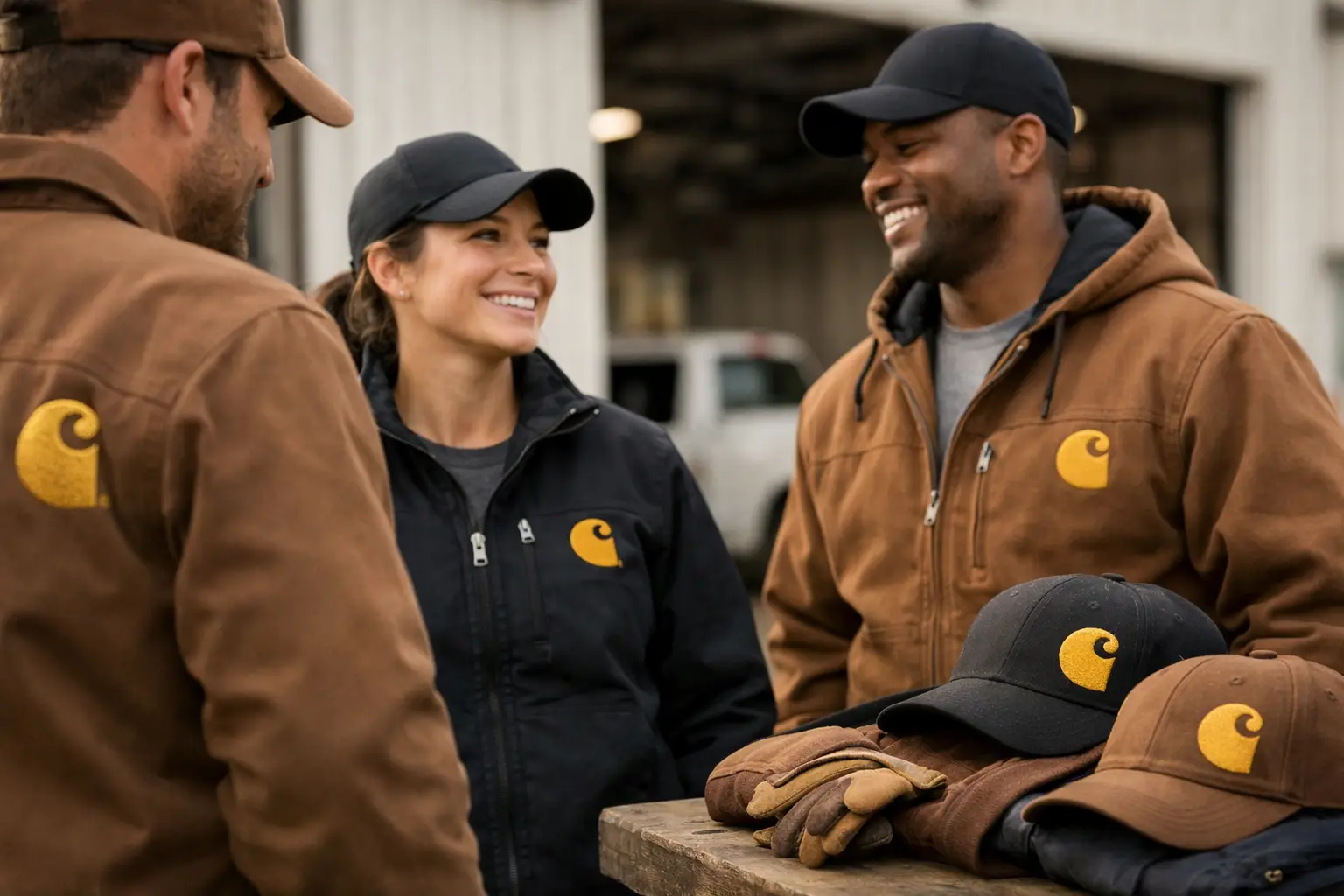
When your crew is in the field, on the shop floor, or moving between job sites and customer visits, apparel has to do two jobs at once. Carhartt embroidered workwear handles both – it stands up to real use and gives your team a clean, professional branded look that holds up under pressure.
That combination is why so many companies choose Carhartt for uniforms, outerwear, and everyday branded gear. The brand already carries weight on its own. Add precise embroidery, and you get workwear that feels intentional, durable, and company-ready instead of looking like an afterthought.
Why carhartt embroidered workwear fits business branding
Not every garment works well for company apparel programs. Some pieces look good for a few wears but lose shape, fade fast, or stop representing your brand the way you intended. Carhartt sits in a different category because it was built for demanding environments first.
For business buyers, that matters. If you are outfitting technicians, warehouse staff, construction teams, drivers, facilities crews, or field sales employees, the apparel needs to reflect the standards of the company. A jacket or hoodie that wears out early creates a replacement problem. A garment that looks cheap can also affect how customers perceive your team.
Carhartt embroidered workwear gives you a better balance of function and presentation. Employees get pieces they will actually wear. Managers get consistency. Your brand gets placed on apparel people already trust.
There is also a practical upside to choosing a recognized workwear brand. Team members are usually more willing to wear premium branded apparel beyond the minimum requirement. That improves visibility and stretches the value of your order over time.
Where embroidered Carhartt works best
Carhartt is a strong fit when the apparel needs to perform in active or rugged settings, but it is not limited to heavy industry. It also works well for service businesses and operations teams that want a more substantial, credible uniform program.
Construction companies often use embroidered jackets, vests, and hoodies for jobsite crews and supervisors. Logistics and warehouse teams lean toward quarter-zips, sweatshirts, and outerwear that can handle temperature changes across shifts. HVAC, plumbing, electrical, and mechanical contractors usually need apparel that is durable enough for daily wear but still polished enough for customer-facing service calls.
It can also be a smart option for manufacturing, landscaping, municipalities, equipment dealers, and field service organizations. In these environments, lightweight promotional apparel may not last, while premium workwear sends the right signal to both employees and customers.
That said, it depends on the role. If your team spends most of the day in a corporate office or at trade show booths, Carhartt may be better as outerwear or a seasonal layer rather than the main uniform. The best apparel program usually mixes purpose-built products instead of trying to make one style cover every setting.
Choosing the right Carhartt pieces for embroidery
The best results start with matching the garment to how the team will use it. That sounds obvious, but it is where many apparel programs go off track.
Outerwear is often the highest-impact choice. Carhartt jackets, insulated vests, and weather-resistant layers give your logo a premium home and provide long-term value because employees wear them season after season. They are especially useful for crews who work outdoors, travel between locations, or need dependable cold-weather gear.
Sweatshirts and hoodies are another strong option. They are practical, widely accepted by employees, and work well for warehouses, service teams, and industrial settings. If your workforce needs comfort and flexibility without sacrificing durability, this category usually performs well.
Work shirts and heavier-duty tops can be ideal when your team needs a more uniform appearance across the week. They present a cleaner look than casual basics while still fitting the realities of active work.
Caps and beanies also deserve consideration, especially for larger programs or budget-conscious add-ons. They are not a replacement for core uniform pieces, but they can round out a branded kit and improve visibility in the field.
The trade-off is that not every logo placement or garment type behaves the same way. Heavier outerwear may have seams, pockets, or linings that affect embroidery placement. Softer fleece or stretch materials may call for adjustments to design size or stitch density. That is why product selection and decoration planning should happen together, not as separate decisions.
What makes embroidery the right decoration method
For workwear, embroidery is usually the most reliable choice because it delivers a finished, professional appearance and holds up well over time. On premium garments like Carhartt, it also looks appropriate. The texture and durability of stitched branding match the weight and quality of the apparel.
A left-chest logo is the most common choice for a reason. It is clean, readable, and versatile across jackets, vests, sweatshirts, and work shirts. For many businesses, that placement gives the right level of brand visibility without overpowering the garment.
In some cases, adding a sleeve or cap logo makes sense, especially when you want secondary branding for supervisors, event staff, or customer-facing teams. But more decoration is not always better. A crowded design can reduce readability and make premium workwear look less polished.
The logo itself matters too. Fine text, tiny details, and complex gradients may need to be simplified for embroidery. Good digitizing and proofing help translate the artwork into clean stitching that stays legible on heavier fabrics. This is one of those areas where production experience matters. A strong embroidered result is not just about the machine. It is about how the logo is prepared before production begins.
How to build a better branded workwear order
A successful order starts with use case, not just product preference. Think about who will wear the apparel, in what conditions, and how often. A service technician who needs a branded jacket for customer appointments has different needs than a warehouse associate loading trucks in early morning cold.
Next, decide what level of consistency matters across the team. Some companies want one standard embroidered style for everyone. Others need tiered apparel by role, climate, or department. For example, managers may receive outerwear and quarter-zips while field crews get jackets, hoodies, and caps. There is no single right structure, but the program should feel intentional.
Sizing is another area where planning pays off. Workwear often layers over other clothing, so fit expectations can differ from standard corporate apparel. If your team wears base layers, sweatshirts, or tool belts under outerwear, that can affect what sizes make sense. It is better to think through wear conditions early than deal with exchanges later.
Then there is branding consistency. Keep logo placement, thread colors, and garment choices aligned with your company standards. If your apparel will be reordered over time, consistency becomes even more important. Business buyers are rarely making a one-time purchase. They are often building a repeatable uniform or branded merchandise program.
Why production control matters on Carhartt orders
Premium garments deserve premium execution. When you are investing in Carhartt, the decoration quality cannot feel secondary.
This is where in-house embroidery, art review, and proofing make a difference. Consistent stitching, clean placement, and dependable production timelines matter more when apparel is being ordered for employees, branch locations, and ongoing brand programs. You do not want one batch to look sharp and the next to drift off standard.
A controlled process also helps prevent common issues such as oversized logos, poor placement on lined jackets, or designs that looked fine on screen but do not stitch well in practice. Experienced production teams catch those problems before the garments are decorated, not after they are boxed.
For companies managing deadlines, onboarding, seasonal outfitting, or multi-person orders, that kind of control is not a bonus. It is part of what makes ordering easier.
Carhartt embroidered workwear is an investment, not a giveaway
The cheapest option is rarely the best value when it comes to workwear. If a garment fails early, is uncomfortable, or sits unworn in a locker, the price savings disappear fast.
Carhartt embroidered workwear tends to deliver stronger long-term value because it gets worn, keeps its appearance, and supports your brand in real working conditions. That is especially true when the embroidery is clean, the garment choice matches the job, and the order is built around how your team actually works.
For many organizations, this kind of apparel does more than identify employees. It reinforces professionalism, helps teams look united, and gives staff something they are proud to wear. That affects morale, brand perception, and daily consistency in ways that low-end alternatives often miss.
If you are building a branded apparel program that needs to last, start with pieces your team will trust on the job and your company will feel confident putting its name on. That is usually where the best workwear decisions begin.
Popular Blogs
What File Formats Does Embroidery Accept?
October 12, 2026