
How to Choose Embroidered Polos for Your Team
- September 6, 2026
- 6:04 am
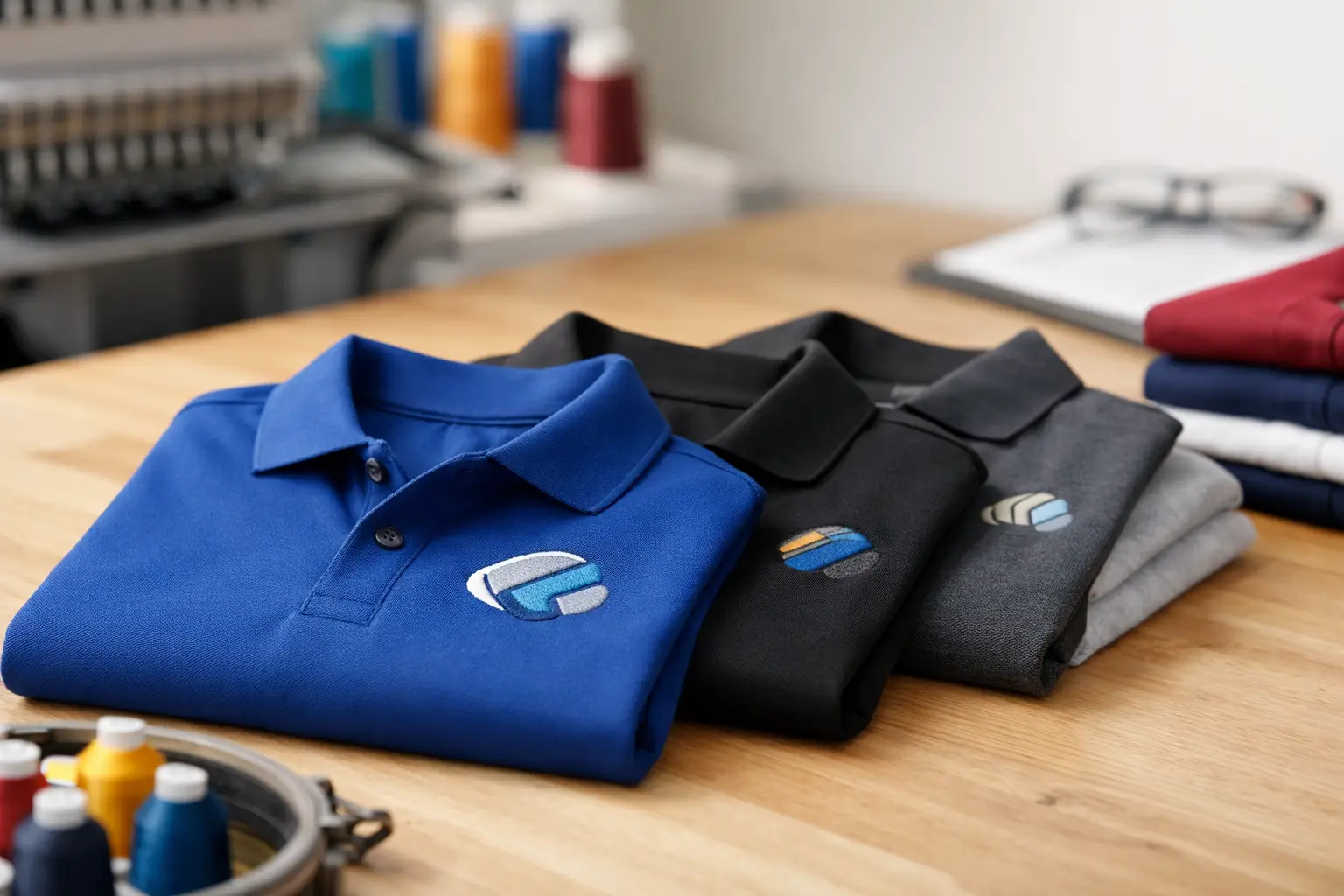
A polo can make a field crew look established, help trade show staff stand out, or give an office team a more unified presence. The difference between a shirt employees wear willingly and one that stays in a closet usually comes down to the details. Knowing how to choose embroidered polos means balancing comfort, brand presentation, durability, and the realities of your team’s workday.
How to Choose Embroidered Polos for the Job
Start with where, when, and how the polos will be worn. A polished polo for a client-facing sales team has different priorities than a shirt for a warehouse crew, golf outing, medical office, or outdoor service department. Choosing based on appearance alone can lead to shirts that wrinkle too easily, feel too warm, or fail to hold up through repeated washing.
For office settings, customer meetings, and corporate events, a smooth performance polo or a cotton-rich blend often creates the right balance of comfort and professional structure. These styles tend to offer a cleaner surface for embroidery and a more refined appearance when paired with chinos, slacks, or skirts.
For active teams, prioritize moisture-wicking performance fabrics. These polos move perspiration away from the body and generally dry faster than traditional cotton. They are a practical choice for golf events, hospitality staff, facility teams, sales representatives on the road, and employees working in warm environments.
For tougher work conditions, look for heavier-weight fabrics, snag-resistant construction, and reinforced seams. A low-cost shirt may work for a one-day event, but it is rarely the best value for uniforms that will be washed every week. If your employees wear polos as part of their regular work attire, durability should carry as much weight as price.
Match the Fabric to Daily Wear
Fabric affects comfort, appearance, and how long the garment represents your brand well. Cotton polos feel familiar and breathable, but they can shrink, fade, and hold moisture longer than synthetic options. They are often a strong fit for office wear, casual team apparel, and organizations that want a traditional look.
Polyester performance polos are lightweight, colorfast, and better equipped for active use. Many include moisture-wicking properties, odor control, UV protection, or snag resistance. Their trade-off is that some lighter styles can look more athletic than corporate, so fabric texture and fit matter when a more upscale impression is the goal.
Blended fabrics give many business buyers the middle ground they need. A cotton-poly blend can provide softness while reducing shrinkage and improving color retention. For recurring uniform programs, a dependable blend is often easier to standardize across departments and reorder over time.
Also consider fabric weight. Lightweight polos are comfortable in heat and easier to layer, but they may reveal more underneath and can feel less substantial. Midweight styles are versatile for year-round use. Heavier polos offer structure and durability, though they may not be ideal for hot climates or highly active teams.
Choose a Fit Your Team Will Actually Wear
An embroidered polo only works as a uniform if people are comfortable wearing it. Fit is one of the most overlooked parts of the decision, especially when ordering for a broad employee group.
Classic-fit polos provide extra room through the chest and body. They are a safe option for varied body types, uniform programs, and roles requiring frequent movement. Modern or tailored fits offer a closer silhouette that can look sharp in client-facing environments, but they may not work equally well for every employee.
Women’s-specific polos typically have adjusted shoulders, sleeve lengths, and shaping through the waist. Offering both men’s and women’s cuts can improve comfort and help every team member feel included in the program. When possible, use sizing charts and provide fit samples before placing a large first order. A few minutes of sizing review can prevent a costly exchange process later.
Think about layering as well. Employees in colder offices or changing weather may wear polos over undershirts or under outerwear. A polo that fits perfectly on its own can feel restrictive when layered. If the shirts will be part of a year-round apparel program, choose a cut that leaves enough room for realistic daily wear.
Pick Colors That Support Your Brand
Your polo color should make the logo easy to see while staying practical for the workplace. Navy, black, charcoal, and gray remain popular because they look professional, hide minor stains, and work across industries. They also create a strong background for lighter embroidered logos.
Brand colors can create a more memorable uniform, particularly for promotional events, restaurant teams, school programs, and customer-facing staff. However, a bright shirt color plus a multicolor logo can become visually busy. Before committing, consider how the logo will look from several feet away, not just on a screen.
Contrast is essential for embroidery. Dark thread on a dark polo or light thread on a light polo can make a logo disappear. If your logo includes fine lines, small text, gradients, or low-contrast elements, the design may need adjustment for thread. A digital proof helps confirm thread colors, placement, and overall readability before production begins.
Practicality matters here, too. White and pale colors can look crisp for events or front-office teams, but they show stains quickly. Darker colors are more forgiving for field service, logistics, food service, and hands-on work. Some organizations use one core color for daily uniforms and a lighter or more distinctive option for trade shows and special events.
Evaluate the Embroidery, Not Just the Polo
A quality polo deserves embroidery that matches it. Embroidery gives a logo dimension and permanence, but it has technical limits that affect the finished result. The goal is not to force every detail from a business card onto the chest of a shirt. The goal is a clean, recognizable mark that looks professional at normal viewing distance.
Logo size is a key decision. Left-chest embroidery is the standard for corporate polos because it is visible without overwhelming the garment. Many logos work well in a modest left-chest size, while larger artwork can become stiff, heavy, or difficult to read. A simple emblem, monogram, or company name often produces the strongest result.
Small lettering deserves special attention. Fine text may need to be enlarged, simplified, or removed from the embroidered version of the logo. This is not a compromise in quality. It is part of adapting artwork for a medium made of thread rather than ink. Professional digitizing converts the logo into a stitch file that directs the embroidery machine, accounting for fabric type, stitch direction, density, and detail.
The polo fabric also affects embroidery. Performance knits, pique polos, and smooth jersey fabrics can each require a different approach to prevent puckering or distortion. Experienced in-house embroidery teams know how to stabilize the garment and adjust the design for a clean finish. That production knowledge matters most when you are ordering a high-visibility employee uniform or managing a large multi-location program.
Set a Budget Based on Total Value
The lowest unit price is not always the lowest-cost choice. A polo that fades after a few washes or fits poorly may need to be replaced sooner, and it can weaken the professional impression you intended to create. For uniforms, calculate value over the expected life of the garment rather than the price of a single order.
Your total cost typically depends on the apparel brand and fabric, quantity, embroidery stitch count, number of embroidered locations, and any setup required for new artwork. A simple one-color logo on the left chest will generally be more economical than a detailed design with multiple locations. Ordering larger quantities can also improve per-piece pricing, particularly when you need consistent uniforms across a department.
Consider future reorders before selecting a style. Will this polo likely be available next season? Can new employees be added without changing the look of the entire team? Established apparel brands and well-managed decoration programs make it easier to maintain consistency as your organization grows.
Build a Better Ordering Process
A smooth polo order begins with accurate information. Confirm your employee count, size range, preferred colors, logo files, delivery deadline, and whether the order will need future reorders. If several departments need different styles, create clear rules around which garments, colors, and logo placements are approved.
Request a digital proof before production so the embroidery design and placement can be reviewed by the right stakeholders. This is the moment to catch a thread-color issue, an outdated logo, or a placement concern. Once the proof is approved, production can move forward with clarity and accountability.
For larger programs, it helps to name one internal decision-maker who can approve artwork and manage size collection. This reduces conflicting feedback and keeps the order on schedule. A reliable decoration partner can guide product selection, prepare art for embroidery, and keep future orders aligned with the original standard.
LOGO USA combines recognized apparel brands, in-house digitizing, and USA-based embroidery to help businesses create polished polos without turning a uniform order into a complicated project.
The best embroidered polo is the one that looks right for your brand, feels right for your people, and still performs after a full season of wear. Start with the workday your team actually has, approve the details before production, and choose a quality level that gives employees a shirt they are proud to put on.
Popular Blogs

A Construction Crew Uniform Case Study That Worked
October 24, 2026