How to Brand Safety Apparel for Your Crew
- August 11, 2026
- 2:51 am

A safety vest that disappears under a large back logo is not doing its job. Neither is a jacket with cracked reflective trim or a shirt that makes a field crew look inconsistent from one location to the next. Learning how to brand safety apparel means protecting visibility first, then building a clean, recognizable uniform around it.
For construction teams, utility crews, warehouse staff, roadwork contractors, delivery operations, and event personnel, branded safetywear has to work harder than a standard company polo. It needs to hold up to demanding shifts, support the garment’s safety purpose, and represent your organization with a professional finish. The right choices make employees easier to identify and help your brand show up clearly where the work happens.
Start With the Job, Not the Logo
The best safety apparel program begins with the environment employees work in. A warehouse team moving around forklifts has different needs than a road crew working near moving traffic, and both differ from a landscaping team working outdoors through changing weather.
Ask where the garment will be worn, what hazards employees face, how much rain, heat, or cold they encounter, and whether a customer, site owner, or regulator requires a specific high-visibility garment class. These answers determine whether you need a lightweight safety T-shirt, a mesh vest, a reflective hoodie, a waterproof jacket, or a layered combination.
If ANSI-compliant apparel is required, select a garment specifically labeled for the appropriate ANSI/ISEA standard and class before discussing decoration. Do not assume that any fluorescent yellow or orange item qualifies as compliant. The garment’s background material, reflective tape, configuration, and labeled rating all matter.
This is also where a practical trade-off comes in. The lightest vest may be more comfortable in summer, but it may not offer the coverage or durability needed for a demanding worksite. A premium insulated safety jacket costs more upfront, yet it can reduce replacement orders and provide a more polished, dependable look through winter conditions.
Choose Garments That Match the Workday
Safetywear is most effective when people are willing to wear it correctly. Fit, comfort, fabric weight, and useful features all affect adoption. A vest that bunches over a tool belt or a sweatshirt that feels too heavy for active work will often end up unworn or replaced with something less appropriate.
For warm conditions, moisture-wicking safety tees and breathable mesh vests can keep crews more comfortable. For cooler weather, consider reflective hoodies, soft shell jackets, and insulated outerwear that can layer over core uniform pieces. Workwear brands known for durability are often a strong fit for crews that need abrasion resistance, reinforced construction, and reliable sizing.
Consistency matters as much as garment selection. If supervisors receive embroidered safety jackets while the field team wears unrelated printed shirts, the company can look fragmented. Build a coordinated program with a few approved garment options that serve different roles and seasons while using the same logo treatment, colors, and placement standards.
How to Brand Safety Apparel Without Reducing Visibility
Decoration should support the function of the garment, not compete with it. The primary rule is simple: keep logos and graphics away from reflective tape and avoid covering the fluorescent background more than necessary.
A small to medium left-chest logo is often the most practical choice for safety shirts, vests, and jackets. It identifies the employer without taking over the front of the garment. A back logo may be useful for crews working with their backs to traffic or customers, but it should be sized carefully and placed where it will not cover reflective striping or interfere with required visibility areas.
For many companies, a simple one-color or two-color logo produces the strongest result. Fine lines, tiny lettering, gradients, and complex artwork can lose clarity on textured or highly visible fabrics. A simplified version of your logo may be a better choice than trying to reproduce every detail from a business card design.
Before production, request a digital proof that shows the logo size, location, colors, and method of decoration. This step is especially valuable for safety apparel because placement is not merely an aesthetic decision. A proof gives your team the chance to confirm that the design preserves the garment’s usable reflective areas and presents the brand as intended.
Keep required reflective elements clear
Reflective striping is a functional part of high-visibility apparel. Do not stitch through it, print over it, or position large logos so close that they visually break up the reflective pattern. On some garments, even a small design can create issues if it falls within a limited clear area.
When a worksite requires ANSI-rated apparel, confirm the decoration plan with an experienced apparel partner and review the garment manufacturer’s guidance. The decorated item may no longer meet its original certification if changes affect required materials, tape, or coverage. When compliance is critical, treat the garment label and the job specification as the final authority.
Select the Right Decoration Method
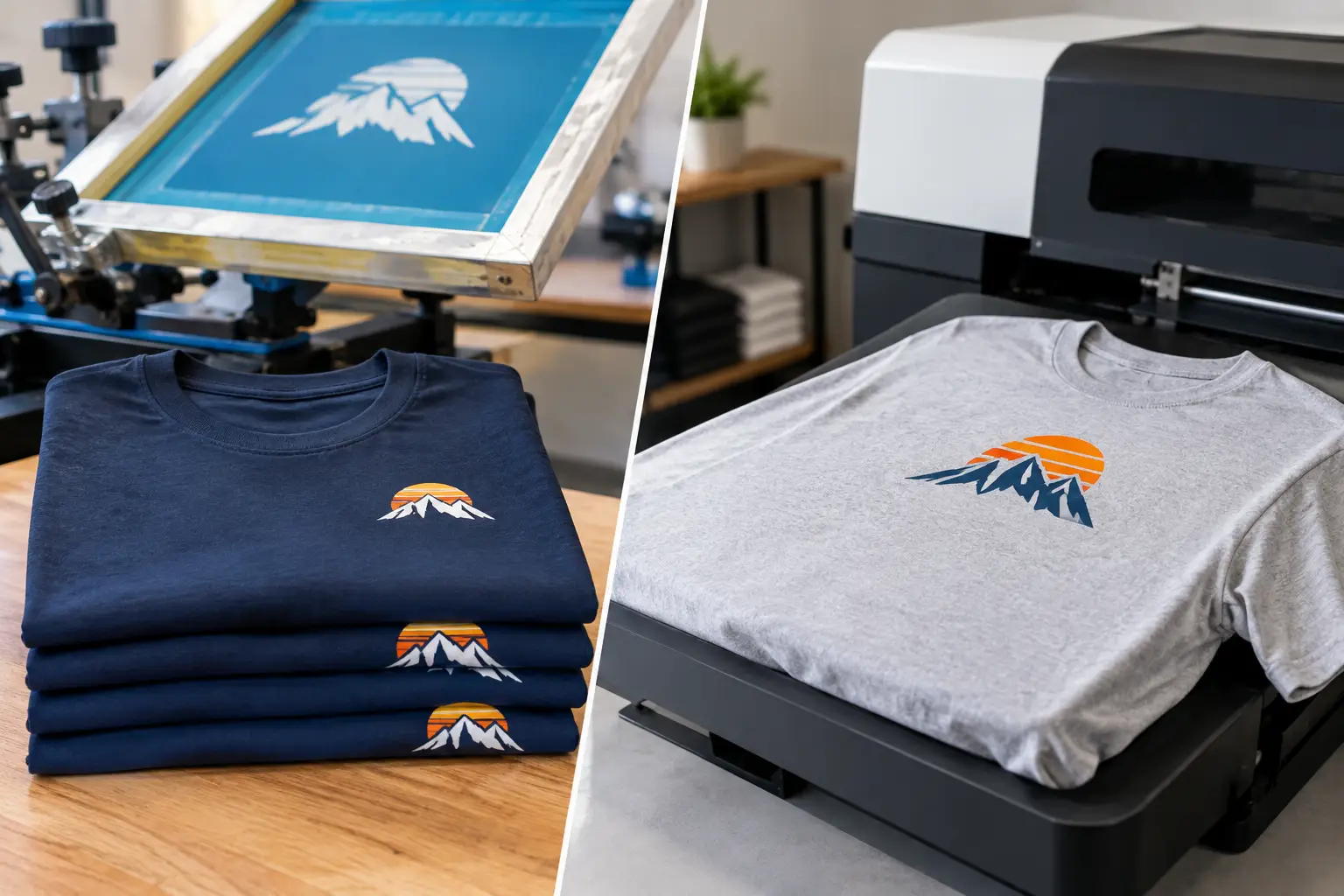
Embroidery and screen printing can both create professional branded safetywear, but they solve different problems.
Embroidery offers a polished, durable look for jackets, outerwear, polos, caps, and heavier workwear. It is an excellent choice for a left-chest company logo, especially when the design has clear shapes and limited small text. On lightweight safety tees or mesh vests, however, embroidery can add weight, pull the fabric, or feel less comfortable. The needlework also needs careful placement to avoid reflective tape and sensitive garment areas.
Screen printing is often a better fit for safety T-shirts, sweatshirts, and larger back graphics. It allows for bold, readable logos and can be more cost-effective for larger quantities. A properly selected ink system matters: the print should remain flexible, resist cracking, and adhere well to the specific fabric. Polyester safety garments require particular attention because dye migration and fabric performance can affect the final result.
Heat-applied graphics can be useful for names, numbers, and certain specialty applications, but the material must be selected for the garment and expected wash conditions. For high-use uniforms, ask about durability rather than choosing a method based on appearance alone.
A dependable decorator will review the artwork, fabric, logo size, and intended use before recommending a method. That guidance prevents common disappointments such as thread distortion on thin fabric, prints that feel overly heavy, or colors that do not stand out against a fluorescent garment.
Make Color and Contrast Work for You
High-visibility yellow, lime, and orange are already visually strong. Your logo needs enough contrast to be readable without turning the garment into a crowded billboard.
Black, navy, dark gray, and deep blue often show clearly on fluorescent backgrounds. White can work on darker safety outerwear, while reflective silver or similar effects should be considered carefully around existing reflective tape. If your brand colors are light or low contrast, use a dark outline or an approved one-color logo version to preserve legibility.
Avoid choosing decoration colors solely from a digital logo file. Colors can appear different on fluorescent polyester, textured fabric, or reflective outerwear than they do on a computer screen. Review a proof and, for larger uniform programs, consider approving a physical sample before committing to a full rollout.
Build an Order Plan That Holds Up Over Time
Brand consistency becomes difficult when every location, manager, or department orders independently. Establish a short set of approved items, approved logo files, decoration locations, and reorder details. This gives new employees the same professional look as the original crew and makes replacement orders much easier.
For a recurring apparel program, document the essentials:
- Approved garment styles, colors, and safety classifications
- Logo versions, thread or ink colors, and decoration sizes
- Placement standards for chest, back, sleeve, and name personalization
- Size ranges, role-based garment options, and reorder quantities
It also helps to plan for the real conditions of the job. Order a few extra pieces in common sizes for new hires and damaged garments. Consider seasonal transitions in advance, particularly when employees need both lightweight summer visibility and insulated winter outerwear. A planned program is more cost-effective than scrambling to source mismatched items after the first cold week or a major project kickoff.
LOGO USA helps businesses bring this process together with in-house embroidery, screen printing, artwork support, digital proofing, and USA-based production. The goal is not simply to put a logo on a vest. It is to produce safety apparel that looks consistent, wears well, and arrives ready for the people who represent your business every day.
Check the Finished Apparel Before Distribution
Before handing out a large order, inspect a few pieces from each style and size range. Confirm that logo placement matches the approved proof, colors are clear, reflective elements remain unobstructed, and names or department identifiers are accurate. Check that the garment labels and required ratings match what your jobsite or customer requested.
Then ask employees for practical feedback after the first weeks of wear. Are the garments comfortable through a full shift? Do logos remain visible after repeated laundering? Does the outerwear layer correctly over the rest of the uniform? These details guide smarter reorders and help you refine the program without disrupting your crew.
The strongest branded safety apparel does two things at once: it helps people recognize your team immediately, and it respects the conditions that keep that team visible. Start with the work, keep decoration purposeful, and build a standard your employees can rely on shift after shift.
Popular Blogs
What File Formats Does Embroidery Accept?
October 12, 2026