How Long Does Embroidery Take?
- May 5, 2026
- 1:21 am
If you need polos for a sales kickoff, caps for a field team, or uniforms for a new location, timing matters as much as quality. One of the most common questions buyers ask is how long does embroidery take, and the honest answer is that it depends on both the design and the production plan behind it.
Embroidery is not a one-step process. Before a logo ever reaches a needle, it has to be prepared for stitching, matched to the right garment, approved, and scheduled into production. That is why a simple left-chest logo on a standard polo moves much faster than a detailed design placed on thick outerwear or multiple products in the same order.
How long does embroidery take from start to finish?
For most business apparel orders, embroidery timing includes several stages: digitizing, proofing, production setup, stitching, finishing, and shipping or delivery. If artwork is ready and approvals happen quickly, standard production often falls into a one- to two-week window after art approval. That timeline can be shorter for straightforward repeat orders and longer for more complex programs.
The key point is this: the stitching itself is only part of the schedule. Buyers sometimes picture embroidery as a machine running for a few minutes per item, but the real timeline is built around preparation, quality control, and order management. Those steps are what protect consistency across every shirt, jacket, hat, or bag in the run.
What affects how long embroidery takes?
Design complexity
A clean logo with bold shapes and limited colors usually runs faster than a highly detailed mark with small lettering, gradients translated into thread, or tight fill areas. More stitches generally mean more machine time. A compact chest logo might sew out quickly, while a larger back design or intricate emblem can take significantly longer per piece.
Complexity also affects setup. Some designs need stitch path adjustments, underlay changes, or compensation for fabric movement. That extra work happens before production begins, but it is essential for a polished result.
Digitizing and artwork readiness
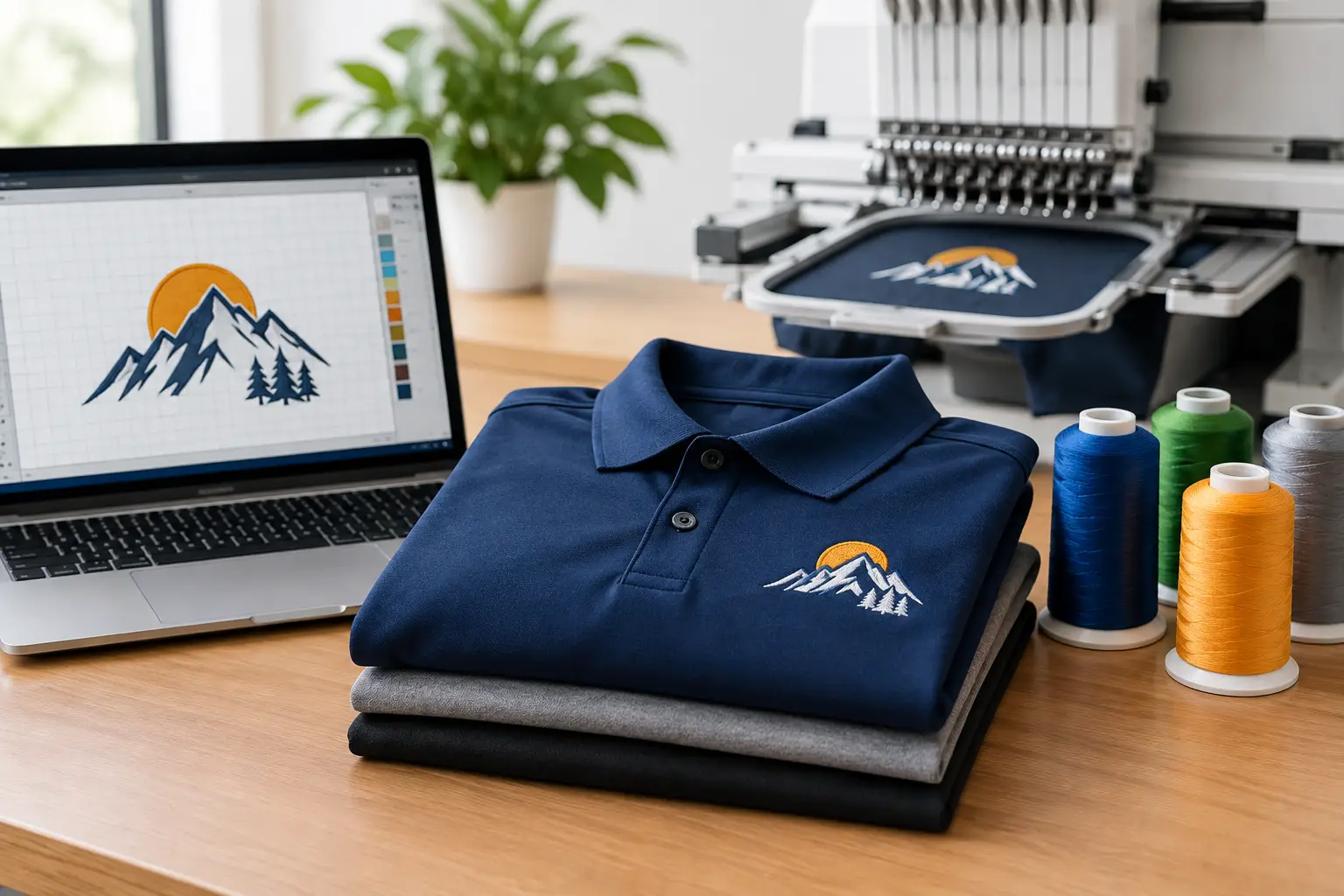
Digitizing is the process of converting artwork into a stitch file the embroidery machine can read. This is a skilled production step, not an automatic file conversion. If the art is crisp and production-ready, digitizing can move quickly. If the logo needs cleanup, resizing, font matching, or stitch simplification, that adds time.
For first-time orders, digitizing is often one of the biggest variables. Reorders are usually faster because the file already exists and has been tested on the intended product type or something similar.
Approval speed
Even a fast production team cannot move forward until artwork or proofs are approved. In many embroidery orders, this is the point where timing is won or lost. A same-day approval keeps the order on track. A few days of internal review can push the production window back just as easily.
For companies with multiple stakeholders, it helps to decide early who has final signoff. That keeps a simple branded apparel order from getting stuck in an approval loop.
Garment type
Not every item embroiders at the same speed. Standard polos, button-downs, and fleece styles are typically straightforward. Caps require different hooping and machine handling. Jackets, bags, workwear, and performance fabrics can require extra care, especially if there are seams, pockets, linings, or waterproof layers involved.
Placement matters too. A left chest logo is usually more efficient than a sleeve, cuff, or oversized location. Specialty placements often need more setup time and closer operator attention.
Order size
A small order may move quickly if the design is simple and capacity is available. A large uniform rollout or event order can still be completed efficiently, but it requires more scheduling and machine time. The larger the quantity, the more important production planning becomes.
That said, bigger orders do not always mean a slower process per item. Once setup is complete, embroidery production can run very efficiently at scale. The question is less about quantity alone and more about how quantity interacts with complexity, garment variety, and current production volume.
Production queue and seasonality
Embroidery turnaround is also shaped by timing in the calendar. Busy periods such as holiday gifting, trade show season, company onboarding cycles, and back-to-school programs can increase demand. If your order lands during a peak window, standard lead times may stretch.
This is one reason experienced buyers place orders earlier than they think they need to. A little lead time gives room for approvals, inventory changes, and any adjustments needed to protect quality.
How long does the actual embroidery stitching take?
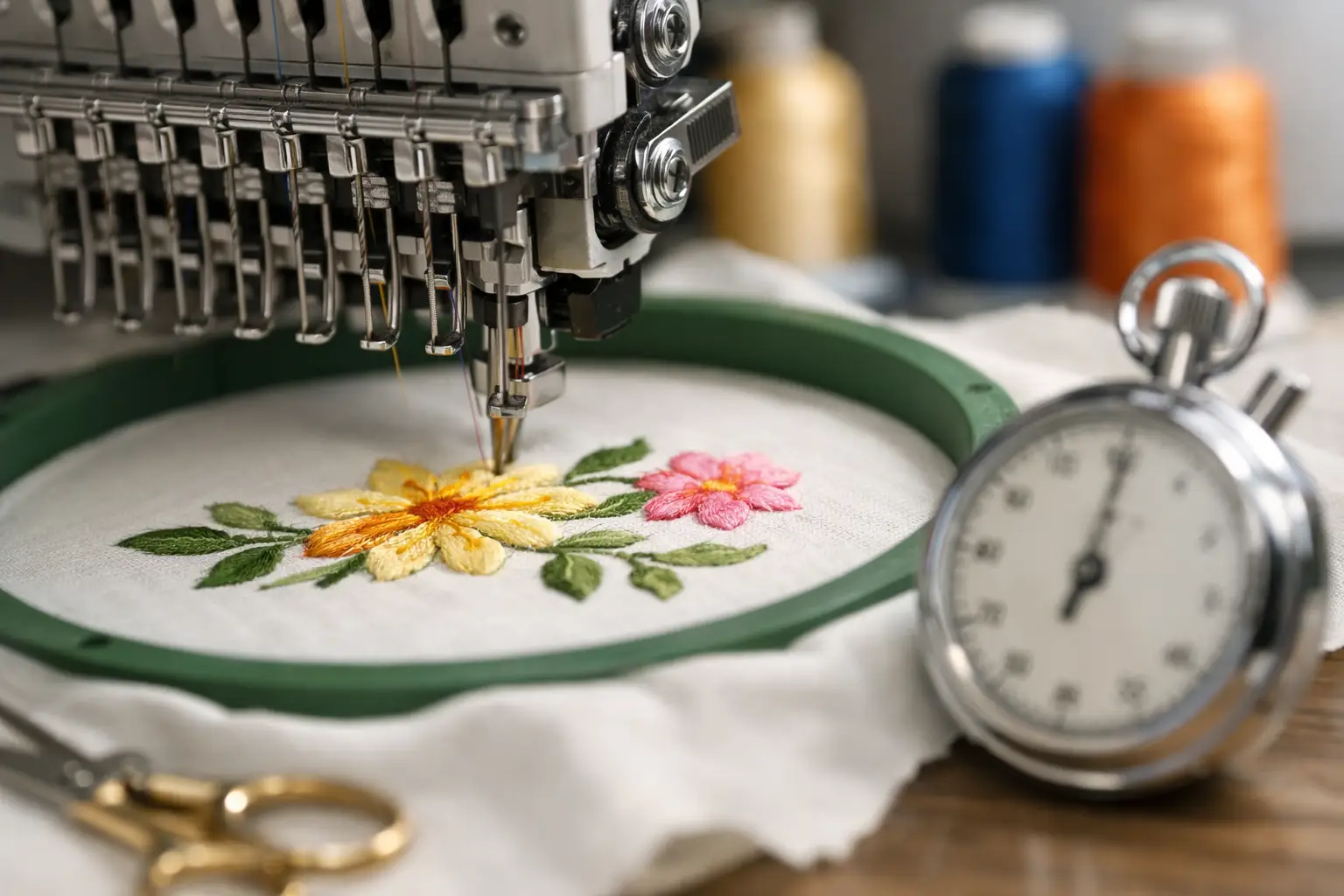
The machine time for one embroidered logo can range from a few minutes to much longer depending on stitch count and placement. A basic logo on a polo may run fairly quickly, while a dense design on a cap or jacket takes more time. But machine runtime never tells the full story.
Each item also has to be hooped, aligned, stitched, trimmed, inspected, and packed. Across a larger order, those handling steps add up. For corporate apparel, consistency is just as important as speed, so quality checks are built into the workflow rather than treated as an afterthought.
First-time orders vs. reorders
If this is your first embroidered order, expect a little more front-end time. New orders need digitizing, setup, and proof approval. There may also be decisions around logo size, thread colors, placement, and garment compatibility.
Reorders are usually faster because much of that groundwork is already done. Once a stitch file has been approved and previous production notes are on hand, repeat orders become more predictable. That is a major advantage for businesses managing employee uniforms, branch expansion, or recurring event apparel.
Rush embroidery orders: possible, but with trade-offs
Rush service can be a good option when you are working against an event date or onboarding deadline, but not every order is a fit for acceleration. A simple reorder on in-stock garments is far easier to rush than a new, multi-style order that still needs art cleanup and approvals.
There are trade-offs to consider. Rush timelines may limit garment choices to what is currently available, reduce flexibility on changes, or require tighter approval windows from your team. The best rush orders happen when artwork is ready, decision-makers are aligned, and the decoration partner has in-house control over production.
How to keep your embroidery order moving
The fastest path to embroidered apparel is not cutting corners. It is reducing avoidable delays. High-resolution artwork helps. Quick proof approvals help. Choosing proven logo placements and in-stock garments helps. So does working with one production partner that can manage digitizing, decoration, and quality control under one roof.
If your order includes multiple departments, branches, or wearers, consolidate details early. Confirm sizes, quantities, shipping needs, and logo usage before the order enters production. Small internal delays at the start often create the biggest schedule problems later.
It also pays to be realistic about the final use. If the apparel is for a major customer-facing event, a recruiting fair, or a company-wide rollout, build in enough time for the work to be done right. Premium embroidery is meant to last, and that quality comes from precision at every stage.
What business buyers should expect
When asking how long does embroidery take, most business buyers are really asking a broader question: when will my team have polished, consistent apparel in hand? That is the right way to think about it.
A dependable embroidery timeline should account for art preparation, product availability, decoration, inspection, and delivery. It should also reflect the realities of your order instead of promising a generic number that ignores complexity. The best production partners are transparent about timing because they know reliability matters just as much as craftsmanship.
For companies ordering branded apparel on a deadline, clarity beats guesswork every time. At LOGO USA, that means helping customers move from artwork to approval to in-house production with a process built for speed, consistency, and premium results.
If you are planning an embroidered apparel order, the smartest move is to start a little earlier than feels necessary. That extra breathing room gives you better product options, smoother approvals, and the confidence that your finished pieces will show up looking exactly like your brand should.
Popular Blogs
What File Formats Does Embroidery Accept?
October 12, 2026