A Guide to Screen Print Ordering for Businesses
- August 19, 2026
- 3:18 am
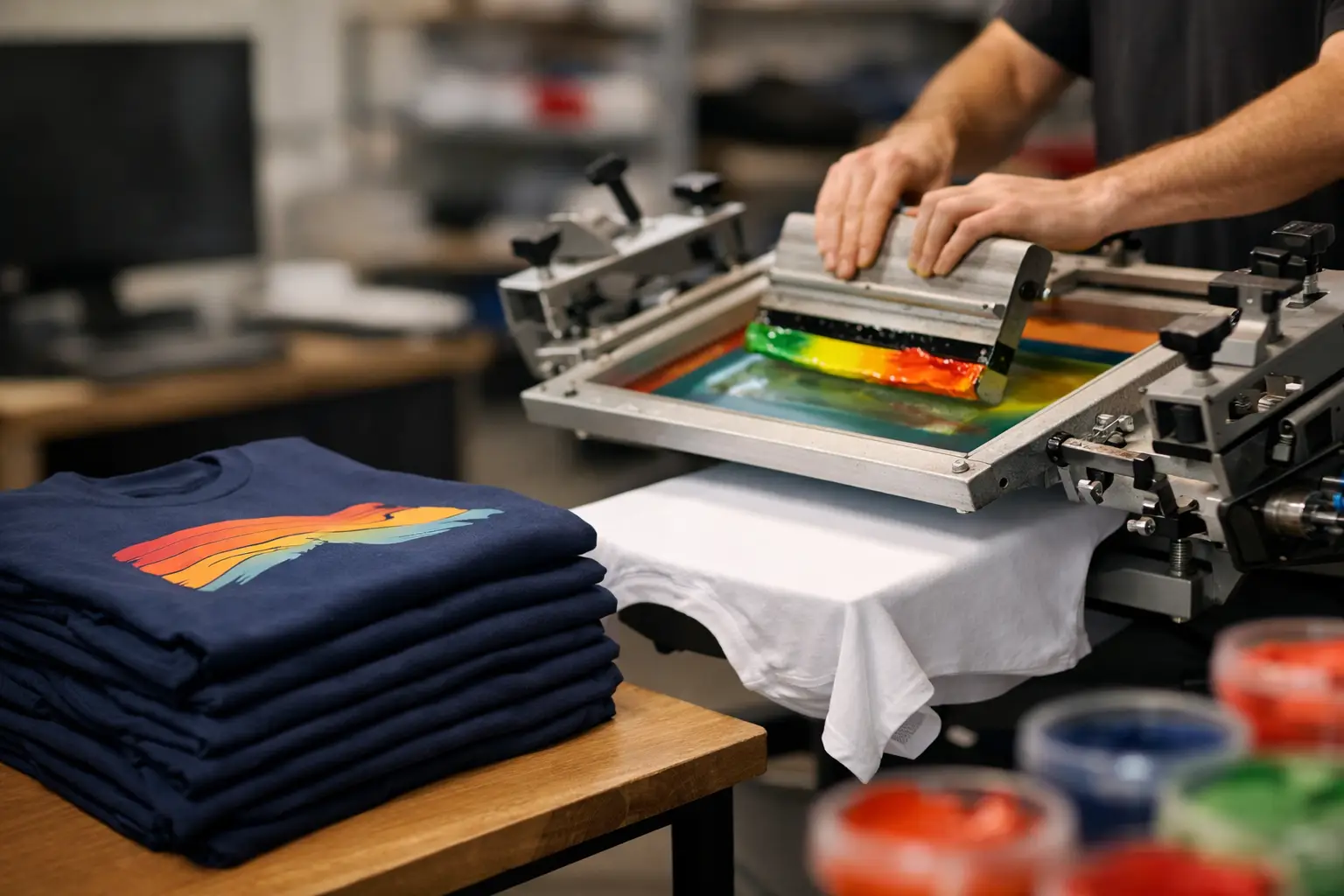
A branded T-shirt can look like a simple purchase until you are responsible for getting the right garment, logo, sizes, colors, and delivery date for 50 or 500 people. A clear guide to screen print ordering helps prevent the costly details from getting missed – especially when the apparel represents your employees, event, or brand in public.
Screen printing remains one of the most dependable decoration methods for bold, durable designs on T-shirts, sweatshirts, workwear, and event apparel. The process rewards good planning. When the garment, artwork, and quantity are decided early, your team gets a polished result that is easier to reorder later.
Start With the Job the Apparel Needs to Do
Before selecting a shirt color or requesting a quote, define how the apparel will be used. Employee uniforms have different requirements than a one-day charity walk, a construction crew order, or a customer giveaway. A retail-facing team may need premium-feel polos or soft cotton-blend tees, while a warehouse crew may prioritize durability, visibility, and a size range that works for every employee.
Think about who will wear the item, how often it will be washed, and where your logo needs to be seen. For a large front logo, a standard T-shirt often provides the best print area and value. For staff apparel, a left-chest print can feel more refined and leave room for a larger back design. Event shirts often need sponsor logos, dates, or participant names, which can affect the print locations and color count.
It also helps to plan for reorders. If the program will continue through the year, choose an apparel style with reliable availability rather than a seasonal item that may disappear after the first run. Consistent garment selection makes it much easier to keep your brand presentation uniform across new hires, locations, and future events.
Choose Garments That Support the Print
Not every garment is equally suited to every screen print design. Cotton and cotton-rich T-shirts are classic choices because they accept ink well and provide a familiar, comfortable feel. Blends can offer softness, stretch, or performance benefits, but they may require specific inks and production techniques to avoid dye migration or reduced opacity.
Dark garments usually need a white underbase beneath light-colored artwork. That underbase helps the design stay bright, but it can add production complexity. Light garments can often support a cleaner, more economical print approach. Neither option is automatically better. The right choice depends on the look you want, the artwork, and your budget.
Fabric weight matters, too. A lightweight shirt can be excellent for summer events and promotional distribution, while a heavier tee or fleece better supports a premium uniform program. If comfort is a major priority, consider ordering a sample or reviewing garment specifications before committing to a large quantity. Brand reputation, fit, and color consistency all matter when apparel will represent your business every day.
Prepare Artwork Before You Request Production
The quality of the final print begins with the quality of the art file. Vector artwork is generally preferred for logos and clean graphic designs because it can scale without becoming blurry. Common vector formats include AI, EPS, PDF, and SVG. High-resolution PNG files may work for certain designs, but low-resolution web images, screenshots, and photos of a logo can create limitations.
Keep small details in perspective. Very thin lines, tiny text, and intricate gradients may not reproduce as clearly in screen printing as they do on a computer screen. A skilled art team can recommend adjustments, such as increasing line weight, simplifying a detail, or selecting a more readable layout for the chosen print size.
Brand colors should be identified as accurately as possible. If your organization has approved Pantone colors, provide them along with the artwork. Screen printing uses physical ink, and the garment color underneath can influence the finished appearance. A navy logo on a gray shirt, for example, may need different treatment than that same logo on white cotton.
Know How Print Colors Affect Cost and Appearance
Screen printing is especially efficient when the same design is printed across a larger quantity of garments. Each ink color usually requires its own screen and setup. A one-color logo is typically more economical than a six-color design, particularly on a dark shirt that also needs an underbase.
That does not mean every design should be reduced to one color. A multi-color print can be the right choice for a campaign, anniversary graphic, or brand mark where color accuracy is essential. The practical question is whether every color adds real value to the final piece. If a subtle shade will not be visible from a few feet away, simplifying it may improve both clarity and budget control.
Build Your Order With Realistic Quantities and Sizes
Screen print pricing is usually influenced by quantity, number of print colors, print locations, garment type, and the complexity of the art. Combining sizes within the same garment style and color commonly helps you reach a stronger quantity break. Ordering a few additional pieces can sometimes be more cost-effective than placing a small follow-up order later.
For employee apparel, use a size collection process rather than relying on guesses. Ask team members to confirm their preferred size and provide the garment’s size chart when possible. If the order is for a public event or giveaway, use prior attendance data and a size curve based on your audience. Most organizations need more medium, large, and extra-large shirts than other sizes, but your actual distribution may differ.
Plan for extras where they make sense. A few spare shirts can cover late registrations, new employees, damaged items, or last-minute leadership requests. For a recurring program, document the exact garment style, color, print locations, ink colors, and approved art version. That order history becomes a valuable tool when it is time to replenish inventory.
Review the Proof Like It Is the Final Shirt
A digital proof is your best checkpoint before production begins. It should show the garment color, logo placement, approximate print size, and the artwork that will be used. Do not approve it quickly just because the logo looks familiar. Compare it with your brand standards and the purpose of the order.
Check spelling, phone numbers, event dates, location names, sponsor names, and employee-facing details. Confirm that the garment color is correct and that the print location matches what you intended. A left-chest design and a full-front design can use the same logo but create very different impressions.
Pay close attention to print dimensions. A design that looks balanced at 11 inches wide on an adult large shirt may need a different approach on youth apparel, ladies’ fitted styles, or very small sizes. If your order includes multiple garment types, ask how the design will be adapted so it remains readable and professionally proportioned.
Once artwork is approved, changes can affect production timing and cost. Taking time for a careful internal review protects your schedule and avoids unnecessary revisions.
Set a Delivery Timeline That Includes Approval Time
The production clock does not truly begin when you first send artwork. It begins after garment details and artwork are confirmed and the proof is approved. Build in time for product selection, art review, proof revisions, and internal sign-off before your required in-hand date.
For a trade show, employee launch, or event, work backward from the date the apparel must arrive. Allow a buffer for shipping or distribution to multiple locations. If your event is on a Friday, receiving the order that same week may leave little room for an unexpected issue. Earlier approval gives your decoration partner more flexibility and gives you more control.
LOGO USA produces decorated apparel in the United States and typically completes production in 7-10 business days after art approval, depending on the details of the order. Larger programs, specialty garments, multiple locations, or complex artwork may require additional planning, so sharing your deadline at the start is always the best move.
A Guide to Screen Print Ordering That Protects Your Brand
The strongest screen print orders are not simply the cheapest or fastest. They are the orders where the garment fits the audience, the artwork is designed for the process, the proof is carefully reviewed, and the timeline respects the realities of production. That level of planning gives your employees apparel they are comfortable wearing and gives customers a brand impression worth remembering.
When you are ready to order, bring your deadline, estimated quantity, apparel priorities, and best available logo file to the conversation. Those four details make it possible to turn a rough idea into branded apparel your team will be proud to put on.
Popular Blogs
What File Formats Does Embroidery Accept?
October 12, 2026