

Custom Polos for Small Business That Work
- May 31, 2026
- 3:15 am
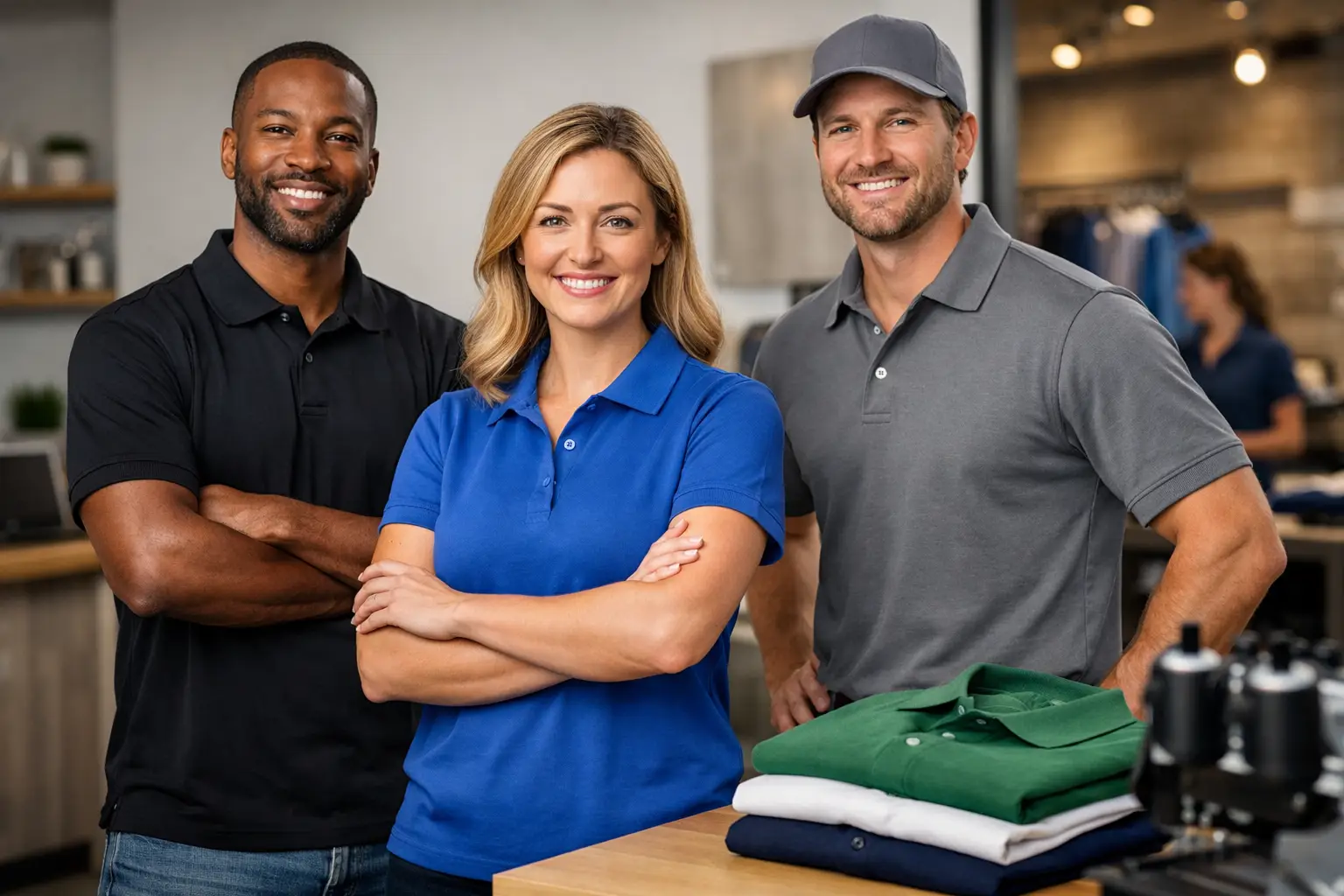
A wrinkled promo tee can make your team look temporary. A well-made polo does the opposite. Custom polos for small business give employees a polished, consistent look that feels professional in the office, on job sites, at trade shows, and in front of customers.
That matters more than many buyers expect. For a small business, branded apparel is not just about putting a logo on a shirt. It is about showing customers that your company is established, organized, and ready to deliver. When the garment fits the role and the decoration is done with care, a polo becomes part of how your brand is recognized and remembered.
Why custom polos for small business make sense
Polos sit in a useful middle ground. They are more refined than a basic t-shirt, but more relaxed and practical than dress shirts. That balance makes them one of the safest and most versatile choices for business apparel programs.
For customer-facing teams, polos create a clean, uniform appearance without feeling overdressed. For internal staff, they are easy to wear through a full workday. For event use, they help a team look coordinated while still being comfortable enough for setup, travel, and long hours on the floor.
They also work across industries. A landscaping company, dental office, brewery, property management team, HVAC contractor, startup sales staff, and nonprofit event crew may all need very different apparel programs, but polos can fit each one with the right fabric, brand, and logo treatment.
The practical benefit is consistency. If your business needs apparel that can handle reorders, new hires, seasonal events, and department variations, polos are often easier to standardize than more fashion-driven options.
Choosing the right polo for your business
Not every polo is built for the same job. That is where many small businesses either overspend or end up with a shirt that looks good online but falls short in person.
Start with how the shirt will actually be used. If your staff spends most of the day indoors meeting customers or working in an office, a smooth, lightweight performance polo may be the right choice. It looks sharp, resists wrinkles, and stays comfortable under pressure. If your team works in a warehouse, outdoors, or in a more demanding service environment, durability may matter more than a sleek hand feel.
Fabric matters because it changes both appearance and wearability. Cotton-rich polos tend to feel familiar and soft, but they can absorb moisture and may show wear faster in high-demand settings. Performance polyester or poly blends are often better for active teams because they hold color well, wick moisture, and maintain shape through repeated washing. The trade-off is that some synthetic styles feel more technical and less traditional, so the right option depends on your brand image.
Fit also deserves attention. A trim, retail-inspired polo may look excellent for client meetings or hospitality use, but it may not suit every body type or every role. A more relaxed cut can improve comfort and make sizing easier across a mixed team. For small businesses ordering for groups, that can reduce headaches when distributing apparel.
Brand selection can play a role as well. Recognized names often bring stronger perceived value, especially when polos are used for executive teams, sales staff, or customer-facing roles. In other cases, a dependable core brand with solid construction is the smarter buy because it keeps the program cost-effective without sacrificing appearance.
Embroidery usually gives polos the best result
Polos and embroidery are a natural match. For most small business logos, embroidery delivers the most professional finish because it adds texture, holds up over time, and feels appropriate on a collared garment.
A left-chest embroidered logo is the standard for a reason. It is clean, recognizable, and suitable for nearly every business setting. It works for uniforms, company events, onboarding kits, and branded merchandise programs without feeling overly promotional.
That said, logo application is not one-size-fits-all. Some designs need simplification before they can stitch well at a smaller size. Fine text, thin outlines, and tight gradients can lose clarity when translated into thread. Good digitizing and proofing are not extras – they are part of getting a result that looks polished on the finished shirt.
Placement matters too. Left chest is the most common, but some teams add sleeves or back yokes for departments, names, or secondary branding. Those additions can be useful, though they should support the purpose of the shirt rather than crowd it. A polo meant for daily employee wear usually looks better when branding stays restrained.
What small businesses should look for in a vendor
The shirt itself is only part of the order. The production process matters just as much, especially if you need consistency over time.
A dependable apparel partner should help you narrow down product options based on budget, logo type, timeline, and use case. That guidance can save a lot of trial and error. Ordering custom apparel should not feel like guessing between dozens of similar styles with slightly different descriptions.
Proofing is another major factor. Before production starts, you should know how your logo will be sized, stitched, and positioned. That is the difference between a controlled brand presentation and a shirt that almost looks right. For growing companies, that control becomes even more important when you are outfitting multiple departments or planning reorders for new hires.
Production location can affect both quality oversight and turnaround reliability. USA-based decoration gives buyers more confidence in communication, scheduling, and execution, especially when deadlines are close or brand standards matter. If a vendor handles digitizing, embroidery, proofing, and production with strong in-house control, there is less room for errors between steps.
Turnaround time should also be realistic. Fast service is valuable, but only if the finished product still meets expectations. A reliable 7 to 10 business day production window after art approval is often more useful than vague rush promises that create risk.
How to build a custom polos for small business program that lasts
The best apparel programs are simple enough to repeat. That is true whether you are ordering 24 polos for a local team or building a broader uniform system over time.
Start by narrowing your lineup. Many small businesses do better with one core polo for everyday wear and one upgraded option for management, trade shows, or client-facing roles. Too many styles create confusion, sizing issues, and inconsistent branding.
Keep logo treatment consistent across the program. If your main logo appears on the left chest in one size, stick with that approach unless there is a clear reason to change it. Consistency makes reorders easier and strengthens brand recognition.
Think ahead about growth. New employees, replacement garments, and seasonal needs are normal. Choosing a polo style with good availability and steady inventory helps prevent the frustration of rebuilding your program around discontinued products.
It is also worth considering who will wear the shirts and how often. If this is daily uniform apparel, prioritize comfort, easy care, and durability. If the polos are mainly for occasional events, presentation may take priority over long-term wear. Neither approach is wrong. The right answer depends on the job the shirt needs to do.
For buyers managing multiple roles, it often helps to standardize color while varying garment tier by function. That keeps the brand look unified while allowing field staff, office teams, and leadership to wear styles better suited to their work.
Common mistakes that cost small businesses time and money
One of the biggest mistakes is buying based on price alone. A low-cost polo that fades, shrinks, snags, or loses shape quickly can make your brand look inconsistent after only a few washes. Saving a few dollars upfront often costs more when you need replacements sooner than expected.
Another issue is choosing a shirt before thinking through the logo. Some fabrics and textures decorate better than others, and some logos need adjustment to look clean in embroidery. Product and decoration should be selected together, not as separate decisions.
Sizing is another area where small errors add up. If you are ordering for a mixed team, size range and fit flexibility matter. A shirt that works for only part of your staff creates waste and frustration.
Finally, many small businesses treat custom apparel as a one-time purchase instead of part of a broader branding system. But if your team wears branded polos regularly, those shirts become part of your customer experience. They deserve the same attention you give to signage, business cards, and your website.
A well-executed polo program does not need to be complicated. It needs to be consistent, durable, and aligned with how your business shows up every day. When the apparel is chosen carefully and decorated with precision, it does more than identify your team – it reinforces the standard your company stands for. LOGO USA helps businesses get there with premium craftsmanship, dependable turnaround, and customization handled with the kind of care that keeps reorders easy and brand presentation sharp.
Popular Blogs

How an Employee Uniform Program Builds Trust
August 31, 2026