
Custom Merch Store vs Bulk Ordering: Which Fits?
- September 8, 2026
- 6:04 am
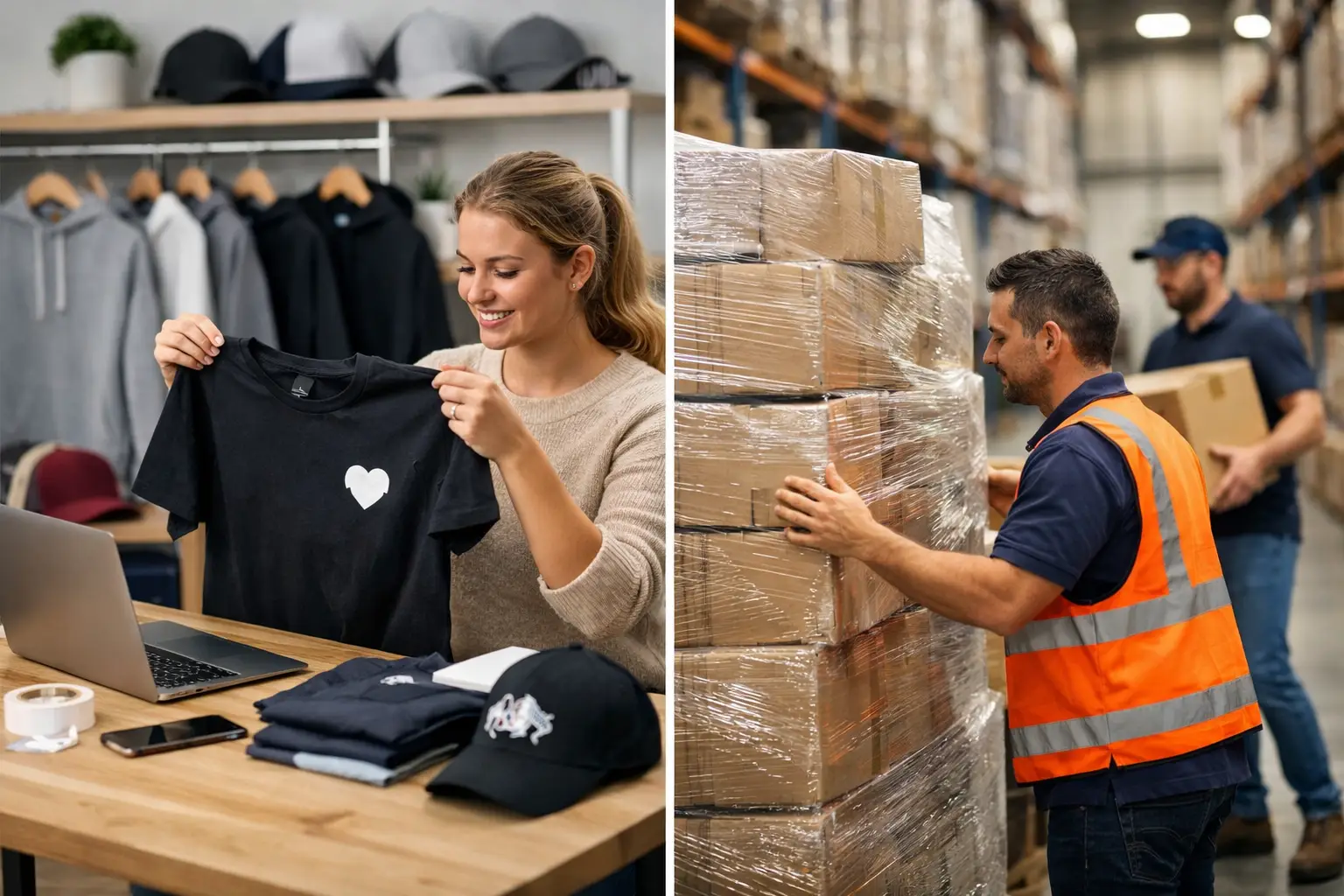
A new-hire kit should not require an operations manager to chase down shirt sizes, collect payments, and sort cartons in a conference room. That is where the choice between a custom merch store vs bulk ordering becomes more than an ordering preference. It affects how easily your team gets branded apparel, how consistently your logo appears, and how much administrative work sits with your business.
Both options can deliver polished, professionally decorated apparel. The right model depends on who is ordering, how often needs change, whether employees pay for items, and how much control you need over quantities, inventory, and delivery.
Custom Merch Store vs Bulk Ordering: The Core Difference
Bulk ordering is the traditional approach. Your company selects products, approves artwork, collects sizes, and places one order for a defined quantity. The finished apparel is delivered to one location or a limited number of locations for internal distribution. It is a strong fit for uniforms, trade shows, company events, and any program with a known headcount and a firm deadline.
A custom merch store is a branded online storefront built around your approved apparel and merchandise. Eligible employees, departments, customers, or event participants can select their own items and sizes within the rules you set. Depending on the program, orders may be collected during a scheduled ordering window or placed on an ongoing basis.
The difference is simple: bulk ordering centralizes purchasing and distribution, while a merch store gives approved buyers a controlled way to order for themselves. Neither is automatically better. The practical question is which one removes the most friction from your specific program.
When Bulk Ordering Makes the Most Sense
Bulk ordering works best when you know exactly what everyone needs. If you are outfitting 75 field technicians with two embroidered polos and one high-visibility jacket each, a single consolidated order gives you direct control over garment counts, colors, decoration placement, and delivery timing.
It is also often the more cost-efficient choice for large, predictable quantities. Ordering more of the same decorated item can improve unit economics, particularly when screen printing or embroidery setup is spread across a larger run. You can ship everything to one receiving point and distribute it in-house, which may be preferable when employees work at one office, warehouse, or jobsite.
This model is particularly effective for time-sensitive moments. Think annual meetings, sales kickoffs, volunteer events, restaurant openings, construction project launches, and convention staff apparel. One approved order keeps the program focused and makes it easier to confirm that every participant receives the right branded pieces before the date arrives.
The trade-off is administrative effort. Someone must gather sizes, confirm product choices, manage late responses, and handle exchanges if an employee selects the wrong fit. Bulk orders can also create leftover inventory when staffing changes or when a popular size was underestimated.
Choose bulk ordering when control matters most
Bulk ordering is usually the right call when the product assortment is limited, the recipient list is known, and apparel needs to arrive together. It gives procurement, operations, or marketing teams a clear order record and a single point of accountability.
It also protects brand consistency for uniforms. Rather than offering many garment options, you can standardize a specific polo, work shirt, cap, or outerwear piece that supports the role, climate, and image of your organization.
When a Custom Merch Store Is the Better Program
A merch store is built for organizations with recurring apparel needs and a moving list of recipients. It can be an efficient option for companies with multiple locations, remote employees, seasonal hiring, employee recognition programs, or departments that need branded gear at different times of year.
Instead of sending spreadsheets back and forth, you create an approved assortment with your logo, garment colors, and decoration standards already established. Employees can select their preferred size from the approved choices. Managers can set rules around who may order, which products are available, spending limits, and whether the company or employee covers the cost.
That structure is valuable when branded apparel serves more than one purpose. Your sales team may need premium quarter-zips for client meetings, while warehouse staff need durable workwear and new hires need basic polos and caps. A well-organized store allows each group to access appropriate items without turning every request into a new sourcing project.
A store can also support employee choice without sacrificing a professional appearance. Offering two approved polo styles or several outerwear options lets people account for fit and comfort while keeping logo treatment, color palette, and quality standards on brand.
The trade-off is that stores require thoughtful setup. Product selection, artwork, pricing, order rules, and fulfillment expectations should be clear before launch. Individual orders may not carry the same per-item savings as a large consolidated order, and direct-to-recipient shipping can add cost. For some programs, scheduled store windows are the best middle ground: employees choose their items, then orders are produced together after the window closes.
Compare Total Cost, Not Just Unit Price
The lowest garment price is not always the lowest program cost. Bulk orders may deliver better pricing per item, but the business still absorbs time spent collecting information, sorting packages, storing extras, and sending replacements. A merch store may have different fulfillment costs, yet it can reduce internal handling and prevent unnecessary inventory.
Consider the cost of the apparel along with decoration, setup, shipping, internal labor, storage, and expected exchanges. Also consider the cost of inconsistency. If different departments buy unapproved items from different sources, the result can be mismatched shades, inconsistent logo sizes, and lower-quality garments that do not reflect the standard of your brand.
For branded apparel programs with frequent reorders, approved artwork and decoration specifications are especially valuable. Once your logo has been properly digitized for embroidery or prepared for screen printing, future orders can move with greater confidence and consistency.
How to Choose the Right Ordering Model
Start with the behavior behind the order, not the product category. A single event with 200 attendees is usually a bulk-order situation, even if the order includes shirts, hats, and bags. A growing company that hires every month has a recurring need that may benefit from a store.
Ask whether the recipient list is fixed, whether every person receives the same items, and whether orders must ship to one place or many. Then look at the program over a full year. If you are placing several small orders for the same branded apparel, consolidating needs into a store or planned ordering windows may reduce repeated administrative work.
Your level of brand control matters, too. For customer-facing roles, establish clear standards for garment color, logo location, thread colors, and approved brands. For employee appreciation, you may allow more variety while still maintaining a curated selection of premium options.
At LOGO USA, the strongest apparel programs begin with a practical conversation about who will wear the products, where they will wear them, and how often they need to reorder. That approach helps match dependable in-house decoration and trusted apparel brands to the ordering method that fits your operation.
Build a Program That Can Grow With Your Team
You do not have to choose one method forever. Many organizations use both. They bulk order uniforms for a major rollout, then maintain a merch store for replacement pieces, new hires, seasonal outerwear, and optional employee purchases. Others use a store for annual staff selections and place bulk orders for trade shows or large promotional campaigns.
The key is to establish an approved product lineup before demand becomes urgent. Select garments that fit the job, confirm how the logo should be decorated, and set realistic production expectations. With domestic production and clear art approval, LOGO USA can typically move into production within 7-10 business days after approval, helping teams plan around real deadlines rather than last-minute guesswork.
Choose the ordering model that makes it easier for people to wear your brand with confidence. When the products are right, the decoration is precise, and the process fits your organization, branded apparel becomes a dependable part of how your team shows up.
Popular Blogs
Richardson Caps for Professional Team Branding
October 22, 2026