Corporate Apparel Quality Checklist for Buyers
- August 25, 2026
- 5:57 am
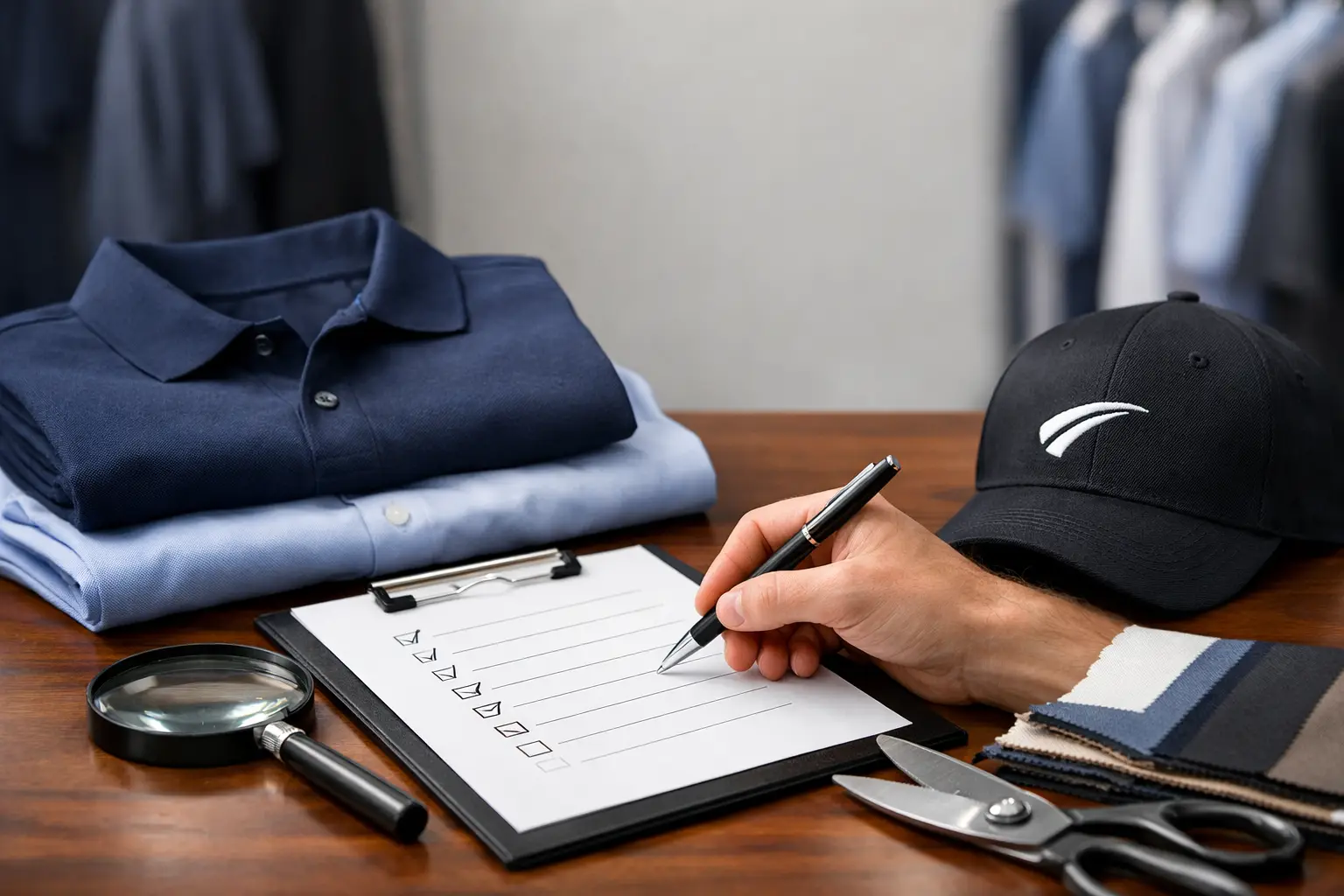
A polo that looks sharp at the kickoff meeting but pills after three washes is not a value purchase. Neither is a jacket with an embroidered logo that pulls, puckers, or disappears against the fabric. A corporate apparel quality checklist helps you evaluate the complete program before production begins, so your team receives branded gear that reflects the standard of your business.
For employee uniforms, trade show shirts, client gifts, and recurring company stores, quality is more than the garment label. It is the fit, fabric, color consistency, logo execution, ordering process, and ability to reorder six months later without surprises. Use this guide to ask the right questions before you approve a proof or place a large order.
Start With the Job the Apparel Needs to Do
The right garment depends on where, how, and how often it will be worn. A lightweight performance polo may be a strong choice for a summer event or an active sales team. It may not be the best option for a warehouse crew that needs a tougher fabric and a more structured collar. Similarly, a premium quarter-zip can elevate a client-facing team, while a value-priced tee may be the practical choice for a one-day volunteer event.
Start by defining the work environment, expected wear frequency, weather conditions, safety requirements, and audience. If employees will wear the apparel daily, prioritize construction and wash performance over the lowest unit cost. For promotional giveaways, comfort and visual impact may carry more weight. There is no single best fabric or brand – there is a best fit for the purpose.
Also consider whether the program needs to serve a broad range of body types. Reliable sizing, inclusive size availability, and a consistent fit across reorders reduce exchanges and help employees feel comfortable wearing the brand.
Corporate Apparel Quality Checklist: The Garment
Before decoration enters the conversation, inspect the blank apparel itself. Trusted brands can offer dependable quality, but each style within a brand still has its own fabric weight, cut, care requirements, and performance characteristics.
Use these garment checkpoints when comparing options:
- Fabric composition and weight: Review cotton, polyester, blends, stretch content, and ounces or GSM. Heavier does not automatically mean better, but it often affects durability, warmth, and how the garment hangs.
- Construction details: Look at seams, collar shape, placket reinforcement, cuff construction, zippers, pocket placement, and interior finishing. These details influence how well a garment holds up through repeated wear.
- Comfort and movement: Stretch, breathability, moisture management, and softness can make the difference between apparel employees wear willingly and apparel that stays in a drawer.
- Color performance: Confirm that the selected color supports your logo and works across available sizes. Dark fabrics, heathered materials, and high-visibility colors can all affect the decoration method and final appearance.
- Care requirements: Check whether the garment can handle regular home laundering or requires special treatment. Complicated care instructions can shorten the useful life of a uniform program.
- Availability and reorder potential: A great style is less useful if it is discontinued before your next onboarding cycle. Ask whether the item is a core style with stable inventory and whether an acceptable substitute is available.
Samples are especially valuable for larger programs. Product photography can show color and styling, but it cannot tell you how a fleece feels, whether a cap profile fits your team, or how a polo collar performs after washing.
Fit Is Part of Brand Presentation
Poor fit is one of the fastest ways to undermine otherwise premium apparel. Review size charts rather than assuming a medium fits the same across brands or garment categories. Retail-inspired styles can run slimmer, while workwear and unisex items may provide more room through the body.
For a broad employee rollout, consider offering more than one approved style. For example, a traditional polo and a women’s cut option may create a more professional result than asking every employee to adapt to one silhouette. The goal is visual consistency without forcing a one-size-fits-all solution.
Review Logo Artwork Before It Reaches Production
A clean logo file makes quality control easier from the start. Vector artwork is generally preferred for screen printing because it preserves sharp edges at different sizes. For embroidery, the artwork must be converted into a stitch file through digitizing. This process determines stitch direction, density, underlay, and other technical settings that affect the finished logo.
Do not judge a design only by how it looks on a screen. Fine type, thin lines, gradients, small registration marks, and highly detailed icons may not reproduce well at a small chest size. An experienced decoration team can recommend adjustments that protect the integrity of your logo rather than forcing a design into an unsuitable application.
Digital proofs are a critical checkpoint. Review the spelling, logo placement, size, thread or ink colors, garment color, and quantity details. Confirm that the proof reflects the exact style and color you selected. A proof is not just an administrative step – it is your opportunity to catch problems before production.
Match the Decoration Method to the Garment
Embroidery and screen printing produce very different results, and choosing between them should be based on the apparel, logo, and intended use.
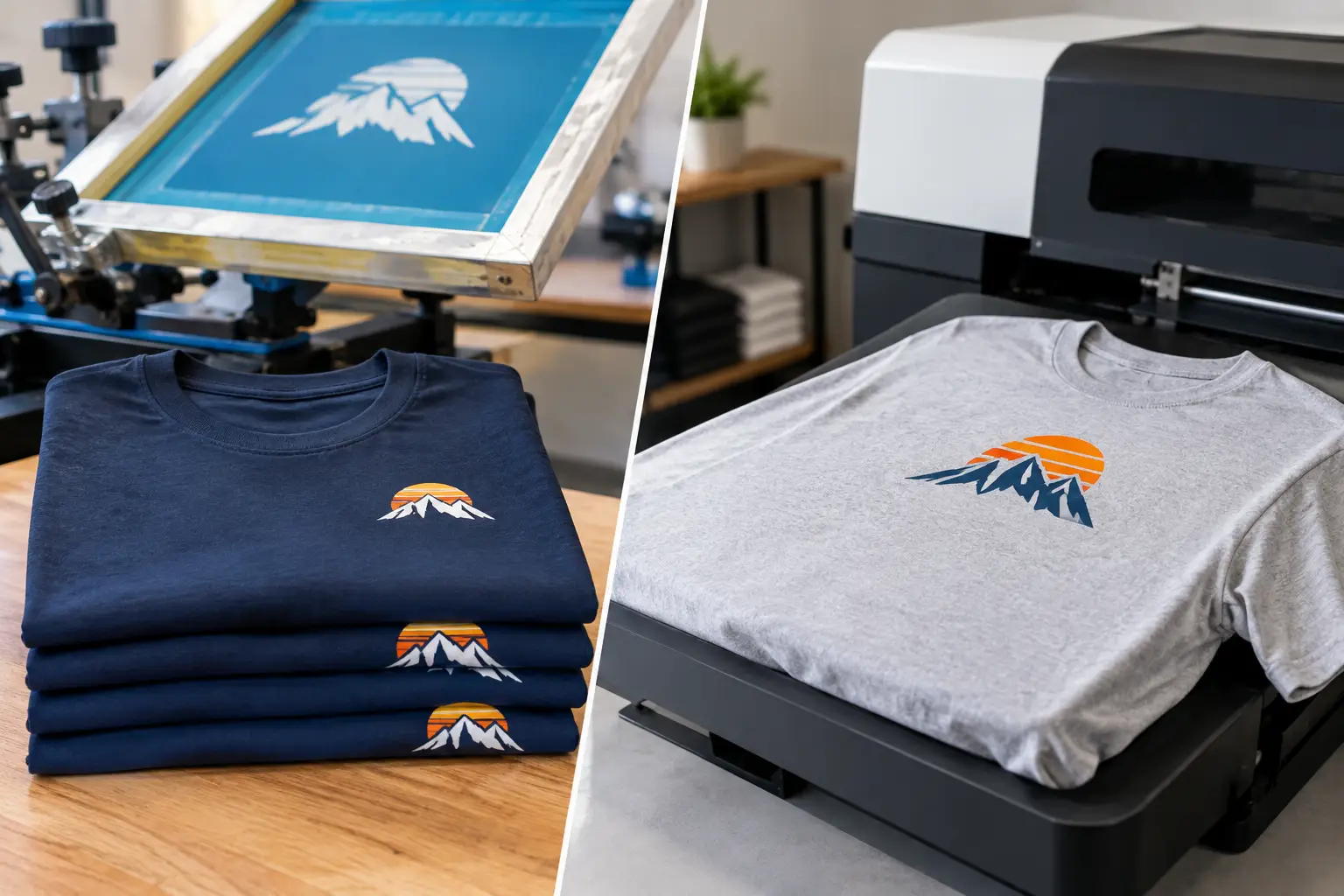
Embroidery gives polos, outerwear, caps, workwear, and bags a dimensional, established look. It is durable and well suited to logos with solid shapes and readable type. However, dense embroidery can feel heavy on thin performance fabrics, and tiny details may need to be simplified. On lightweight garments, proper backing and careful digitizing are essential to prevent puckering.
Screen printing is an excellent choice for T-shirts, sweatshirts, event apparel, and larger artwork. It can reproduce bold graphics, large back prints, and vivid color areas efficiently. The trade-off is that a complex design with many ink colors may increase cost, while the fabric type can influence ink selection and final hand feel.
Placement matters as much as method. A left-chest logo should be positioned consistently from garment to garment. A sleeve print needs enough clear space to avoid seams. A back graphic should be sized for visibility without overwhelming the garment. Ask how placement is measured and verified during production, particularly when your order includes multiple sizes or garment styles.
Inspect the Details That Separate Good From Great
Quality issues are often small at first glance but obvious once apparel reaches your team. Embroidery should have clean edges, stable fabric, consistent thread coverage, and no visible loops or loose thread tails. Screen prints should have crisp detail, accurate color, even ink coverage, and alignment that is consistent across the order.
Check the logo against your brand standards. Is the thread color close to your approved Pantone or brand color? Is white ink bright enough on a dark shirt? Does the logo have adequate contrast on a charcoal jacket? A decoration can be technically well made but still fail if it does not read clearly at a normal viewing distance.
For multi-location programs, consistency is particularly important. The same logo should look intentional whether it appears on a cap, polo, hoodie, vest, or insulated jacket. Some variation is natural because fabric texture and decoration methods differ, but the brand identity should remain recognizable and professional.
Evaluate the Supplier’s Production Controls
Quality apparel programs require more than a good garment catalog. Ask who handles decoration, how artwork is approved, where production takes place, and what happens if an item is backordered or a proof needs revision. Clear answers signal a process designed to protect your order.
In-house production offers meaningful advantages for orders that need precise oversight. The team managing digitizing, embroidery, screen printing, and final inspection can address issues directly rather than passing them through multiple vendors. That is especially useful for complex orders with several garment types, departments, logo locations, or shipping destinations.
Turnaround time should also be realistic. Fast production is valuable, but it should not eliminate the proofing and quality-control steps that prevent mistakes. Build approval time into your event or rollout schedule, and allow extra time when you need new artwork, custom sizing plans, or individual fulfillment.
Plan for Reorders Before the First Order Ships
The best corporate apparel programs make future ordering easier. Keep approved artwork, decoration specifications, garment style numbers, placement notes, and thread or ink color decisions in one place. This record helps maintain consistency when you add new hires, replenish uniforms, or launch a seasonal collection.
If your needs are ongoing, a company apparel store can simplify access for employees and managers while preserving approved product options. It can reduce off-brand purchases, minimize manual order collection, and give your team a controlled way to order what they need.
Make the Final Approval With Real-World Use in Mind
Before approving a large order, picture the apparel after a full workday and after repeated washing. Will the collar stay presentable? Will the logo remain clear from across a room? Will employees be comfortable enough to wear it regularly? Does the price reflect the expected lifespan of the item?
A lower-priced garment may be appropriate for a short campaign. For uniforms and customer-facing teamwear, investing in proven fabric, accurate decoration, and dependable production usually protects your budget over time. Replacing apparel early, correcting decoration errors, and managing employee complaints are all costs that rarely appear on the original quote.
Your branded apparel is worn in front of customers, candidates, partners, and the communities you serve. Choose it with the same care you apply to your signage, website, and customer experience. A well-reviewed proof, a properly matched garment, and a production partner committed to craftsmanship can turn everyday workwear into a consistent expression of your brand.
Popular Blogs
What File Formats Does Embroidery Accept?
October 12, 2026