Bulk T Shirt Printing That Gets Teams Noticed
- August 21, 2026
- 5:55 am
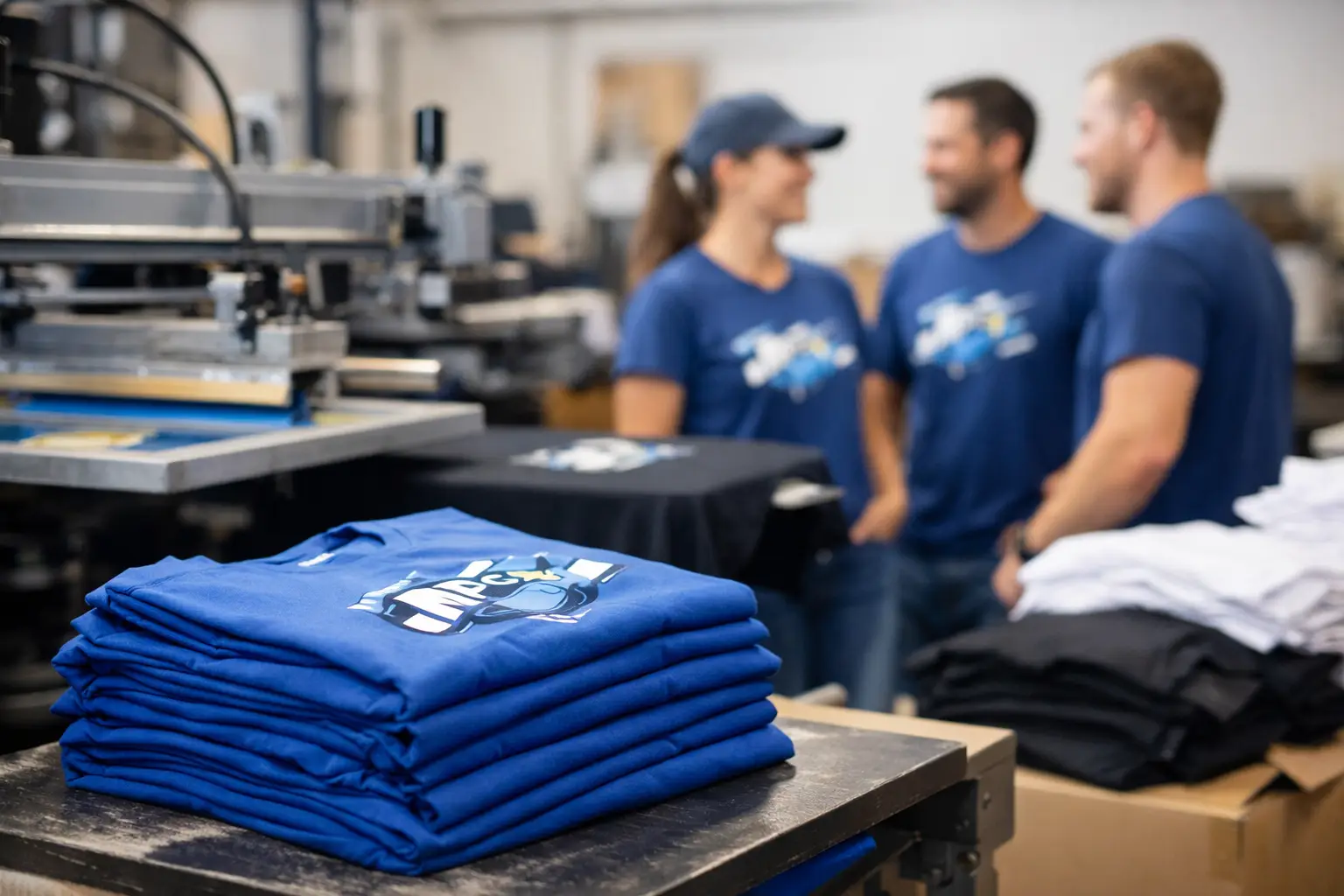
A company shirt becomes part of the job the moment an employee puts it on. It represents your business at a customer site, at a trade show, on a delivery route, or across a busy event floor. That is why bulk t shirt printing is more than placing a logo on a basic tee. The right order gives your people a consistent, professional look while putting your brand in front of the audiences that matter.
For a large apparel order to work, the shirt, artwork, decoration method, quantity, and production schedule all need to line up. A lower unit price is valuable, but it should not come at the expense of a shirt people will not wear or a print that fails to represent your organization well. Here is how to plan an order that holds up in real work and makes ordering easier from the start.
Start With the Job Your Shirts Need to Do
The best t-shirt is not always the softest, heaviest, or least expensive option. It is the one that fits the environment where it will be worn. A landscaping crew, a warehouse team, a nonprofit volunteer group, and a conference staff each have different needs.
For active jobs, lightweight performance fabrics can help employees stay comfortable through heat, movement, and long shifts. For retail, office events, and promotional giveaways, a soft cotton or cotton-blend shirt may create a more relaxed, premium feel. If durability is the priority, consider a heavier-weight cotton or a workwear-inspired option that can handle repeated washing.
Color deserves the same attention. Dark shirts can hide job-site dirt and create a sharp uniform look, while bright colors improve visibility and help event teams stand out. White and light-colored shirts often make colorful artwork pop, but they may be less practical for field crews. Think about the setting, the people wearing the garment, and how often the shirt will be washed before selecting a style.
Choose a Decoration Method That Fits the Artwork
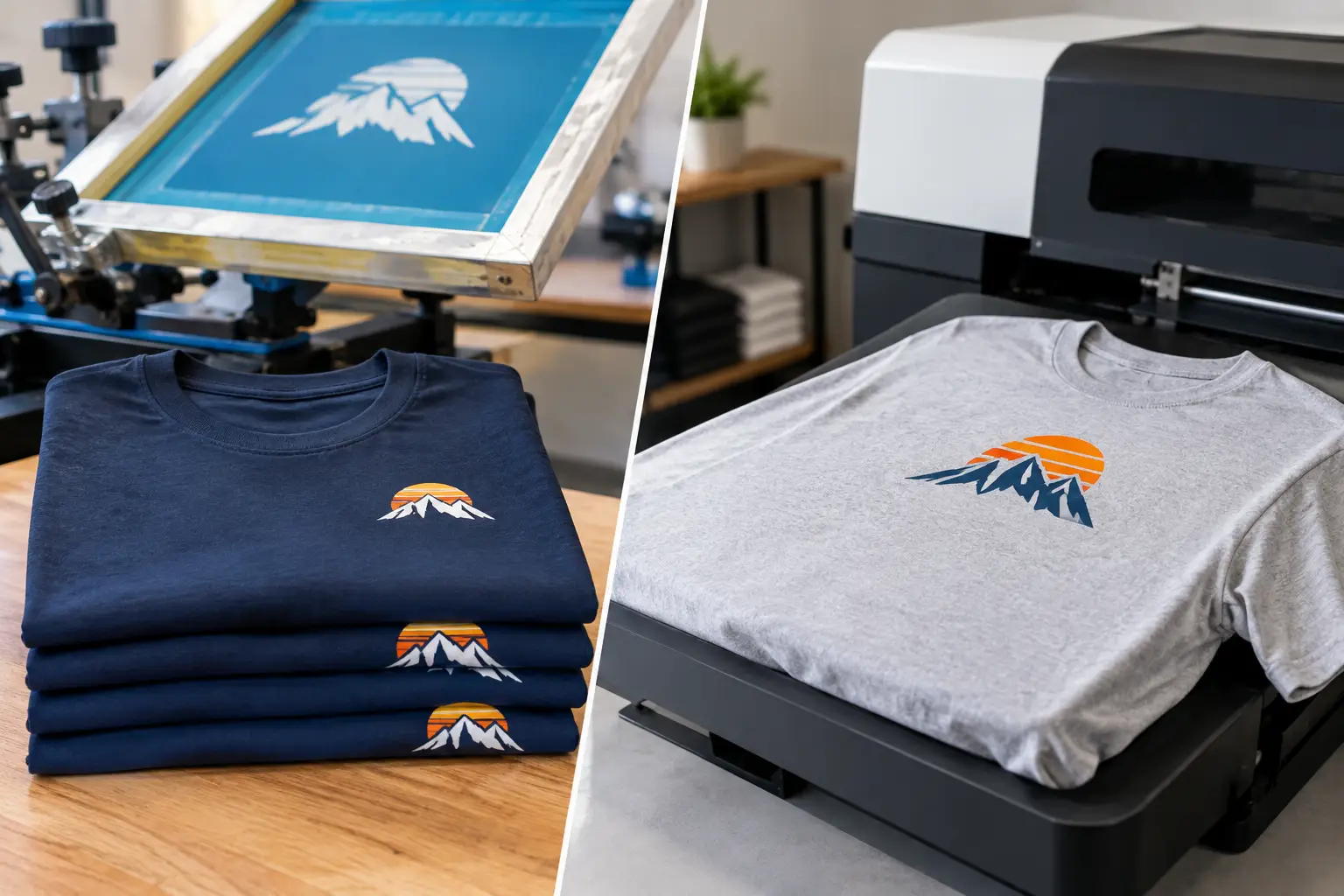
Screen printing is a strong choice for most bulk t shirt printing orders. It produces bold, consistent color and is especially cost-effective when you are ordering larger quantities of the same design. A well-executed screen print can remain crisp through regular wear and washing, making it a dependable choice for uniforms, events, spirit wear, and promotional campaigns.
The design itself affects the production approach. Simple one- or two-color logos generally print cleanly and help keep costs controlled. Designs with multiple spot colors, large artwork, or a detailed illustration may require additional screens and setup. Full-color graphics may call for a different printing method depending on the art, fabric, and order size.
Print location also changes both the look and the budget. A left-chest logo offers a polished uniform appearance, while a full front print creates greater impact for campaigns and events. A back print is useful when your company name, service area, or event message needs to be seen from a distance. Sleeve prints can add a finished, retail-inspired detail, but they are best used when they support the design rather than crowd it.
Before production begins, review a digital proof carefully. Check spelling, color, placement, and logo proportions. This is the point to catch a phone number that is one digit off or a tagline that appears too small to read. Good artwork and clear approval protect the finished result.
Build Your Quantity Around Real Distribution
Ordering in bulk usually improves the per-shirt cost, but quantity planning should be practical. Start with the number of employees, participants, or recipients, then account for size distribution, backups, and future needs. If your workforce is growing or you expect new hires in the next few months, a small amount of extra inventory can prevent a rushed reorder.
Size breakdowns are often where otherwise well-planned orders fall short. Do not divide your quantity evenly across every size unless you have reliable historical data that supports it. If possible, collect sizes from employees before ordering. For event giveaways, use past registration details or prior order history to estimate demand. Most organizations need more medium, large, and extra-large shirts than the smallest and largest sizes, but your audience may differ.
There is also a balance between one large order and a smaller initial run. A large order can offer stronger price efficiency and consistent decoration across the entire team. A smaller run can make sense when a new logo, event date, or campaign message may change soon. For evergreen company uniforms, a repeatable decoration setup is often the smarter long-term choice.
Make the Logo Work on Fabric
A logo designed for a website header does not always translate directly to a shirt. Fine lines, tiny type, and subtle color shifts can lose clarity once printed on fabric. The goal is not to reproduce every pixel. The goal is to create a version that reads quickly, looks balanced, and stays true to your brand.
High-resolution vector artwork is ideal because it can scale cleanly for different print locations and shirt sizes. If you only have a low-resolution image, a production team may be able to help prepare or recreate usable art. It is better to resolve that issue before a proof is produced than to accept a fuzzy print that weakens an otherwise professional shirt.
Contrast is equally important. A dark logo on a dark shirt may look understated on screen but disappear in person. Printing a light underbase beneath artwork on dark garments can help colors appear brighter, though it may add production considerations. In some cases, a one-color white version of your logo will look cleaner and more intentional than trying to force a multicolor design onto every garment color.
Keep Uniform Programs Consistent
If shirts are part of an ongoing uniform program, establish a few standards early: approved garment colors, logo locations, print colors, and artwork versions. This gives employees a coordinated appearance across t-shirts, polos, sweatshirts, outerwear, and caps.
Consistency also makes reorders faster. Instead of rebuilding the order every time, your team can return to an established program with known products and decoration details. That reduces approval delays and helps preserve your brand presentation as departments expand.
Plan Production Time Before the Deadline Becomes Urgent
A printed shirt order involves more than production. Product selection, inventory availability, artwork preparation, proof approval, and shipping all need time. The earlier you begin, the more choices you will have in garment styles, colors, and sizes.
For a scheduled event, work backward from the date the shirts must arrive, not the date you want to place the order. Build in time for your internal team to review the proof and confirm quantities. If the shirts are going to multiple locations, allow for distribution planning as well.
At LOGO USA, production is handled from a US-based facility, with typical production running 7-10 business days after artwork approval. Timing can vary based on garment availability, decoration complexity, and order details, so an early conversation is still the best way to protect your deadline. A dependable production partner should be clear about what is possible and what decisions need to be made to keep the order moving.
Avoid the Common Shortcuts That Create Disappointing Shirts
The fastest way to undermine a bulk order is to select every option based on the lowest starting price. An inexpensive shirt can be appropriate for a one-day giveaway, but it may not be the right fit for employees who need comfort and durability all week. Likewise, a large front print may seem like the best visibility choice, yet a smaller chest logo can be more useful for daily uniforms.
Another common mistake is treating the proof as a formality. Assign one person who understands the brand to review it closely, then confirm the final approval in writing. This keeps decisions organized and gives production a clear direction.
Finally, avoid ordering without a plan for extras. A few replacement shirts, additional common sizes, or blank garments for last-minute team members can save time later. The amount depends on your budget and use case, but planning for change is usually less costly than reacting to it.
Well-planned printed apparel gives employees something they can wear with confidence and gives your organization a visible, consistent presence wherever work takes them. Choose shirts people will appreciate, approve the details carefully, and allow enough time for quality production. The result is not just a bulk order. It is branded apparel that keeps working long after the first day it is worn.
Popular Blogs
What File Formats Does Embroidery Accept?
October 12, 2026