Waterproof Jacket Printing for Work Teams
- November 29, 2026
- 2:43 am
A rain jacket with a peeling logo, a stiff printed chest, or punctures through a weatherproof shell does not represent your company well. Waterproof jacket printing requires more planning than decorating a standard T-shirt or fleece, but the result can be a professional layer your team reaches for in real working conditions.
For field crews, facilities teams, event staff, delivery personnel, and outdoor sales teams, branded outerwear does more than display a logo. It helps employees look organized while staying comfortable through rain, wind, and changing temperatures. The right garment and decoration method protect both the polished appearance of your brand and the performance features your team depends on.
Start With the Jacket’s Actual Performance Level
Not every jacket described as weather-ready is truly waterproof. Water-resistant styles can handle light rain or brief exposure, while waterproof jackets are built to keep water out during sustained wet conditions. Many use coated fabrics, waterproof-breathable membranes, sealed seams, storm flaps, and durable water-repellent finishes.
That distinction matters before decoration begins. A lightweight windbreaker with a water-resistant coating may accept printing differently than a fully seam-sealed shell. Soft shell jackets also vary widely: some repel light precipitation well but are not designed for prolonged rain. Knowing how and where the jacket will be used helps determine whether printing, embroidery, or another decoration approach makes the most sense.
For example, a landscaping company may need highly visible, waterproof outerwear for employees who work outdoors for hours. A corporate golf event may only need lightweight rain jackets that look sharp during an occasional shower. Both groups need branding, but their jacket requirements are not the same.
How Waterproof Jacket Printing Works
Screen printing can be an effective choice for certain waterproof and water-resistant jackets, especially when the shell fabric has a smooth, stable surface and the artwork is designed for the garment. However, coated nylon, polyester shells, stretch fabrics, and technical finishes require tested inks, controlled heat, and experienced production handling.
The goal is not simply to get ink onto the jacket. The decoration needs to adhere properly without excessive cracking, peeling, or unwanted changes to the shell’s feel. Large, heavy prints can make a lightweight jacket feel less flexible. A print placed over seams, pockets, ventilation panels, or waterproof zippers can also create an uneven result.
Heat-applied graphics may be appropriate for some outerwear programs, particularly when logos include fine detail, small text, or multiple colors. The right transfer material and application settings depend on the fabric composition and finish. Excessive heat or pressure can affect technical fabrics, so decoration should be evaluated for the specific jacket rather than treated as a one-size-fits-all process.
A dependable apparel partner will review the garment, artwork, placement, and quantity before recommending a method. That upfront guidance prevents a logo treatment that looks good in a digital mockup but fails once the jackets are worn in the field.
Printing vs. Embroidery on Waterproof Jackets
Businesses often assume embroidery is automatically the premium option. It delivers a classic, dimensional look and performs well on many corporate outerwear styles. Yet on a fully waterproof shell, needle holes can be a real consideration.
Embroidery penetrates the outer fabric. On a jacket where water protection is critical, those stitch holes may compromise the shell in the embroidered area. This does not mean embroidery is never appropriate for waterproof outerwear. It means the intended use of the garment should guide the decision. A water-resistant soft shell worn for commuting or customer visits may be an excellent candidate for embroidery. A seam-sealed rain shell worn in heavy weather may be better suited to an approved print or heat-applied logo.
Printing generally keeps the fabric intact because it does not require needle penetration. It can also provide a cleaner finish for detailed logos, full-color artwork, or larger back graphics. The trade-off is that not every waterproof fabric accepts every print method, and large printed areas can affect breathability and flexibility.
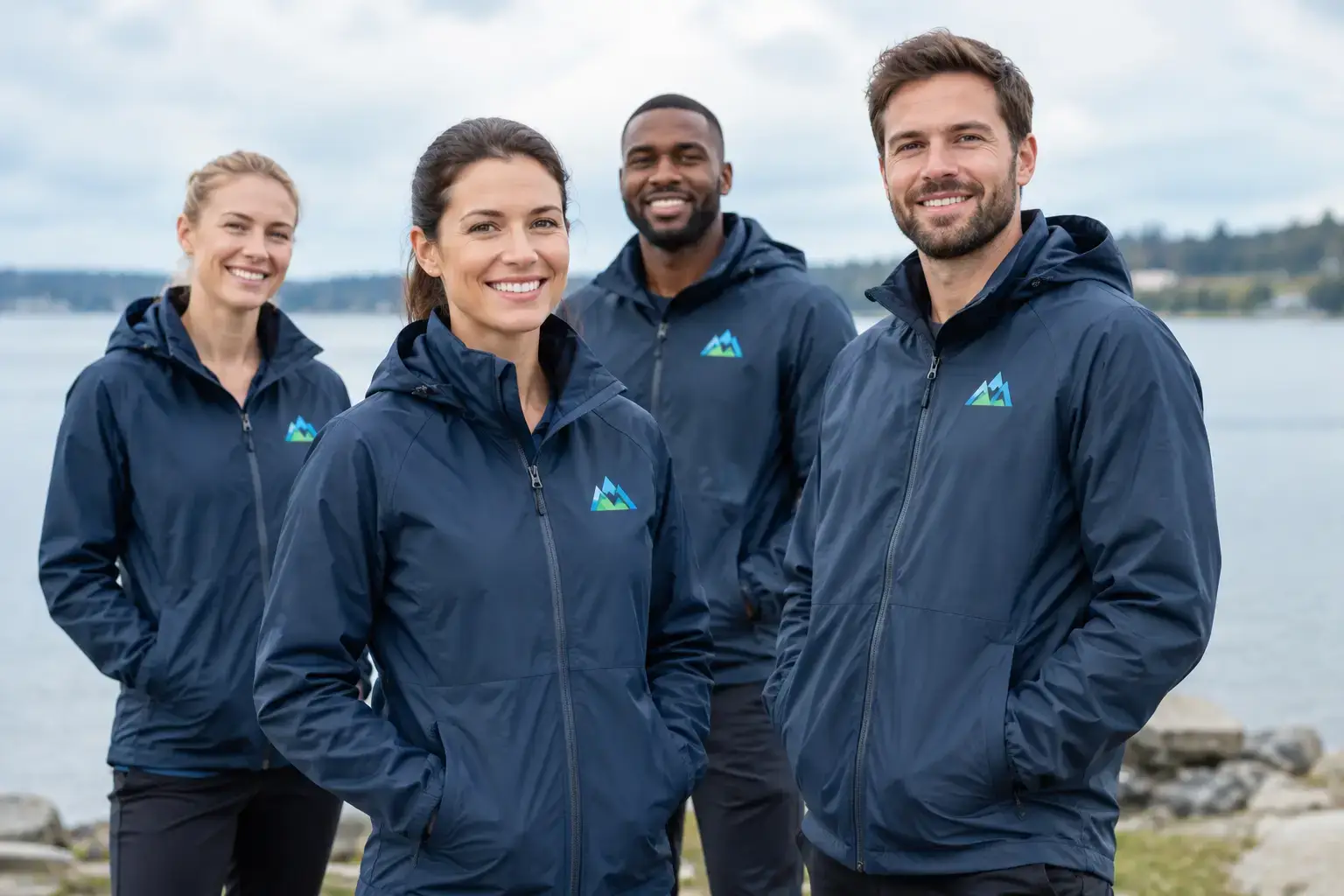
For many company outerwear programs, the strongest solution is simple: use a small, well-placed logo on the left chest, sleeve, or upper back. It keeps the brand visible without covering a large portion of the technical fabric.
Choose Logo Placement With Function in Mind
A jacket has more construction details than a basic shirt. Zippers, storm flaps, chest pockets, reflective tape, seam taping, hood adjustments, and ventilation features all affect where artwork can go.
The left chest remains a popular location because it is familiar, professional, and easy to recognize from a conversational distance. Still, it is not always available. A vertical zipper, utility pocket, or waterproof flap may make a sleeve logo or upper-back placement more practical.
Avoid placing artwork across areas that bend heavily, such as elbows, side panels, or the lower back. Also keep graphics clear of seams and taped seam lines whenever possible. These areas can create uneven pressure during printing and may affect how the design wears over time.
Before production, review a digital proof that shows the logo size and exact position on the selected jacket. A proof is not just a formality. It is the opportunity to confirm that a small logo will remain legible, that a back design is centered, and that the artwork does not interfere with useful garment features.
Prepare Artwork for a Clean, Durable Result
Technical outerwear often benefits from clean, confident artwork. Fine lines and tiny type may reproduce poorly on textured or lightweight shells, particularly when viewed from a distance. Simplifying a complex mark can improve both readability and durability.
For a smoother production process, provide the best version of your logo available. Vector files are ideal for many decoration methods because they can scale without losing clarity. If only a raster image is available, a high-resolution file gives the production team a stronger starting point.
Before approving waterproof jacket printing, confirm these practical details:
- The logo colors and any required brand color standards.
- The preferred decoration location and approximate size.
- Whether employee names, departments, or location identifiers are needed.
- The jackets’ fabric content, care instructions, and weather-performance features.
- The expected use, from event giveaways to daily outdoor work.
These details help determine whether a one-color print, multi-color transfer, embroidery, or a different garment selection will deliver the best long-term value.
Consider the Entire Outerwear Program
A jacket program works best when it supports the way your organization operates. If new hires need the same outerwear throughout the year, choose a style with reliable availability and a decoration approach that can be repeated consistently. If teams work across regions, consider whether one jacket can handle the climate or whether a layered system is more practical.
A branded waterproof shell can pair well with logoed polos, hoodies, safetywear, caps, and insulated layers. This gives employees a coordinated look without forcing one garment to handle every temperature and job condition. It also makes reorders simpler when the logo placement, thread or ink colors, and approved artwork are documented from the start.
For larger programs, consistency matters as much as the first order. Employees should receive the same professional presentation whether they are part of a five-person service team or a multi-location operation. Working with a domestic decorator that controls production, proofing, and quality review can reduce uncertainty when deadlines and brand standards matter.
Care Instructions Matter After Delivery
Even a well-decorated jacket needs proper care. Follow the manufacturer’s care label, especially for technical shells with water-repellent finishes. High heat, harsh detergents, fabric softeners, and aggressive washing can affect both the jacket’s performance and its decoration.
Employees should avoid ironing directly over a printed logo and should report any damage early, particularly for jackets used in demanding work environments. For company programs, sharing simple care guidance with the order helps protect the investment and keeps the outerwear looking uniform longer.
LOGO USA helps businesses match trusted outerwear with decoration methods designed for the job, the logo, and the people wearing it. Choose the jacket for the weather first, then build a decoration plan that keeps your brand looking sharp every time the forecast turns.
Popular Blogs

Screen Print Uniforms That Look Professional
November 27, 2026