Promotional Apparel That Works Beyond the Giveaway
- November 21, 2026
- 2:45 am
A box of logoed shirts is not a branding strategy. The promotional apparel that delivers real value is the apparel people reach for on a busy workday, wear to a customer meeting, and keep in rotation long after an event ends. That requires more than adding a logo to the lowest-cost garment. It takes thoughtful product selection, clean decoration, dependable sizing, and a plan that fits the people who will wear it.
For businesses, organizations, and teams, branded apparel has a practical job to do. It should create a polished, consistent appearance while giving recipients something useful and comfortable. When those goals are met, every wear becomes another positive brand impression.
What Promotional Apparel Should Accomplish
Promotional apparel can serve very different purposes. A lightweight event T-shirt may be exactly right for a 5K, volunteer day, or product launch. A durable embroidered polo makes more sense for customer-facing staff. A safety vest, work jacket, or insulated outerwear piece may be essential for a field crew rather than a promotional extra.
The strongest programs begin by defining the job of the garment. Ask where it will be worn, how often it will be washed, whether employees need to layer it, and what kind of impression it needs to make. A uniform program needs consistency and easy reordering. A trade show giveaway needs broad appeal and an appropriate cost per piece. Executive gifts call for recognized brands, refined decoration, and materials that feel worth keeping.
Cost matters, but cost per wear is often the better measure. A shirt that costs less but stays in a drawer does not create much value. A quality sweatshirt, cap, or jacket that becomes a favorite can represent your company for years.
Start With the Wearer, Not the Logo
It is tempting to select a garment based on what looks best in a catalog. A more reliable approach is to consider the recipient first. Their work environment, climate, movement, and personal preferences should guide the choice.
For employee uniforms
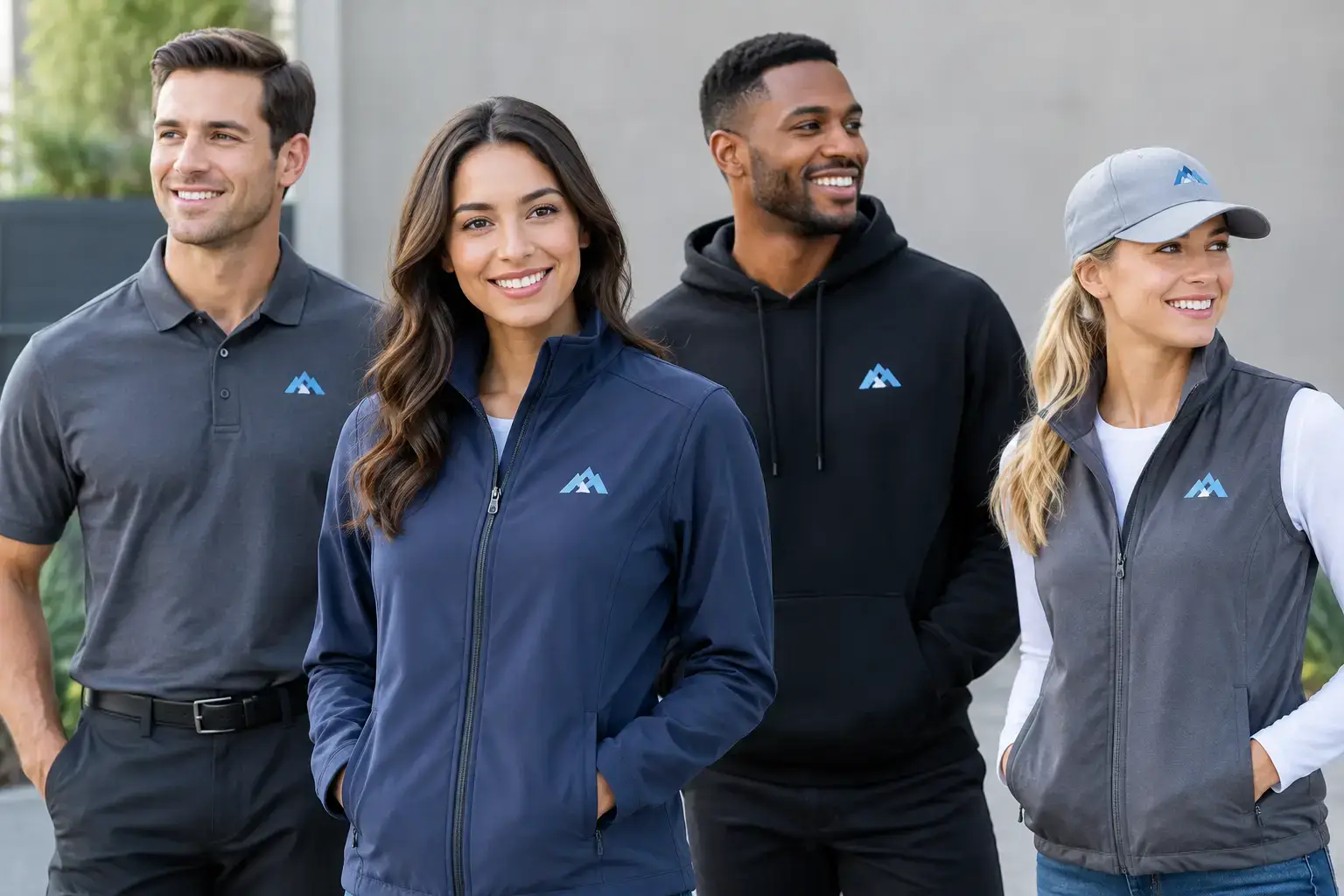
Employees who interact with customers need apparel that looks professional through a full shift. Polos, button-downs, quarter-zips, work shirts, and outerwear can create a unified appearance without making everyone feel like they are wearing the same stiff uniform. Choose practical colors that complement your logo and hold up well between washes.
For active roles, fabric performance matters. Moisture-wicking polos can help teams stay comfortable in warm conditions. Durable workwear is a better fit for crews that deal with tools, equipment, or physical labor. Safetywear should meet the visibility needs of the job first, then carry clear branding where appropriate.
For events and promotions
Event apparel needs an immediate visual impact, but comfort still determines whether it gets worn again. Soft cotton blends, modern fits, and useful layers tend to have more staying power than thin, boxy garments selected only for a low unit price.
Think beyond the event date. If a large graphic includes a date, sponsor list, and multiple messages, it may work for participants but have limited life afterward. A simpler design with a strong logo or campaign message often earns more repeat wear.
For client gifts and leadership teams
Premium branded apparel is an effective choice when the goal is appreciation rather than mass distribution. Well-known options from brands such as Carhartt, The North Face, OGIO, Richardson, and TravisMathew can help position the gift as something selected with care. Embroidery is often the preferred decoration for these pieces because it provides a polished, lasting finish.
Choose Apparel People Will Want to Wear
Fit is one of the most overlooked details in promotional apparel. A garment can have excellent embroidery and a sharp logo, but it will not get much use if the cut is uncomfortable or the sizing range is too narrow. Review size charts early, consider men’s, women’s, and unisex options where appropriate, and build a size run that reflects your actual team or audience.
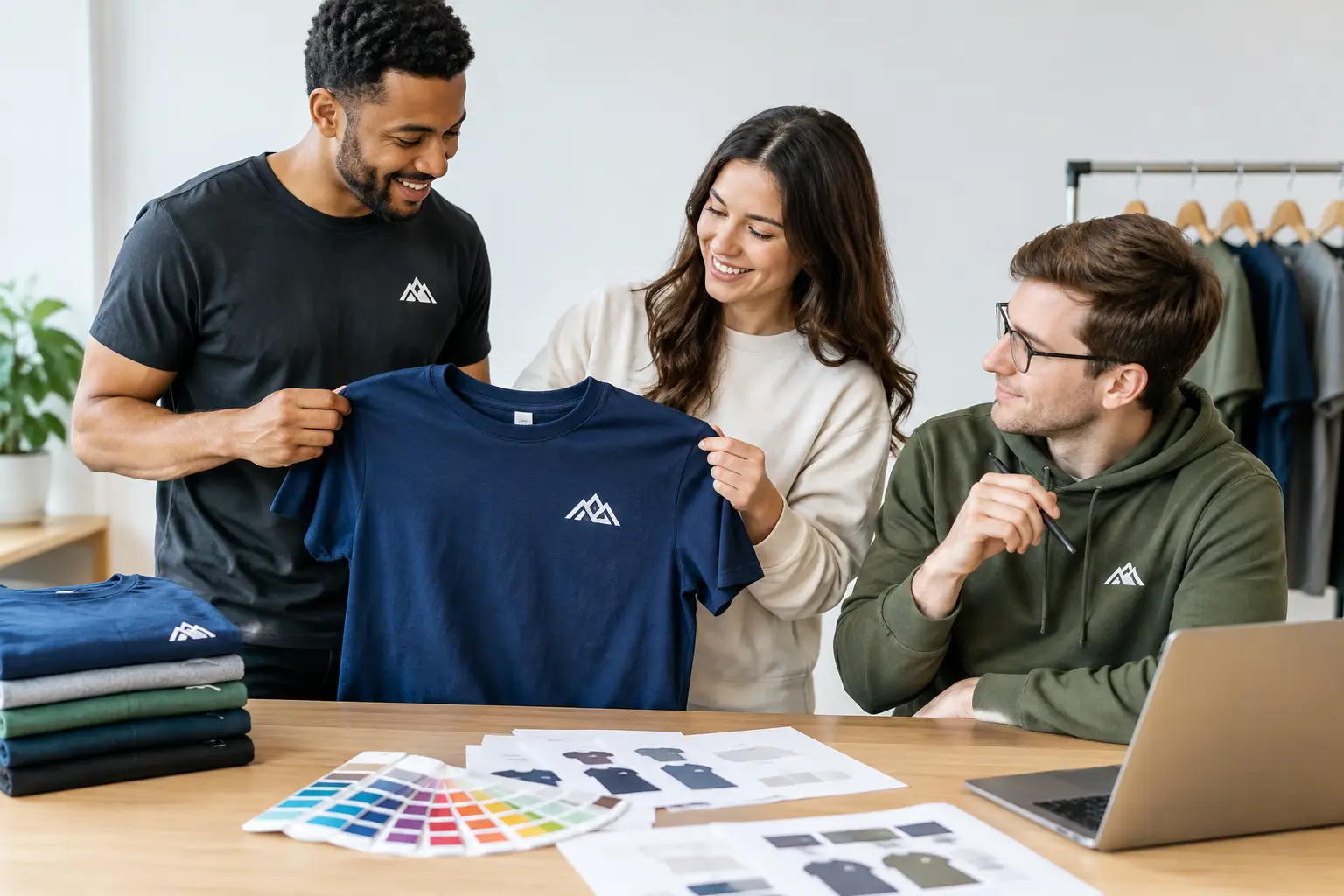
Color deserves the same attention. Brand colors are useful, but they are not always the best choice for every garment. A bright logo may stand out more clearly on black, charcoal, navy, or heather gray than on a shirt that matches it too closely. Neutral garment colors also make reorders easier as teams grow and roles change.
Fabric selection should match the assignment. Cotton feels familiar and works well for many casual T-shirts. Blends can offer softness, durability, and better shape retention. Performance fabrics suit active staff and outdoor events. Fleece and insulated layers provide more perceived value, especially for company stores, seasonal gifts, and cold-weather crews.
Do not assume one product must serve everyone. A single company may need polos for sales staff, work shirts for operations, outerwear for field teams, and T-shirts for a community event. The goal is a consistent brand presentation, not a one-garment solution.
Match Decoration to the Garment and Design
The decoration method affects appearance, durability, and budget. It should be decided alongside the garment, not after the order is built.
Embroidery is a strong choice for polos, caps, jackets, quarter-zips, bags, and many uniform pieces. It adds texture and a premium finish that holds up well over time. Small logos with clean shapes generally translate best. Fine text, gradients, and intricate photographic artwork may need to be simplified before digitizing.
Screen printing is often ideal for T-shirts, sweatshirts, event apparel, and designs with larger artwork. It provides bold color and can be especially efficient for higher quantities. The number of ink colors, print locations, and garment color all influence production requirements and pricing.
Placement also changes the feel of the finished item. A left-chest logo is a familiar professional standard. A full back print increases visibility for events and crews. Sleeve printing can add a distinctive detail, but should support the design rather than compete with it. Before production, confirm the digital proof carefully. Check spelling, logo proportions, thread or ink colors, and placement on the actual garment color.
Plan the Order Before the Deadline Gets Close
Promotional apparel programs run more smoothly when product decisions and artwork approval happen before the event calendar creates pressure. Allow time for product selection, artwork preparation, proof review, and production. If you need a specific brand, color, or size range, planning ahead also gives you better flexibility if inventory shifts.
For an initial order, provide the best available logo file and be clear about how the items will be distributed. A named employee order requires accurate sizes. A giveaway requires a practical range of popular sizes and some extra capacity for last-minute needs. For recurring programs, retain approved artwork and product details so reorders stay consistent.
Working with an experienced decorator can reduce avoidable surprises. At LOGO USA, in-house embroidery, digitizing, screen printing, graphic design support, and digital proofing keep critical production steps under close control. Once art is approved, standard production can move quickly, with many orders produced in 7-10 business days.
Avoid the Mistakes That Make Apparel Forgettable
Most disappointing apparel orders are not caused by one major error. They come from small decisions that add up: a logo that is too large, a garment that does not suit the wearer, an art file that was never reviewed closely, or an order placed without enough time to make thoughtful choices.
Keep the design focused. A logo should be easy to recognize from a reasonable distance, and the decoration should fit the scale of the garment. Make comfort a requirement, not a bonus. Finally, order samples or review product details when the apparel will represent your brand in a high-visibility setting. The right item is easier to recognize when you can evaluate its weight, fit, and finish before committing to a larger program.
Build a Program That Is Easy to Repeat
For growing companies, promotional apparel becomes more effective when it is treated as an ongoing brand system. Establish a core collection of approved garments, colors, and logo treatments for different needs. This gives departments a clear starting point while preserving a consistent appearance across locations, seasons, and employee roles.
A company apparel store can make this even easier for teams with regular onboarding, multiple offices, or distributed employees. Rather than collecting sizes and orders manually every time, approved items can be organized for the people who need them. It is a practical way to maintain brand standards without making every reorder a new project.
The best promotional apparel does not feel promotional to the person wearing it. It feels useful, comfortable, and appropriate for the day ahead. Choose pieces with that standard in mind, and your logo will earn visibility because people genuinely want to put it on.
Popular Blogs
Promotional Apparel That Works Beyond the Giveaway
November 21, 2026