A Workwear Branding Guide for Businesses
- August 7, 2026
- 2:31 am
A crew that arrives in clean, consistent branded workwear looks prepared before the first handshake, service call, or jobsite walk-through. This workwear branding guide for businesses helps you make the decisions that turn basic employee apparel into a reliable part of your brand presentation.
Workwear needs to do more than carry a logo. It has to hold up to the actual job, fit a range of employees, meet safety requirements where needed, and look polished after repeated washing. The right program makes ordering easier, protects brand consistency, and gives employees apparel they are comfortable wearing.
Start With the Job, Not the Garment
The most effective workwear program begins with how your team works. A warehouse crew, restaurant staff, sales team, construction company, and field service operation may all need branded apparel, but they do not need the same garments or decoration methods.
Consider the environment first. Employees who work outdoors may need insulated jackets, water-resistant outerwear, caps, and layering pieces. Teams in hot warehouses or active service roles often benefit from breathable polos, moisture-wicking shirts, and lightweight caps. For office-facing staff, structured polos, quarter-zips, and button-down shirts can create a more elevated appearance without feeling overly formal.
Durability should be tied to the job, not assumed from the price tag. Heavier fabrics, reinforced stitching, and established workwear brands are often worth the investment for teams that move equipment, work on jobsites, or wear uniforms five days a week. A lower-cost tee can be the better choice for a one-day event or seasonal promotion. The goal is to buy apparel that earns its place in the program.
Build a Practical Workwear Branding Guide for Businesses
A consistent program does not require every employee to wear the exact same item. It requires clear standards. Start by defining the core pieces that represent your company across roles, then add options based on climate, job function, and employee preference.
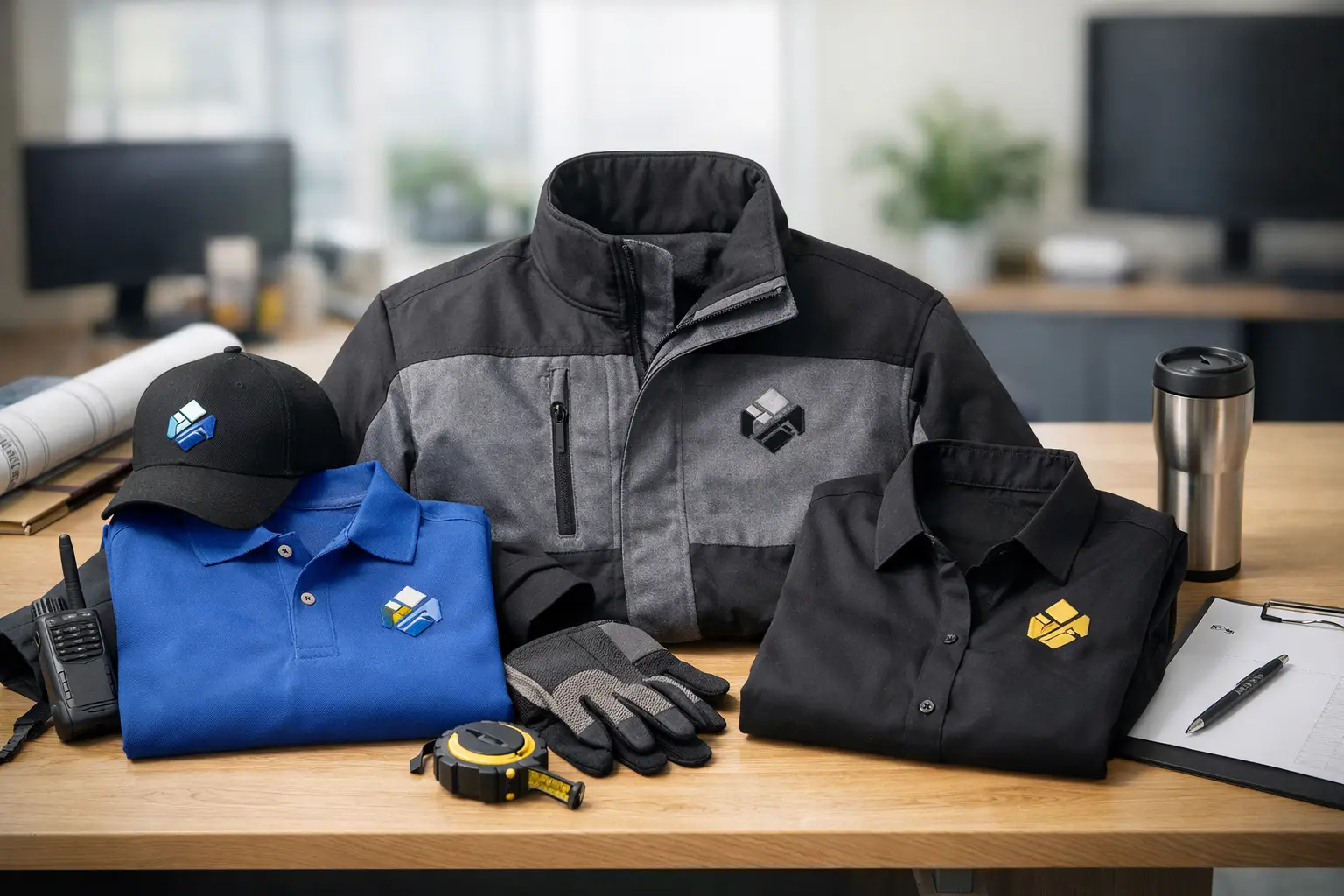
For many businesses, a strong foundation includes a branded polo or work shirt, a layering piece such as a sweatshirt or quarter-zip, outerwear for changing weather, and a cap or beanie where appropriate. This gives employees practical choices while keeping the logo, colors, and overall look aligned.
It also helps to separate everyday uniforms from promotional apparel. A premium embroidered jacket may be right for customer-facing managers and long-service recognition. Screen-printed tees can be ideal for volunteer events, company outings, recruiting campaigns, and large team orders. Both support your brand, but they serve different operational and budget needs.
Choose colors employees will actually wear
Brand colors matter, but the exact shade of your logo does not always need to become the garment color. A bright corporate color may look sharp as embroidery on a charcoal, navy, black, or gray work shirt. Neutral garment colors are easier to coordinate, more forgiving in hands-on environments, and often make a logo easier to read from a distance.
If safetywear is part of the program, visibility requirements should lead the decision. High-visibility colors, reflective detailing, and compliant garment options may be necessary for roadside, construction, warehouse, or industrial teams. Your logo treatment should support visibility rather than compete with it.
Keep logo placement purposeful
The left chest remains the most versatile placement for embroidered polos, button-downs, jackets, and work shirts. It is professional, recognizable, and usually works well with a wide range of logo shapes. A full-back print can add impact for field crews, delivery teams, and event staff when identification from behind matters.
Sleeve decoration can work well for a secondary mark, department name, or campaign message, but it should not become clutter. Too many marks can make apparel feel promotional instead of professional. In most cases, one primary logo and one supporting detail are enough.
Before production, review a digital proof carefully. Confirm the logo size, thread or ink colors, placement, spelling, and garment color. A proof is where a polished concept becomes an approved production plan, so it deserves attention from the person responsible for your brand standards.
Match the Decoration Method to the Apparel
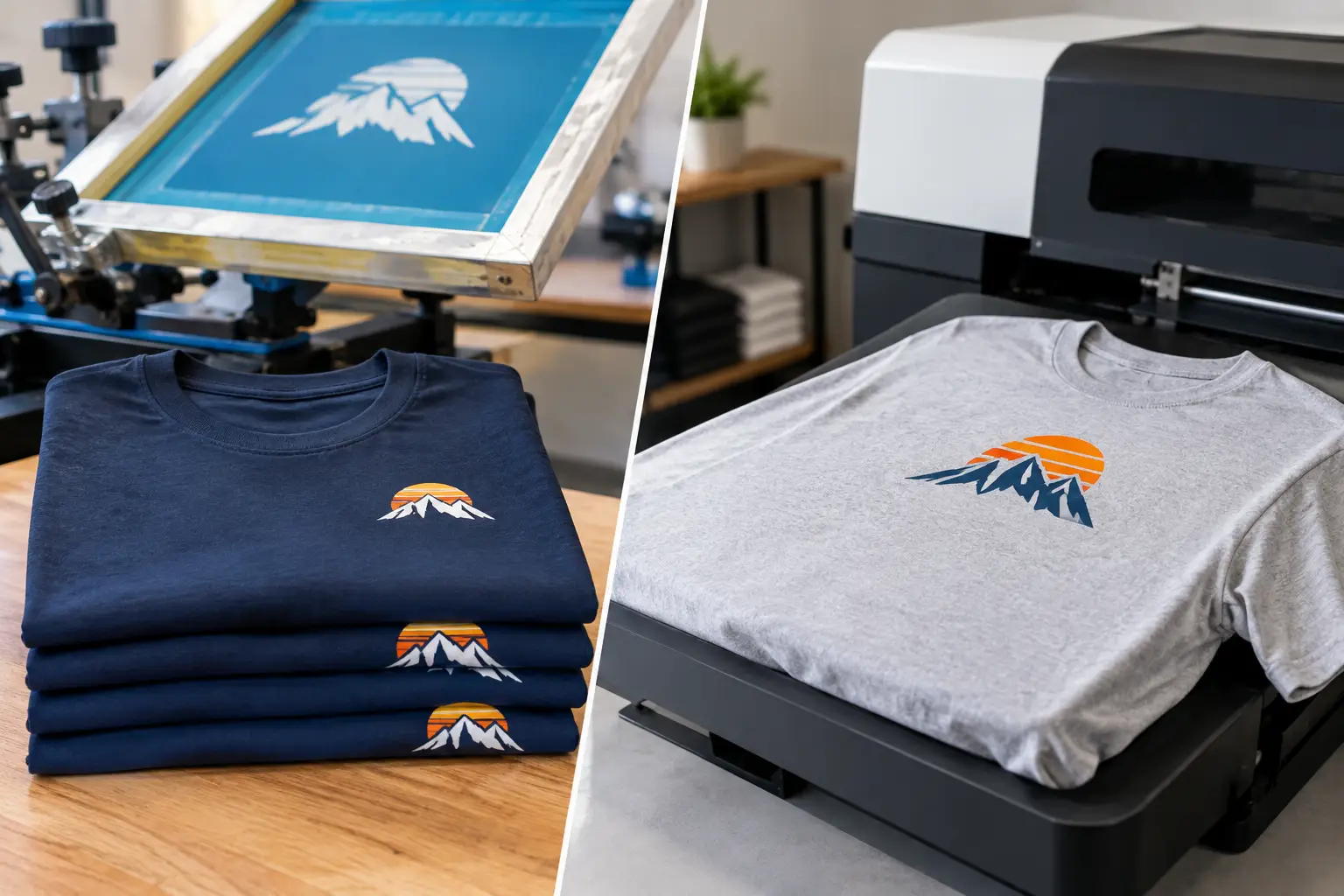
Embroidery and screen printing are not interchangeable. Each has strengths, and the best choice depends on the garment, logo design, quantity, and intended use.
Embroidery creates a dimensional, premium finish that is especially well suited to polos, caps, fleece, outerwear, work shirts, and bags. It stands up well to regular wear and gives uniforms a more established appearance. Fine details and very small text may need to be simplified during digitizing so the stitched result remains clean and legible.
Screen printing is a smart choice for larger artwork, bold graphics, event shirts, and higher-quantity orders. It lays flat on the garment and can reproduce broad areas of color efficiently. It is often the better option for tees and sweatshirts, particularly when the logo includes a large back design or a message beyond the company name.
There are trade-offs. Embroidery can add weight on lightweight fabric and may not suit highly detailed artwork. Screen printing can be less appropriate for some outerwear or small chest logos. A knowledgeable decoration partner can recommend the method that protects both the garment and the design rather than forcing one approach onto every item.
Plan Sizes, Quantities, and Reorders Before You Need Them
Sizing is where many uniform orders become difficult. Avoid ordering only around a few sample sizes or relying on guesses from a prior supplier. Use current size information, account for new hires, and consider how the garment is intended to fit. Workwear may need room for movement or layering, while customer-facing apparel may call for a more tailored option.
Build a modest reorder plan into the original order. Keep approved garment styles, colors, logo files, decoration locations, and thread or ink colors on record. When a new employee starts or an existing item wears out, your team should be able to reorder without reopening every design decision.
For larger organizations, an approved apparel assortment is especially valuable. Limit choices enough to protect consistency, but give departments the flexibility they need. A field technician may require a work jacket and performance polo, while an office coordinator may prefer a quarter-zip and branded tote. Both can look like part of the same company.
Set Standards That Employees Can Follow
A workwear policy does not need to be complicated, but it should answer practical questions. Define which items are required, when they are worn, how employees should care for them, and whether personal additions or alternate garments are allowed. Clear expectations prevent a uniform program from slowly becoming a collection of mismatched logo wear.
Care instructions deserve a place in the process. Employees should know whether garments should be washed inside out, kept out of high heat, or treated differently because of reflective material or embroidery. Good apparel lasts longer when people understand how to care for it, which protects your investment and keeps the team looking consistent.
Managers should also have a process for replacing damaged or heavily worn items. Uniforms communicate standards. A faded logo, stained shirt, or worn-out jacket may be a normal result of hard work, but it should be replaced before it becomes the public face of the company.
Work With a Production Partner That Can Scale
A dependable supplier should make the process easier from garment selection through proof approval and production. Look for strong apparel options, clear communication, experienced artwork support, and control over decoration quality. Fast turnaround matters, but accuracy matters just as much when your logo will be worn in front of customers every day.
LOGO USA supports businesses with in-house embroidery, digitizing, screen printing, and digital proofing from a US-based production facility. That gives teams a practical path from an uploaded logo to decorated apparel built for everyday use, whether the need is a straightforward staff order or an ongoing company apparel program.
The best workwear does not ask employees to become walking billboards. It gives them useful, comfortable gear that reflects the pride you want customers to see. Start with the work your team does, make a few clear branding decisions, and create a program that is ready for the next hire, the next season, and the next opportunity to make a strong impression.
Popular Blogs
What File Formats Does Embroidery Accept?
October 12, 2026