Why Is Embroidery More Expensive Than Printing?
- July 30, 2026
- 2:25 am
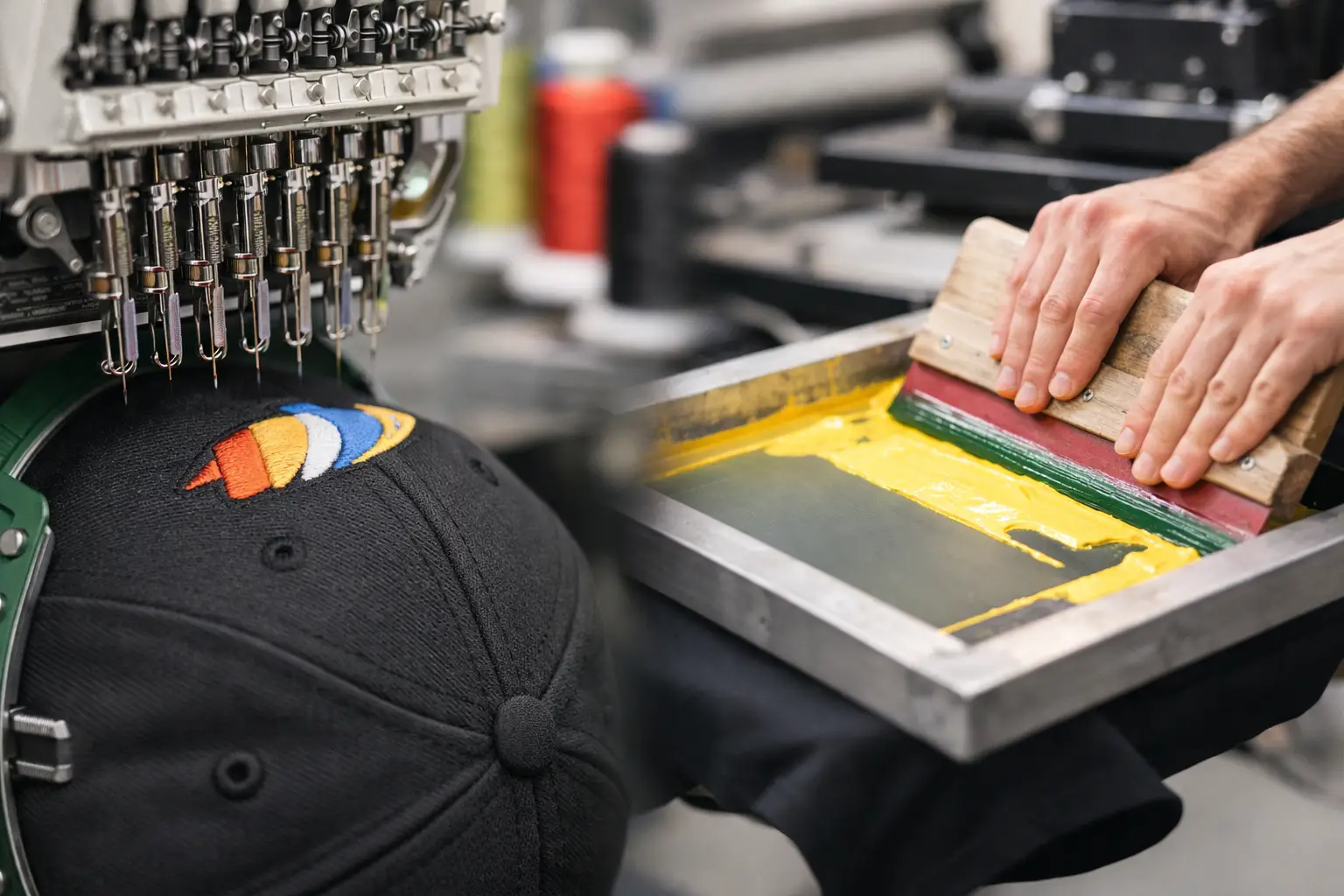
An embroidered logo can make a polo, jacket, cap, or work shirt look immediately more established. That polished, dimensional finish is also why is embroidery more expensive than many printed decoration methods. The price reflects more than the thread itself. It accounts for the preparation, machine time, skilled production, and quality control required to turn your artwork into a durable stitched design.
For businesses ordering employee uniforms, event apparel, or client-facing merchandise, the better question is not simply whether embroidery costs more. It is whether its professional appearance, long-term wear, and brand impact make it the right investment for the garment and purpose.
Why Is Embroidery More Expensive?
Embroidery is a production process, not a surface application. A logo is built stitch by stitch with commercial embroidery equipment, using thread that is physically sewn into the garment. Before production begins, the artwork must be prepared for that process, then every item must be hooped, embroidered, trimmed, inspected, and finished.
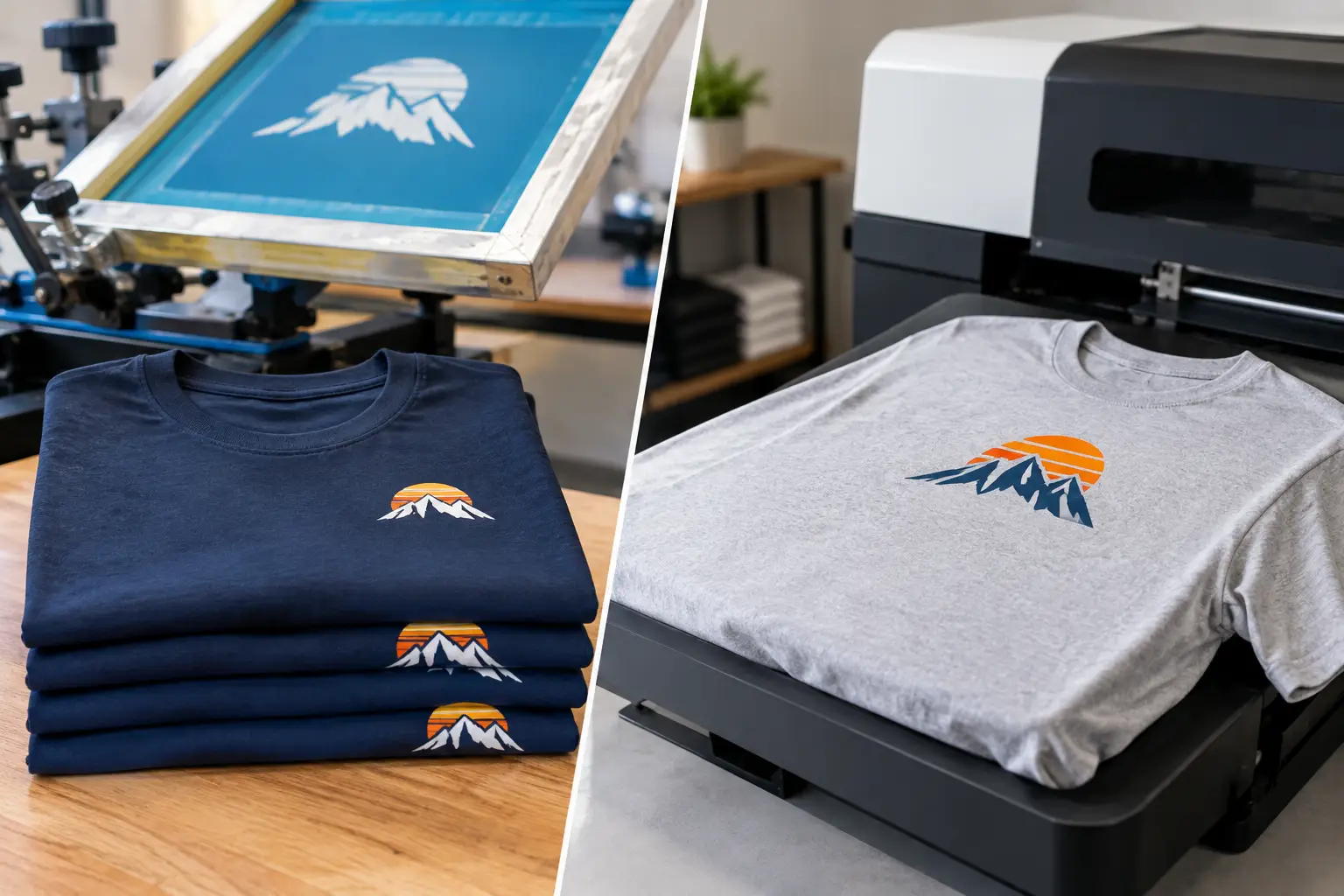
Screen printing can be highly efficient for large runs of shirts with the same design, especially when the artwork is broad and flat. Embroidery is often better suited to left-chest logos, hats, outerwear, bags, workwear, and premium uniform programs where texture and durability matter. Each method has a place. The cost difference comes from how the work is performed and how much machine time each logo requires.
Your Logo Must Be Digitized First
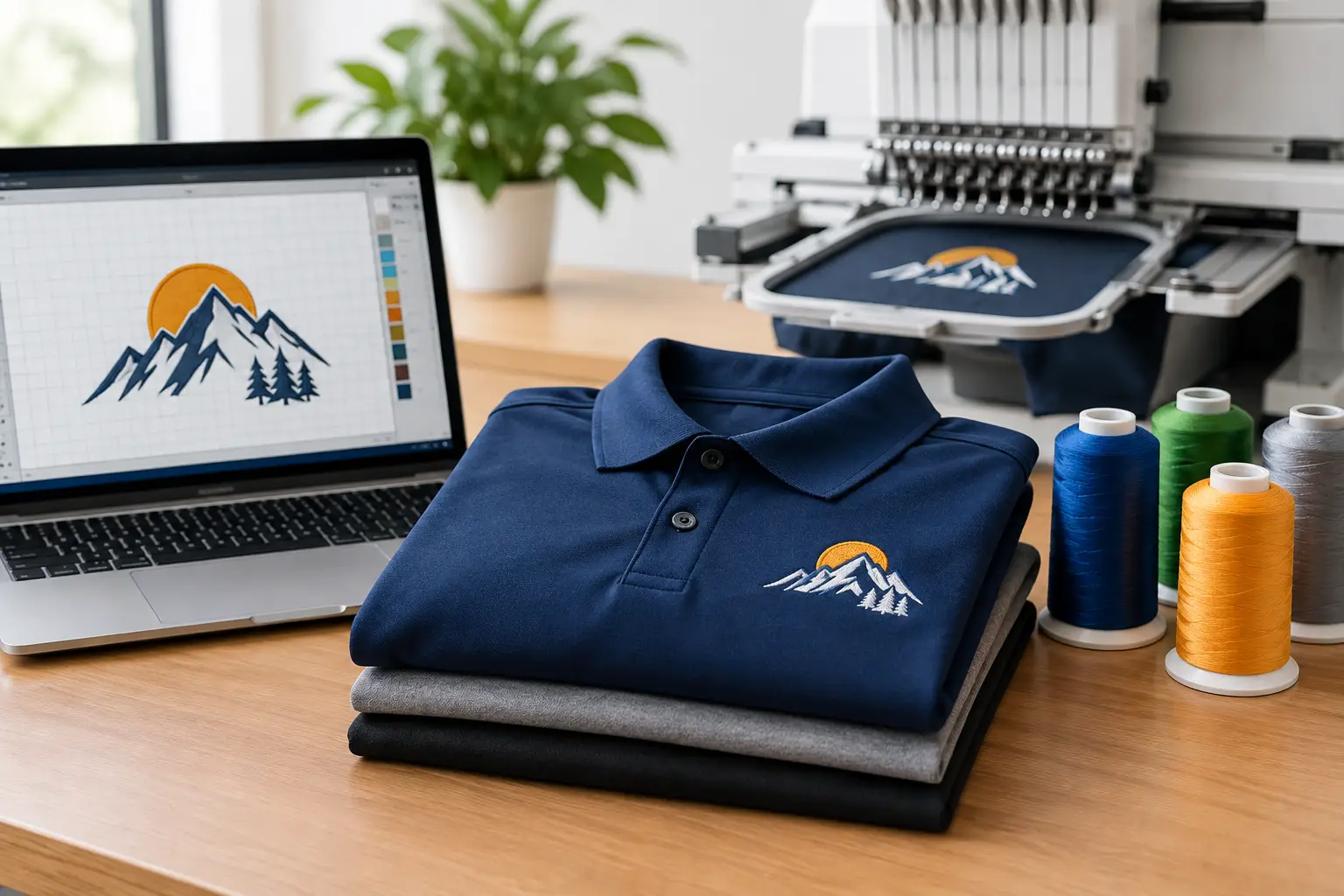
Embroidery machines do not read a standard JPG, PNG, PDF, or vector file the way a printer reads artwork. A digitizer creates a specialized stitch file that tells the machine where each stitch goes, what direction it runs, where thread colors change, and how the design should be layered.
This is not an automatic conversion. A skilled digitizer has to account for the logo’s fine details, the type of fabric, lettering size, stitch density, and pull compensation. Pull compensation helps prevent fabric movement from distorting the finished logo. The goal is a design that remains crisp and recognizable once it is sewn onto a real garment.
Digitizing is typically a one-time setup cost for a new logo or a significantly revised design. It can feel like an added expense on a first order, but approved files can often be used again for future orders, making reorders more efficient.
Stitch Count Drives Machine Time
The biggest factor in embroidery pricing is usually stitch count. A simple left-chest logo with a few thousand stitches takes much less time than a large, detailed logo with dense fills, multiple colors, or small lettering.
Commercial embroidery machines run quickly, but they still need time to complete every stitch accurately. A design with 12,000 stitches requires considerably more production time than one with 4,000 stitches. Thread changes, trimming between elements, and machine stops can add time as well.
This is why two logos that look similar in size may not cost the same to embroider. A clean wordmark or simple icon may stitch efficiently. A logo with large solid areas, gradients recreated in thread, intricate borders, or layered details may require a far higher stitch count.
Every Garment Requires Hands-On Setup
Before the machine begins, each garment must be positioned in a hoop or secured with a specialized backing system. The operator aligns the placement so the logo sits consistently from piece to piece. For a company uniform program, that consistency matters. A logo placed too high, too low, or off-center can undermine an otherwise professional garment.
The garment type affects this process. A stable pique polo is generally straightforward compared with a thick insulated jacket, a stretchy performance fabric, a structured cap, or a backpack with seams and pockets. Different materials may require different stabilizers, needles, hooping methods, and operator attention.
After embroidery, excess backing and thread need to be trimmed, and each item is inspected. These finishing steps are part of delivering apparel your employees will be proud to wear, not simply getting a logo onto fabric.
Design Choices That Affect Embroidery Cost
If controlling cost is a priority, the artwork and placement can make a meaningful difference without sacrificing brand presentation. The strongest embroidery designs are often clear, intentional, and scaled for the garment.
Small text is one common challenge. Lettering that looks sharp on a screen may become difficult to read when stitched at a small left-chest size. Enlarging the logo, simplifying a tagline, or using a logo version designed for embroidery can improve readability while reducing unnecessary stitch density.
Large filled areas also increase cost. Thread is excellent for outlines, lettering, and compact marks, but it is not always the most economical choice for a large graphic across the front of a T-shirt. In that case, screen printing may deliver the visual result more efficiently. For a premium jacket or polo, a compact embroidered chest logo often provides the best balance of impact and cost.
Placement matters too. A standard left-chest location is generally more efficient than multiple embroidered locations, oversized back designs, or hard-to-access areas. Caps and bags can be excellent embroidery choices, but their construction may require specialized handling.
Quantity Changes the Per-Item Price
Embroidery includes both fixed preparation work and per-garment production work. Digitizing, setup, testing, and proofing are spread across the order quantity. That means a 12-piece order often has a higher per-item decoration cost than a 100-piece order using the same logo.
Quantity does not eliminate stitch time, however. Each garment still needs to be loaded, stitched, finished, and checked. A large, high-stitch design will remain more expensive per piece than a small, simple logo, even at higher quantities.
For organizations with recurring hiring, seasonal uniforms, or multiple locations, planning ahead can help. Standardizing a logo size, approved thread colors, and core garment styles makes reorders faster and helps maintain a consistent look across the program.
When Embroidery Is Worth the Investment
Embroidery is often the right choice when apparel must look polished over repeated wear. It is particularly well suited for employee polos, executive apparel, hospitality uniforms, construction and field-service workwear, branded outerwear, caps, and durable bags.
The stitched finish has depth that printed ink cannot fully replicate. It holds up well on heavier garments and gives customers, employees, and prospects a tactile signal that your company takes its presentation seriously. For client-facing teams, that impression can justify the higher upfront cost.
That said, embroidery is not automatically the premium answer for every item. Large promotional T-shirt runs, full-front event graphics, detailed photographic artwork, and designs with fine color transitions may be better candidates for screen printing. Choosing the correct decoration method for the garment prevents paying for detail that will not improve the final result.
How to Get Better Value From an Embroidered Order
Start with the intended use of the apparel. If the garments are everyday uniforms or premium outerwear, choose a durable piece from a recognized brand and use a logo size that reads clearly at a normal viewing distance. If they are giveaway shirts for a large event, consider whether printing better matches the budget and design.
Provide the cleanest logo artwork available, ideally in a vector format when possible. This gives the digitizing team a better starting point and reduces uncertainty around colors and fine details. Be open to production recommendations when a tagline is too small or an element needs adjustment for stitching. Those recommendations protect the finished appearance of your brand.
At LOGO USA, in-house digitizing and USA-based production allow the art, proofing, and production process to stay closely coordinated. Once artwork is approved, a well-planned order can move from proof to production with clear accountability at every stage.
Embroidery costs more because it is built to last, one precise stitch at a time. Choose a logo treatment that fits the garment, the audience, and the life of the program, and the finished apparel will do more than carry your name – it will represent your business well every time it is worn.
Popular Blogs
What File Formats Does Embroidery Accept?
October 12, 2026