

A Practical Guide to Branded Workwear Selection
- July 16, 2026
- 2:03 am
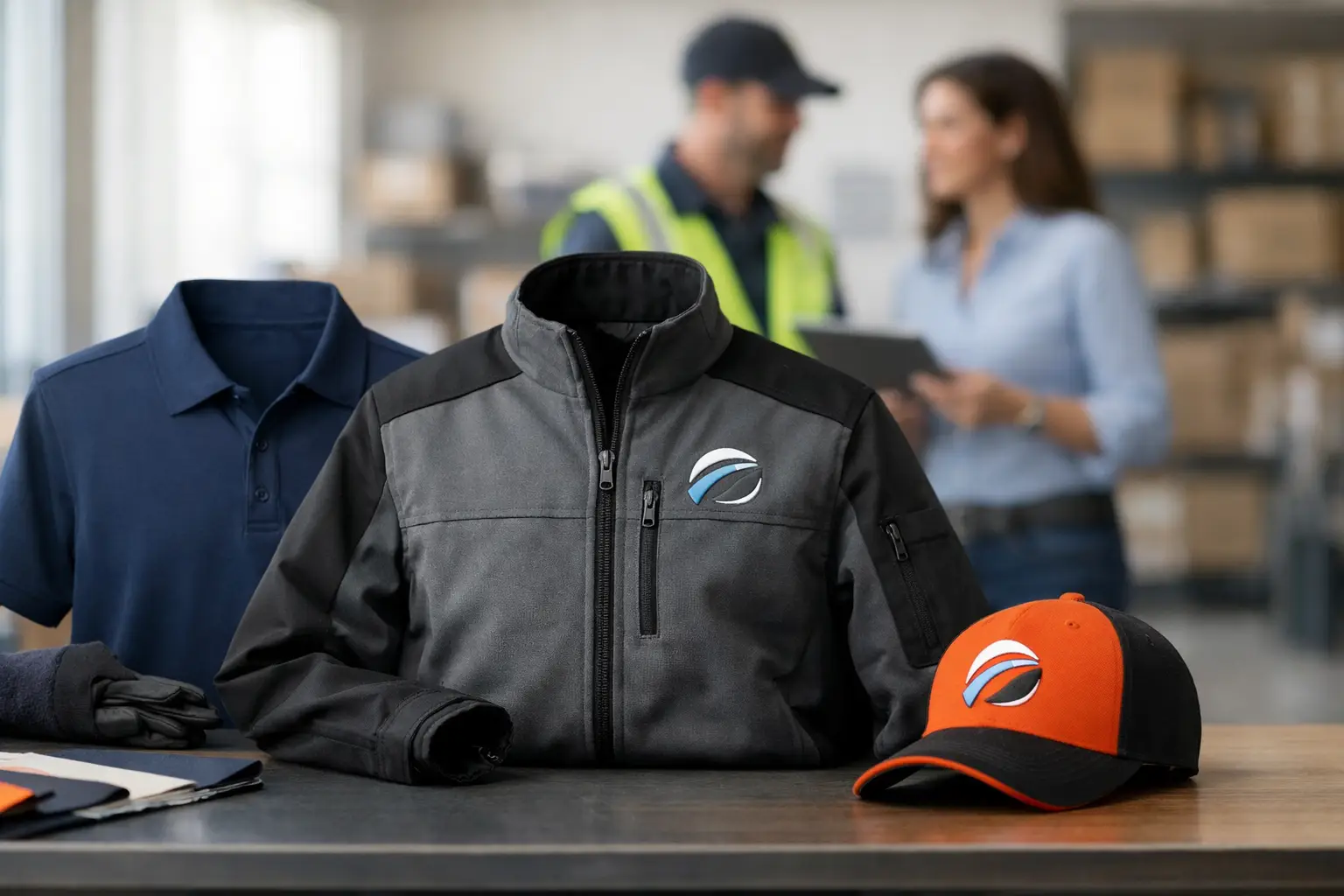
A field technician arriving at a customer site in a faded, poorly fitting shirt sends a different message than one arriving in clean, durable apparel with a crisp embroidered logo. Workwear is not just a uniform expense. It is a daily, visible part of your company’s reputation. This guide to branded workwear selection will help you choose apparel that stands up to the job while presenting your team with consistency and confidence.
Start With the Work, Not the Catalog
The right workwear begins with a clear view of where and how your employees spend their day. A warehouse crew, a construction team, a property management staff, and a client-facing service department may all need branded apparel, but they do not need the same garments.
Consider the conditions first. Employees working outdoors may need insulated outerwear, weather-resistant shells, and layered options for changing temperatures. Teams in active industrial environments may need high-visibility colors, reflective accents, durable fabrics, and garments that allow comfortable movement. Office-adjacent staff may be better served by polished polos, quarter-zips, or button-down work shirts that look professional without feeling overly formal.
Ask managers and employees what gets in the way with current uniforms. Are shirts too warm? Do jackets restrict movement? Are pockets necessary for tools, phones, or work orders? Do garments look worn after a few washes? Those answers will point you toward practical upgrades instead of selecting apparel based only on appearance.
Define who needs what
One company-wide garment choice can simplify ordering, but it is not always the best operational decision. A single polo may work well for sales representatives and front desk staff, while installation crews need heavier shirts or work jackets. The goal is a coordinated program, not necessarily identical apparel for every role.
Build a small collection around job functions. For example, your program might include performance polos for customer-facing employees, durable tees for labor-intensive work, fleece or soft shells for cool weather, and branded caps for outdoor crews. Keeping the color palette and logo treatment consistent creates a unified look across those options.
A Guide to Branded Workwear Selection: Fabric and Durability
Fabric choice affects comfort, garment life, decoration quality, and your long-term uniform budget. Lower-cost apparel can be appropriate for a one-day event or a high-volume giveaway. For workwear that employees wear several days a week, spending more on reliable construction often delivers better value.
Cotton is familiar, breathable, and comfortable, especially for casual work tees. However, 100% cotton can shrink and may hold moisture during physically demanding work. Cotton blends offer a useful middle ground, combining a soft hand with better shape retention and durability.
Performance polyester fabrics are a strong choice for active teams, warm environments, and roles where moisture management matters. They dry quickly, resist wrinkles, and maintain color well. The trade-off is that some lightweight performance fabrics can snag more easily than traditional cotton blends, particularly around rough surfaces or equipment.
For tougher environments, look for heavyweight cotton, canvas, duck cloth, ripstop fabrics, or workwear-specific blends. These materials are designed to handle repeated washing and physical wear. Brands known for work-ready construction, such as Carhartt, can be a smart fit when durability is central to the job.
Pay attention to details that employees notice over time: reinforced seams, rib-knit collars, sturdy zippers, quality closures, and fabric weight. A garment that feels substantial and holds its shape will usually be worn more willingly and represent your brand better months after delivery.
Plan for seasons and layering
A dependable workwear program accounts for more than one weather condition. Instead of issuing one bulky jacket that may sit unused for much of the year, consider a layerable system. A branded tee or polo, a midweight sweatshirt or fleece, and a water-resistant outer layer give employees flexibility while keeping the company look consistent.
Layering also makes reorders easier. New hires can receive the core garments they need first, then add seasonal pieces when appropriate. For organizations with employees in different regions, this approach prevents teams in warmer climates from being stuck with apparel designed for colder weather.
Choose Colors That Work for the Brand and the Job
Your brand colors should guide the program, but workplace realities still matter. White shirts may look sharp in a showroom or hospitality setting, yet they are rarely practical for crews working around dirt, grease, paint, or equipment. Darker colors typically hide stains better and can extend the presentable life of a garment.
Think about visibility as well. Navy, charcoal, black, and dark green are popular workwear colors because they look professional and wear well. In lower-light settings or roadside environments, high-visibility yellow, orange, or reflective safetywear may be necessary. When safety requirements apply, they should take priority over a purely aesthetic color choice.
You do not have to place every garment in the same color. A primary company color for polos and jackets, paired with neutral work tees or pants, can look intentional and reduce replacement concerns. The key is setting clear standards so reorders remain consistent.
Match the Decoration Method to the Garment
Your logo is only as effective as its execution. Embroidery and screen printing are both proven options, but each works best in different situations.
Embroidery creates a premium, dimensional finish that is especially well suited for polos, button-down shirts, jackets, fleece, hats, and bags. It holds up well through repeat wear and laundering, making it a popular choice for uniforms and client-facing teams. Small, detailed logos may need thoughtful digitizing so fine lines and small text remain readable in thread.
Screen printing is often the better choice for t-shirts, sweatshirts, large back designs, and bold artwork. It can reproduce larger graphic elements efficiently and is a practical option for bigger quantities. Fabric type, ink color, and print placement all affect the finished result, particularly on performance fabrics or dark garments.
Placement matters as much as method. A left-chest logo is the standard for uniforms because it is recognizable without overpowering the garment. A large back print can add visibility for delivery, construction, event, or service teams. Sleeve decoration can create a polished detail, but should be used selectively so the finished piece does not look crowded.
Before production, review a digital proof carefully. Confirm spelling, logo color, placement, sizing, and garment color. This is the point to make corrections, not after a full order has been decorated.
Get Fit, Sizing, and Employee Buy-In Right
Employees are far more likely to wear workwear proudly when it fits well. Offer a practical size range and account for both men’s and women’s fits when appropriate. Unisex garments are useful for some programs, but they are not a universal solution. A more tailored option may improve comfort and presentation for customer-facing roles.
Sizing can be one of the largest sources of avoidable uniform waste. Use garment-specific size charts rather than assuming a size is consistent across brands or styles. When placing a large initial order, sample sizing or a fit session can prevent a costly wave of exchanges.
It is also worth asking a small group of employees to test key choices before a company-wide rollout. Their feedback on sleeve length, warmth, mobility, pockets, and wash performance can reveal issues that are not obvious from a product image. You still need to maintain program standards, but practical input improves adoption.
Build for Reorders, Not Just the First Order
The first order gets attention. The reorder process determines whether the program stays organized. Select styles that are likely to remain available, document approved garment colors and logo placements, and keep a record of thread or ink colors used for the program.
Avoid creating a uniform collection with too many one-off items. A focused assortment is easier for managers to administer and easier for employees to understand. It also helps maintain a professional appearance as new staff members join throughout the year.
For growing organizations, a company apparel store can simplify recurring orders by giving approved employees or departments access to pre-selected branded items. This approach can reduce back-and-forth, keep branding controlled, and make it easier to support multiple locations or job roles.
A production partner with in-house decoration also gives you better control over quality and timing. LOGO USA combines product selection, artwork support, digital proofing, embroidery, and screen printing from its US-based facility, helping businesses move from approved art to finished apparel with accountability at every step.
Set a Budget Around Value, Not Unit Price
A lower unit price can look attractive on an order sheet, but replacement costs add up when garments fade, shrink, snag, or lose their professional appearance quickly. Consider cost per wear. A durable polo that remains presentable through frequent washing may offer better value than a cheaper alternative that needs replacement after a season.
Separate your core uniform budget from promotional or event apparel when possible. Durable embroidered workwear for employees has a different purpose than giveaway tees for a trade show. Treating them as separate needs allows you to invest where daily brand representation matters most.
The best branded workwear makes employees feel prepared for the job and makes customers feel confident in the team standing in front of them. Choose garments your people will genuinely want to wear, then support them with decoration and reordering standards that keep your brand looking sharp on every shift.
Popular Blogs

How an Employee Uniform Program Builds Trust
August 31, 2026