Bulk Embroidered Polo Shirts That Work
- April 18, 2026
- 2:15 am
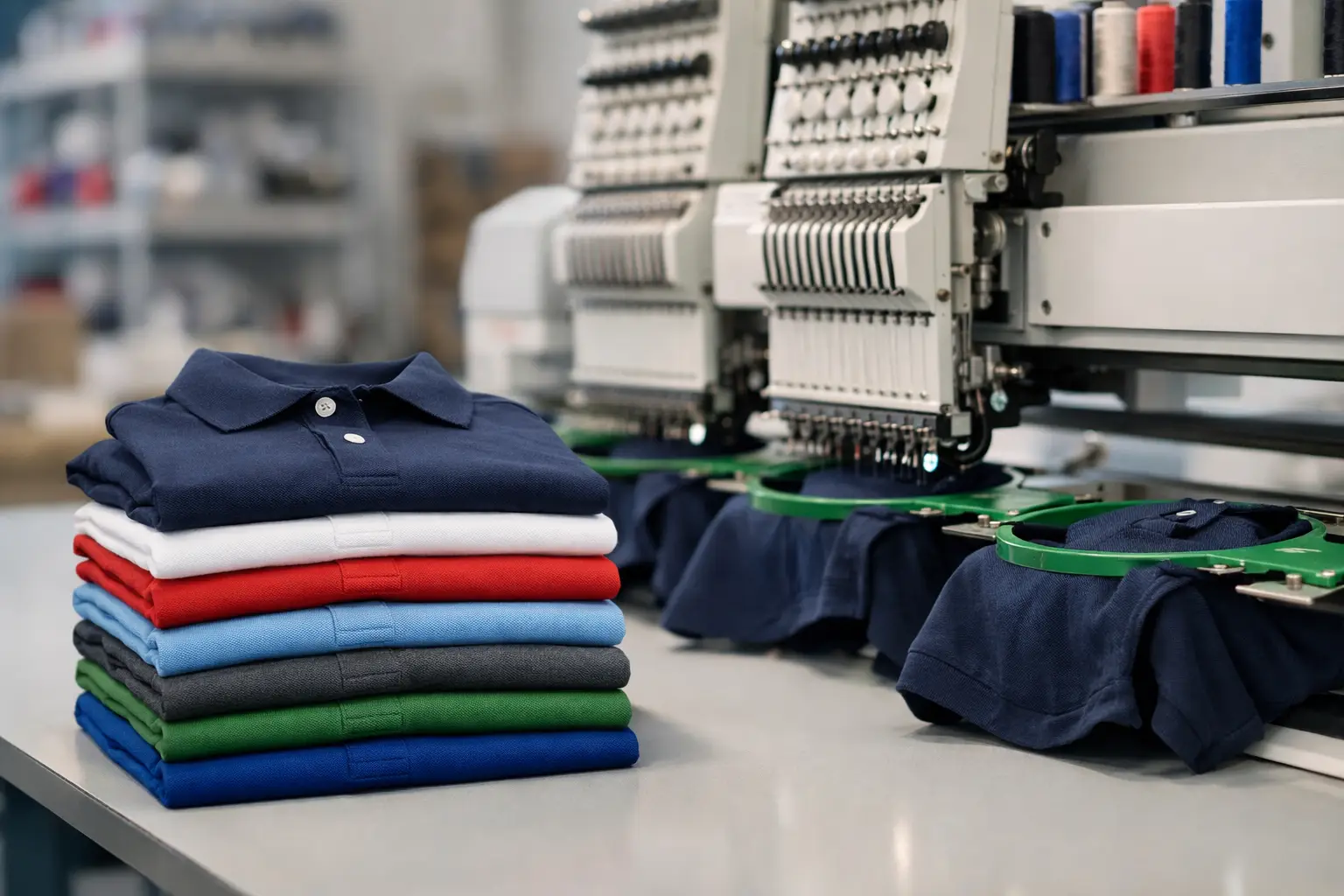
When your team shows up in mismatched shirts, people notice. So do customers, prospects, job candidates, and event attendees. Bulk embroidered polo shirts solve that problem quickly, but the real value goes beyond putting the same logo on the same chest. Done well, they create a cleaner brand presentation, hold up through repeat wear, and make reordering far easier down the line.
For business buyers, that last part matters more than it gets credit for. The first order is rarely the only order. New hires come in, departments grow, trade shows stack up, and locations need consistent apparel across the board. That is why choosing the right polos, decoration method, and production partner at the start saves time and protects your brand every time you reorder.
Why bulk embroidered polo shirts make sense
Polos sit in a useful middle ground. They are more polished than a basic t-shirt, but more approachable and easier to wear than a button-down. For office teams, sales staff, service crews, golf outings, school programs, hospitality teams, and event personnel, they strike the balance most companies want.
Embroidery adds another layer of professionalism. A stitched logo has texture, permanence, and a more elevated look than many print applications. On polos in particular, embroidery feels right because the garment already carries a business-casual identity. A clean left-chest logo on a quality polo communicates organization, consistency, and attention to detail.
That said, not every use case is identical. If your staff works outdoors all day, fabric performance will matter more than fashion details. If you are ordering for a trade show, color consistency and fast turnaround may be the priority. If you are outfitting managers and field staff, you may want tiered options from different brands while keeping the logo treatment consistent. Bulk ordering works best when those real-world needs are addressed upfront.
Choosing the right bulk embroidered polo shirts
The best polo is not always the most expensive one. It is the one that fits your environment, your brand standards, and your budget. That sounds simple, but in volume orders, small product decisions have a big impact.
Start with fabric. Cotton-rich polos feel familiar and comfortable, but they may wrinkle more and dry more slowly. Performance polyester or poly-blend polos offer moisture management, color retention, and easier care, which makes them a strong fit for active teams or frequent use. For hospitality, office, or client-facing settings, a smooth performance blend often gives the cleanest all-day appearance.
Fit matters too. Some polos are relaxed and traditional. Others are more modern and tailored. If your order covers a wide range of body types and roles, a classic fit tends to be the safest path. If your brand leans more premium, elevated retail-inspired styles can make sense, especially for leadership teams, corporate gifts, or executive events.
Brand selection also changes the perception of the finished piece. Recognized names such as TravisMathew, The North Face, OGIO, Port Authority, and Carhartt each send a different message. One may feel corporate and refined. Another may feel rugged and practical. Another may signal lifestyle appeal. The right choice depends on the audience wearing it and the impression you want them to make.
Embroidery quality is where the difference shows
Two embroidered polos can look similar online and very different in person. That is why decoration quality deserves as much attention as garment choice.
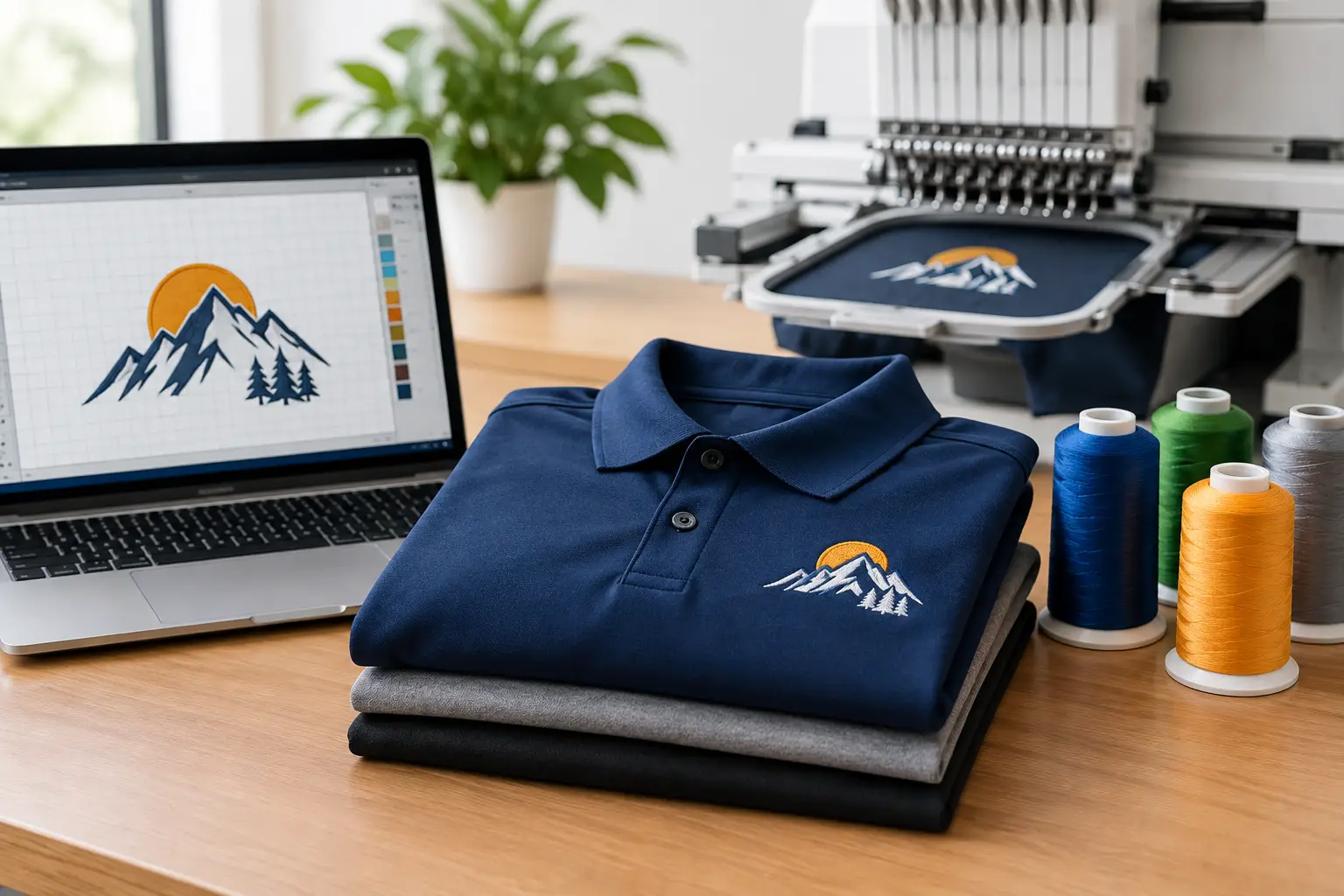
Digitizing is the first checkpoint. Before a logo is stitched, it must be translated into an embroidery file that tells the machine how to build the design. A logo that looks sharp in print does not always convert perfectly to thread. Fine lines may need adjustment. Small text may need to be enlarged or simplified. Dense fills may need to be balanced to avoid puckering. Good digitizing protects the integrity of the mark while making sure it performs on fabric.
Thread choice and stitch execution matter just as much. Clean edges, proper thread tension, and stable backing are what separate a polished logo from one that looks uneven or bulky. On bulk orders, consistency is critical. The hundredth shirt should match the first, not just in logo placement but in stitch quality, color, and overall finish.
This is one reason US-based, in-house production can be a real advantage. When decoration happens under one roof, there is better control over proofs, production standards, and repeatability. For buyers managing uniforms or company apparel programs, that kind of control helps reduce surprises.
How to plan a smoother order
Most apparel delays do not start in production. They start in decision-making. A few practical choices on the front end can make your order easier to approve, easier to distribute, and easier to repeat.
First, decide who the polos are for. A front desk team, warehouse crew, executive sales group, and trade show staff may all need polos, but not necessarily the same polo. If appearance standards need to be uniform across departments, select one style. If comfort or role-specific performance matters more, choose coordinated styles in the same color family with the same embroidery placement.
Next, think through logo usage. The left chest is the standard for a reason – it is clean, professional, and wearable in most settings. Larger embroidery on sleeves or backs can work, but it depends on the garment and the occasion. For everyday company wear, subtle branding often has the longest shelf life.
Color selection deserves more thought than many teams give it. Black, navy, white, and gray are safe because they work across industries and hide wear well. But the best color is the one that supports your logo and your environment. White polos can look sharp in hospitality and golf settings, yet they may be a poor fit for industrial or outdoor work. Darker colors are practical, though some logos need contrast adjustments to stay visible.
Sizing is another common sticking point. If your order includes a large team, build in a little room for exchange planning or overage. If polos are intended for events, ask whether they will be layered over base garments or worn on their own. That affects fit choices more than people expect.
What business buyers should ask before ordering
A strong supplier should make the process straightforward, not vague. You should know what the production timeline looks like, when the clock starts, how art approval works, and what happens on reorders.
Ask whether digitizing is handled in-house, whether proofs are provided before production, and how logo files are stored for future use. Ask whether the same thread colors and placement standards will be used on repeat orders. If your company has multiple offices or ongoing hiring needs, those details are not minor. They are the foundation of consistency.
It is also worth asking how brand and product substitutions are handled if inventory shifts. In bulk apparel, availability can change. A dependable partner will guide you toward comparable options early rather than forcing a last-minute compromise.
For larger programs, ask about building a repeatable ordering path. That may mean standardizing approved garments, thread colors, and logo locations so reorders move faster. For companies with recurring onboarding, field teams, or event calendars, this can save significant admin time.
When price matters most – and when it should not
Budget matters. No serious buyer ignores unit cost, especially on larger runs. But the lowest shirt cost is not always the lowest total cost.
If a cheap polo loses shape after a few washes, fades quickly, or wears uncomfortably, it does not serve the brand well. If embroidery is inconsistent, the savings disappear in perception alone. Employees notice the difference. Customers do too.
The better approach is to align product level with purpose. For a one-time event, a value-driven performance polo may be exactly right. For daily uniforms or customer-facing teams, spending more on garment quality and embroidery precision usually pays off. The shirts get worn longer, your team looks better, and reorders are easier to justify because the first order performed well.
That is where an experienced partner earns trust. At LOGO USA, for example, the value is not just in offering decorated apparel. It is in helping buyers get the right product, approve art with confidence, and receive polished results on a dependable timeline from a US-based facility.
Bulk embroidered polo shirts are really about consistency
The shirt itself matters, but what most organizations are really buying is consistency. Consistency in appearance. Consistency in quality. Consistency in how a brand shows up across offices, events, and teams.
When that consistency is built into the ordering process, branded apparel becomes much easier to manage. New hires can be outfitted without starting from scratch. Event orders can move faster. Teams in different locations can still look like part of the same company.
A good polo does more than dress a team. It helps your brand look prepared before anyone says a word. If you are ordering in volume, that is the standard worth holding.
Popular Blogs
What File Formats Does Embroidery Accept?
October 12, 2026