

Logo Digitizing for Embroidery Explained
- April 12, 2026
- 3:10 am
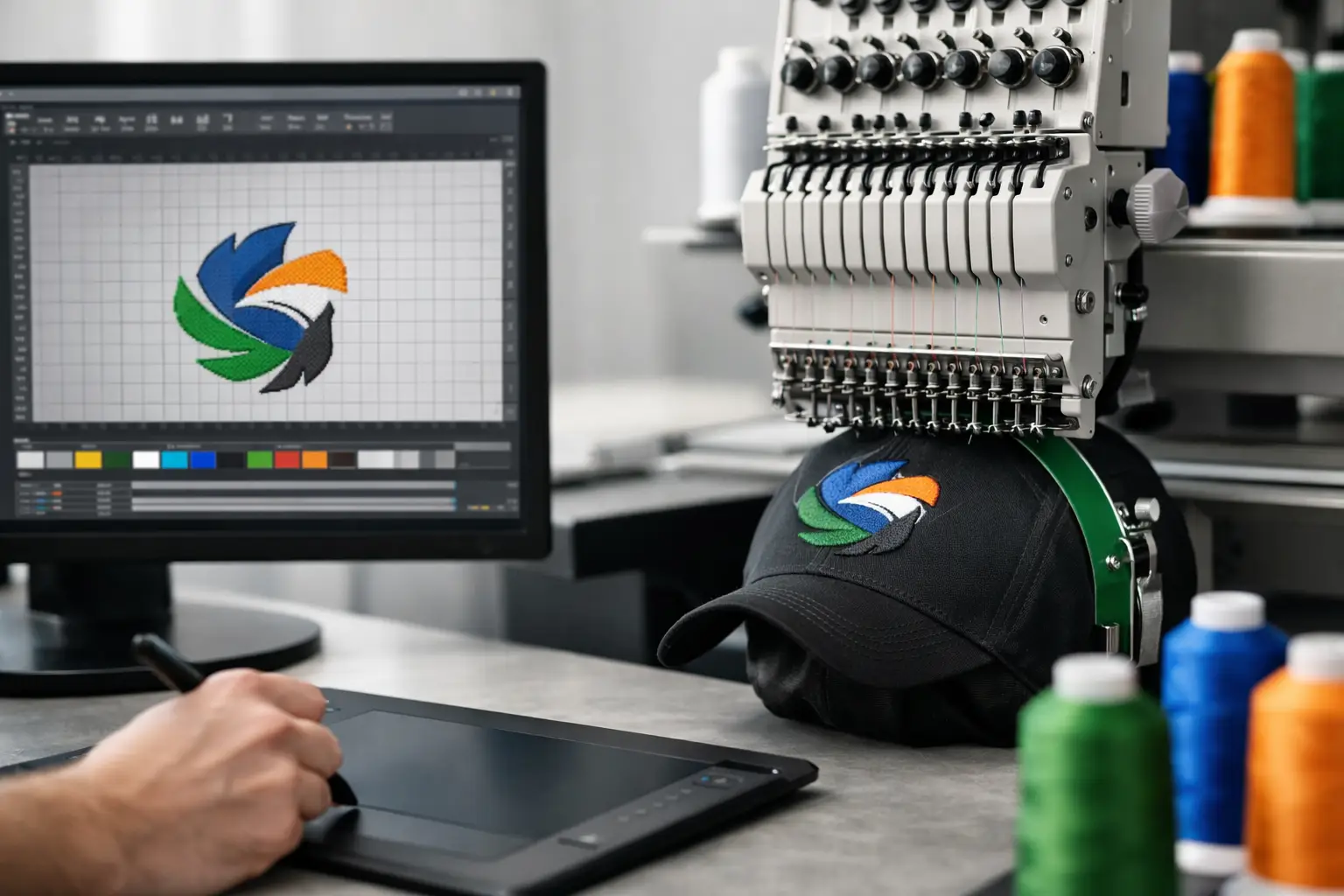
A logo can look sharp on a website and still stitch poorly on a polo. That gap is exactly why logo digitizing for embroidery matters. Before thread ever touches fabric, your artwork has to be translated into a stitch file that tells the embroidery machine what to do, where to do it, and how densely to sew it.
For business apparel, that step is not a technical footnote. It is what determines whether your logo looks clean on employee uniforms, polished on event apparel, and consistent across repeat orders. When digitizing is handled correctly, embroidery looks premium and holds up well. When it is rushed or treated like a simple file conversion, the finished product can look uneven, bulky, or hard to read.
What logo digitizing for embroidery actually means
Logo digitizing for embroidery is the process of converting artwork into a file made specifically for embroidery machines. That file is not the same as a JPG, PNG, PDF, or vector art file. It contains stitch instructions, including stitch type, stitch direction, density, sequencing, underlay, and compensation for how fabric behaves during sewing.
This is why embroidery is not a one-click output from your original logo file. A strong digital logo and a strong embroidered logo are related, but they are not identical. Thread has width. Fabric stretches. Small details can close up. Sharp gradients and subtle shadows usually need to be simplified or reworked.
A trained digitizer makes judgment calls based on the logo itself, the size of the embroidery, and the garment being decorated. A left-chest logo on a polo requires a different approach than a larger design on a cap or jacket back. Good digitizing is part technical skill and part production experience.
Why digitizing quality shows up on the finished garment
Business buyers usually notice digitizing after the fact. Maybe one batch of polos looked crisp and another looked heavy. Maybe text that seemed readable in the proof became hard to read when stitched. Maybe a cap logo lost its shape because the design was not set up for that structured surface.
Those issues often trace back to the stitch file.
High-quality digitizing helps control thread buildup, keeps lettering readable, and creates a more balanced design. It also improves consistency across garment types and reorder cycles. If your organization is ordering uniforms for multiple departments or refreshing apparel throughout the year, that consistency matters. You want the same logo to look like your brand every time, not a slightly different version depending on who ran the job.
Poor digitizing can also affect wearability. Dense embroidery on lightweight garments can pucker the fabric. Incorrect stitch direction can make fills look uneven. Weak sequencing can create unnecessary trim points or messy transitions. None of that supports a professional presentation.
The artwork factors that affect embroidery results
Not every logo starts embroidery-ready, and that is normal. Some logos need only minor adjustments. Others need thoughtful simplification before they can stitch cleanly at the intended size.
Fine lines are one of the most common issues. A line that looks elegant on screen may be too thin to hold in thread. Very small text is another challenge, especially for standard left-chest embroidery where the design size is limited. Intricate shapes, overlapping elements, and color gradients can also create problems because embroidery works with solid thread, not pixels.
The best result usually comes from aligning the logo with the application. If a logo is being embroidered on uniforms, it may need a version optimized specifically for embroidery. That does not mean changing your brand identity. It means respecting the medium so the branded apparel still looks polished and recognizable.
For many companies, that is the difference between forcing artwork into stitches and building an embroidery version that performs well in production.
How digitizers adapt a logo for different garments
Polos, jackets, and woven shirts
Flat garments offer a relatively stable surface, but they still behave differently depending on fabric weight and texture. A pique polo has more texture than a smooth woven shirt. A fleece jacket can absorb detail differently than a performance polo. Digitizing has to account for that so the same logo remains balanced across apparel categories.
Caps and structured headwear
Caps are one of the most specialized embroidery surfaces. The seam, curve, and structure all affect how a logo runs. Designs often need to be adjusted for height, sequencing, and stitch angles to sew well on headwear. A file built for a left chest is not automatically the right file for a cap.
Bags, workwear, and outerwear
Heavier materials can support more embroidery, but they still present trade-offs. Thick fabrics may allow a bold mark to stand out well, while small detail can get lost on textured surfaces. Workwear and outerwear also need durable stitching that complements the garment without becoming overly stiff.
What a professional digitizing process should include
The strongest embroidery programs start with a review of the artwork, not just an upload box. A production team should evaluate the logo, decoration size, garment type, and placement before the file is finalized. That is where preventable problems get caught early.
Digitizing should also include practical refinement. That may mean adjusting tiny details, increasing spacing around small letters, or recommending a simplified version for certain placements. If a design will not sew cleanly at a requested size, a dependable partner should say so clearly and offer a better path.
Proofing matters too. A digital proof helps confirm placement, sizing, and general appearance before production begins. For embroidery, that front-end alignment is especially valuable because it reduces surprises once stitching starts.
At LOGO USA, in-house digitizing supports that level of control. When digitizing and production work together, it is easier to maintain quality standards, move efficiently from approval to production, and deliver more consistent results across repeat orders.
Common misconceptions about embroidery files
One of the biggest misconceptions is that vector art is already an embroidery file. Vector files are excellent source artwork, but they still need to be digitized for embroidery. Another misconception is that one stitch file works perfectly at every size. In reality, shrinking or enlarging an embroidery file without reworking it can affect density, clarity, and overall appearance.
There is also a belief that more detail always makes a logo look more premium. In embroidery, the opposite is often true. Clean shapes, readable text, and controlled stitch counts usually create a stronger result than trying to force every fine design element into thread.
For business apparel, clarity almost always wins. Employees wearing branded polos, jackets, or caps need a logo that reads quickly and looks consistent, not one that becomes muddy at normal viewing distance.
How to set your project up for success
If you are ordering embroidered apparel for a business, school, team, or organization, it helps to start with a few practical decisions. First, think about where the logo will be placed. Left chest, sleeve, cap front, and bag panel all have different size and construction limits. Second, consider the garment mix. A logo going on polos alone may be digitized differently than one that also needs to run on caps and outerwear.
Third, be realistic about detail. If your brand mark includes small text or fine graphic elements, ask whether an embroidery-optimized version would improve the final result. That kind of adjustment often leads to a cleaner, more professional finished product.
Finally, work with a supplier that treats decoration as a production discipline, not an afterthought. Fast turnaround matters, but quality control matters just as much. The right partner can move quickly without skipping the steps that protect your brand presentation.
Why this matters for long-term brand consistency
Embroidery is often used for the pieces people wear most – employee uniforms, sales polos, trade show apparel, team jackets, and branded caps. These are visible, repeat-use items that shape how customers, staff, and partners perceive your organization.
That is why logo digitizing for embroidery is not just a setup step. It is part of brand execution. A well-digitized logo supports a cleaner appearance, stronger consistency across products, and fewer issues when it is time to reorder. It also gives your team confidence that the apparel they wear reflects the standards of your business.
If your logo is going on apparel that represents your company every day, the stitch file deserves real attention. Good embroidery starts long before production. It starts with making sure your logo is built to sew well, wear well, and look right every time.
Popular Blogs

How an Employee Uniform Program Builds Trust
August 31, 2026