
How Much Does Logo Embroidery Cost?
- April 9, 2026
- 3:20 am
If you are pricing branded polos, hats, or uniforms for a team, one of the first questions is simple: how much does logo embroidery cost? The short answer is that most orders include two separate costs – a one-time digitizing fee to prepare the artwork for embroidery, and a per-item embroidery charge that depends on stitch count, placement, garment type, and order size.
For many business orders, embroidery pricing lands somewhere between a few dollars per item for straightforward left-chest logos and significantly more for large, detailed designs or specialty placements. That range is wide for a reason. Embroidery is not a flat-fee decoration method. The cost is tied directly to how your logo is built and how efficiently it can be stitched on the apparel you choose.
How much does logo embroidery cost on average?
A practical baseline for standard corporate apparel is this: a simple to moderate left-chest logo on polos, button-downs, jackets, or work shirts often costs around $5 to $10 per piece after setup, depending on quantity. Hats can be similar or slightly higher because cap embroidery requires different hooping and production handling. Large back logos, sleeve embroidery, and oversized designs usually increase the price.
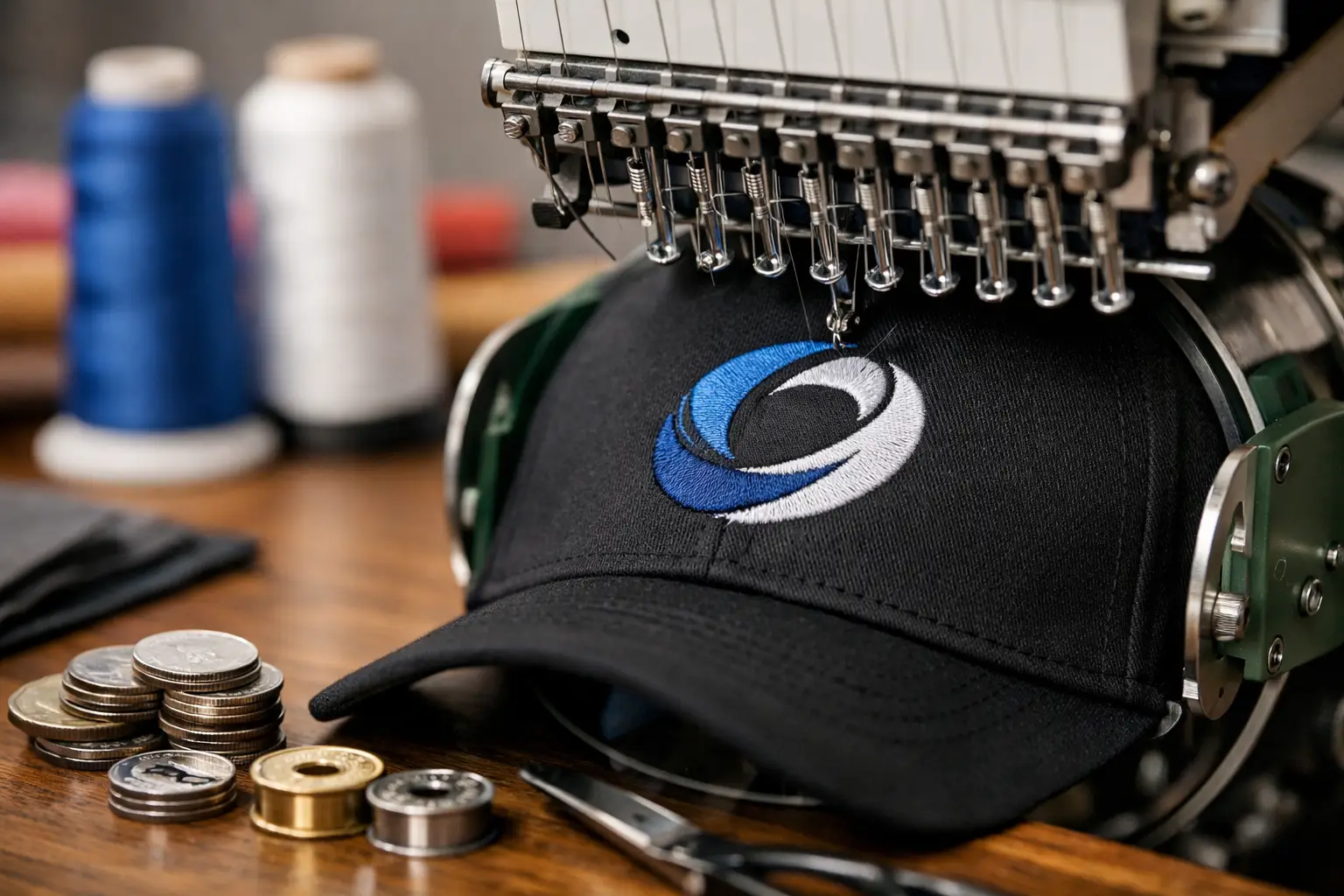
Before production starts, most embroidery orders also require digitizing. This is the process of converting your logo into a stitch file that tells the embroidery machine exactly how to run the design. A typical one-time digitizing fee often falls in the $40 to $100 range, though complex artwork can go higher.
That means a 24-piece polo order with a standard chest logo may include a one-time setup charge plus the per-garment embroidery cost. Once the logo is digitized and approved, reorders are often more economical because you are not paying to create the stitch file again.
What actually drives embroidery pricing?
The biggest factor is stitch count. Embroidery machines do not price based on how your logo looks on screen. They price based on how many stitches are needed to recreate it cleanly on fabric. A compact two-color logo with clean lettering may run efficiently. A dense design with gradients converted into fills, small text, or layered detail may require far more stitches and more production time.
Size matters too. A left-chest logo is usually the most cost-effective placement because it is standard, easy to hoop, and relatively small. A full back design uses more thread, more machine time, and more handling. The same logo placed on a sleeve, cuff, or cap can also cost more because specialty placements are slower to set up and run.
Garment type plays a role as well. Embroidering a stable polo or work shirt is generally straightforward. Fleece, thick outerwear, structured caps, bags, and performance fabrics can require different backing, hooping methods, machine adjustments, or added care to get a polished result. That added production attention is part of the price.
Quantity is the other major lever. Larger runs usually lower the embroidery cost per item because setup time is spread across more pieces. A 12-piece order and a 144-piece order may use the same logo, but the larger order is more efficient to produce, which often leads to better unit pricing.
Setup fees versus per-piece charges
This is where many buyers get confused. They receive a quote and wonder why embroidery seems to have both a setup fee and a decoration fee. The reason is that embroidery has a genuine pre-production stage.
Digitizing is not the same as uploading a logo file. Even a clean vector logo still needs to be rebuilt for embroidery. Thread direction, underlay, pull compensation, density, lettering clarity, and sequencing all need to be programmed so the design runs well on the actual garment. Good digitizing is part of what separates premium embroidery from logos that pucker, sink, or lose definition.
After that, the per-piece embroidery charge covers machine time, thread, backing, labor, hooping, quality control, and production handling. If your order includes multiple logo locations, each placement is usually priced separately.
Why some logos cost more than others
Two logos can be the same physical size and still have very different embroidery costs. A simple wordmark with bold text and one icon is usually efficient. A logo with thin outlines, tiny registration marks, shaded fills, or intricate borders is not.
Small text is one of the most common cost and quality issues. On a screen, tiny lettering may look sharp. In embroidery, very small text often has to be enlarged, simplified, or removed to keep the logo readable. If the artwork needs adjustment to stitch well, that can affect both setup and final pricing.
Color count can matter, but usually less than stitch count. Thread changes add some production time, yet the real price driver is still how dense and detailed the logo becomes when translated into stitches.
Embroidery cost by common apparel type
For most business buyers, left-chest embroidery on polos, quarter-zips, work shirts, and outerwear is the standard starting point. This is the placement used most often for employee uniforms, sales teams, trade shows, and company apparel programs because it looks professional and wears well.
Caps are also a common choice, but they are their own category. Structured hats, trucker caps, and performance headwear often need cap-specific setup and can price differently than flat garments. If your logo is tall, wide, or text-heavy, cap embroidery may also require edits to fit the available sewing area cleanly.
Bags, backpacks, and duffels can be excellent for branding, but access points, seams, and material thickness may affect decoration cost. Jackets and fleece can also run higher than polos due to heavier fabrics and the need for strong, consistent stitching on premium outerwear.
How to keep logo embroidery cost under control
The best way to manage embroidery cost is to match the logo and garment to the purpose of the order. If you are outfitting a large employee team, a clean left-chest logo on a proven polo or work shirt is usually the most efficient route. If you are creating executive gifts or branded outerwear, paying more for premium placement and garment quality may be the right call.
It also helps to simplify artwork where possible. Thick, readable text and solid design elements usually embroider better than fine detail. Not every logo needs to be redesigned, but some versions should be optimized for embroidery rather than copied directly from print materials.
Planning quantity carefully matters too. If you expect ongoing needs, it is often smarter to place a larger opening order or build around a reorder-friendly program. That approach can improve unit cost and keep branding consistent across departments or locations.
Is embroidery worth the price?
For many business applications, yes. Embroidery generally costs more than basic screen printing for simple large-volume tees, but it delivers a more elevated, durable presentation. On polos, hats, outerwear, and uniforms, embroidery tends to signal professionalism. It holds up well, resists fading, and gives branded apparel a finished look that works in offices, job sites, client meetings, and events.
That is why embroidery is often the preferred choice for company uniforms, management apparel, hospitality programs, golf events, and premium staff gear. The higher decoration cost often makes sense because the end result lasts longer and carries stronger brand presence.
Getting an accurate quote for how much logo embroidery costs
The fastest way to get realistic pricing is to provide the actual logo, the apparel style, the placement, and the order quantity. Without those details, any price is just a rough estimate. A quote becomes much more accurate when a production team can review the artwork, judge likely stitch count, and flag any issues before approval.
For buyers managing brand standards, that review process is valuable. It helps avoid surprises, protects logo consistency, and gives you a clearer picture of total cost before production begins. A dependable embroidery partner should be able to explain what is driving the price and where adjustments might reduce cost without sacrificing presentation.
If you are comparing vendors, do not look at unit price alone. Ask what is included, whether digitizing is separate, how proofs are handled, where production takes place, and how quality is controlled. A low quote can get expensive quickly if the stitching is inconsistent or the logo is not production-ready.
When embroidery is done right, you are not just buying decoration. You are investing in apparel that represents your business with precision, consistency, and lasting value. If your team wears your logo in front of customers, that difference shows up every day.
Popular Blogs
Custom Branded Bags for Employees That Work
April 8, 2026