
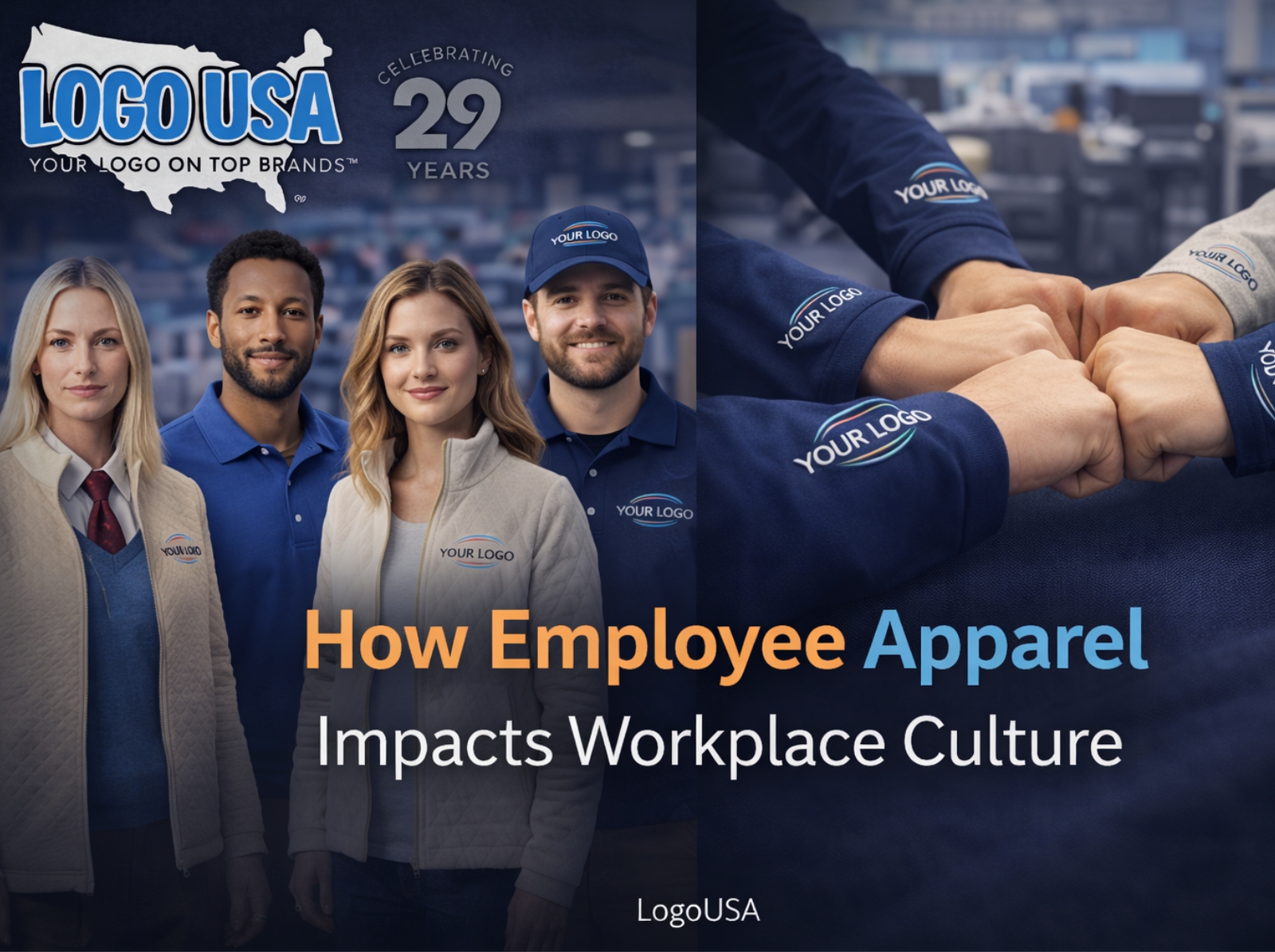
How Employee Apparel Impacts Workplace Culture
- March 20, 2026
- 10:00 pm
The moment someone walks into a workplace, subtle signals begin shaping their impression of the environment. The way employees interact, the energy of the space, and even how people dress can reveal a great deal about the company’s culture. When a team appears organized, confident, and visually connected, it sends a message that the organization values professionalism and shared purpose.
Now picture a workplace where every team member maintains a consistent, polished appearance. There is no uncertainty about dress expectations or confusion about who represents the company. Instead, employees move through their day with a sense of belonging and pride in the brand they represent. This sense of unity often begins with something simple but powerful: thoughtfully designed apparel that reflects the company’s identity.
This is where branded employee uniforms can influence workplace culture in meaningful ways. Coordinated apparel helps employees feel like part of a unified team while also reinforcing the organization’s values and professionalism. When everyone represents the brand in a similar way, it strengthens internal connection and creates a clear visual identity for customers and visitors.
Employee apparel also affects how individuals perceive themselves at work. When uniforms are comfortable, well-designed, and aligned with the company’s image, employees are more likely to feel confident and engaged throughout the day. Over time, these small details contribute to a stronger workplace culture where employees feel connected to their roles, their colleagues, and the brand they represent.
The Evolution of Workplace Attire and Its Cultural Role
Workplace clothing has come a long way from the rigid suits of the mid-20th century. Today’s hybrid environments demand flexibility yet crave clarity. Employee branded apparel bridges that gap by providing consistency without sacrificing personality. Unlike generic dress codes that can lead to confusion, branded pieces create visual harmony across departments, locations, and even remote teams through virtual backdrops.
This harmony does more than look polished. It signals that the organization values its people enough to invest in their daily experience. When employees slip on a well-fitted polo or jacket bearing the company logo, they step into a shared identity. The result is a subtle but powerful shift: reduced decision fatigue each morning, fewer micro-judgments about outfits, and more mental energy directed toward collaboration and innovation.
Studies from leading institutions confirm this effect. A recent Forbes analysis highlights how thoughtful style choices boost confidence: 96 percent of surveyed professionals report greater confidence in their abilities when they feel good about what they wear. Similarly, research out of Temple University demonstrates that attire aligning with both personal comfort and organizational expectations directly improves goal progress and colleague interactions. These findings underscore a central truth: clothing is not superficial. It is a daily cue that either reinforces or undermines the culture leaders work so hard to build.
Building Belonging Through Shared Visual Identity
At the heart of strong workplace culture lies belonging—the feeling that “I am part of something larger than myself.” Employee branded apparel delivers this feeling visually and emotionally. When everyone wears coordinated pieces, hierarchies soften. A new hire, wearing the same embroidered shirt as a seasoned executive, experiences immediate inclusion rather than intimidation.
This sense of equality fosters psychological safety. Conversations flow more freely because external differences fade into the background. Team members focus instead on ideas, skills, and shared goals. Over time, the repeated use of high-quality garments strengthens social bonds, much as a sports team’s uniform builds camaraderie on the field.
One particularly effective approach involves branded uniforms for employees that incorporate subtle custom touches—such as department colors, role-specific icons, or motivational slogans. These details turn standard apparel into personal statements while maintaining overall cohesion. The outcome is measurable: employees report higher engagement, lower stress around appearance, and stronger loyalty to the organization.
Elevating Professionalism and External Perception
Clients, partners, and visitors form first impressions within seconds. When those impressions include a team dressed in crisp, consistent attire, credibility rises instantly. Professional branded uniforms for employees communicate reliability, attention to detail, and respect for the customer experience. A warehouse crew in matching safety polos or a sales team in logoed blazers instantly projects competence.
Internally, this professionalism loops back to influence behavior. People tend to rise to the standard they see reflected in the mirror each morning. The uniform becomes a daily reminder of excellence, encouraging punctuality, thoroughness, and courteous interactions. Over months and years, these small behavioral shifts compound into a culture known for its reliability and high standards.
Business owners often discover another advantage: brand ambassadors multiply. Employees wearing quality pieces outside the office— at networking events, community functions, or even casual errands—extend the company’s reach organically. Each logo becomes a mobile billboard, far more authentic than traditional advertising.
Boosting Productivity Through Confidence and Focus
The connection between appearance and output is no longer theoretical. Multiple studies link employee confidence derived from clothing to tangible performance gains. Happy workers are over 13 percent more productive, according to Oxford University research referenced in industry analyses. When uniforms contribute to that happiness, the ripple effects touch everything from task completion rates to creative problem-solving.
Employee branded apparel achieves this by eliminating daily wardrobe stress. Instead of wondering whether an outfit meets unspoken expectations, team members start the day focused and prepared. The psychological concept known as “enclothed cognition” explains why: the symbolic meaning of clothing influences mindset. A lab coat worn by doctors sharpens attention; similarly, a thoughtfully designed company jacket can sharpen focus and commitment.
Practical examples abound. Retail associates in comfortable yet branded polos move more efficiently on the sales floor because they feel both professional and at ease. Office teams wearing custom hoodies during hybrid meetings report fewer distractions and stronger participation. The common thread is comfort paired with purpose—elements that employee branded apparel delivers when sourced from experienced providers.
To illustrate these dynamics clearly, consider the following comparison of apparel approaches and their typical cultural outcomes:
| Generic Casual Wear | Low | Variable | Moderate | Neutral |
| Basic Branded T-Shirts | Moderate | Low to Medium | Moderate | Positive |
| Custom Embroidered Polos & Jackets | High | High | High | Strong |
| Premium Uniform Programs | Very High | Very High | Very High | Exceptional |
This table highlights why investing in quality over quantity pays dividends. Premium options consistently outperform basic or unregulated choices across every key culture metric.
The Psychological Mechanisms at Play
Beyond surface-level benefits, employee branded apparel engages deeper psychological processes. First, it activates identity theory—people derive self-worth from group membership. Wearing the logo reinforces “I belong here,” which research shows is tied to a 56 percent jump in job performance when belonging is strong.
Second, it reduces cognitive load. Decision fatigue from outfit selection vanishes, freeing mental resources for strategic thinking. Third, it triggers positive reinforcement loops. Feeling sharp and aligned with the brand leads to better interactions, which earn recognition, which further boosts confidence.
These mechanisms explain why organizations that update uniforms thoughtfully often see simultaneous improvements in engagement scores and customer satisfaction ratings. The apparel becomes a daily dose of cultural affirmation rather than a mere dress requirement.
Practical Benefits of Employee Uniforms for Businesses
While the cultural shifts described above are compelling on their own, the benefits of employee uniforms for businesses extend beyond cultural factors. Recruitment becomes easier when candidates see a clear visual standard that communicates respect and stability. Onboarding accelerates because new hires immediately understand expectations and feel part of the team.
Safety improves in environments where visibility and consistency matter—think high-visibility vests with embroidered logos that enhance both branding and hazard awareness. Maintenance costs drop when durable, professionally decorated garments replace frequent personal clothing replacements. Even inventory management is simplified through company stores that allow easy reordering of approved styles.
Leaders who implement these programs report fewer HR complaints about appearance and more time spent on core business objectives. The investment returns through higher engagement, lower turnover, and stronger external perception—all while reinforcing the very culture that drives long-term success.
Designing and Implementing an Effective Program
Creating a successful employee branded apparel initiative requires more than ordering shirts. Start by gathering input. Survey teams about preferred fabrics, fits, and styles. Involve different departments to ensure representation. This collaborative step alone builds excitement and ownership.
Next, partner with specialists who understand embroidery precision, screen-print durability, and material performance across climates and job functions. Quality matters—fading logos or shrinking seams undermine the very confidence the program aims to create.
Rollout thoughtfully. Host a launch event that celebrates the new look. Provide clear care instructions and replacement policies. Consider phased introductions to help employees adapt gradually. Finally, measure results through pulse surveys on belonging, engagement, and perceived professionalism. Adjust based on feedback to keep the program living and relevant.
Many organizations discover that once implemented, the program becomes self-sustaining. Employees request additional pieces for family events or client gifts, turning the apparel into an organic extension of brand loyalty.
Real-World Transformations
Consider a mid-sized manufacturing firm that switched from mismatched polos to custom-embroidered workwear. Within six months, employee satisfaction scores rose 18 percent, and external client feedback praised the “professional team presence.” Absenteeism dropped as people felt more connected and valued.
A tech startup adopted subtle branded hoodies and quarter-zips for its hybrid workforce. Remote employees reported feeling more “in the loop” during video calls, while office teams noted smoother cross-department collaboration. The simple visual cue bridged the physical divide that many hybrid cultures struggle to overcome.
These stories repeat across industries because the underlying psychology remains constant. When apparel honors both individual dignity and collective identity, culture strengthens naturally.
Overcoming Common Objections
Some leaders hesitate, citing cost or concerns about creativity. Yet thoughtful programs actually save money over time by reducing turnover and increasing productivity. Creativity need not suffer—modern options allow color accents, unique embroidery placements, and gender-inclusive sizing that respect personal expression while maintaining unity.
Others worry about resistance to change. Experience shows that when employees participate in design choices and see tangible quality, adoption is enthusiastic. The key is framing the initiative as an investment in their daily comfort and pride rather than a top-down mandate.
Looking Ahead: Apparel as a Cultural Investment
Workplace culture continues evolving toward authenticity, flexibility, and belonging. Employee branded apparel fits perfectly into this future. It offers a tangible, visible way to live organizational values every single day. Organizations that embrace this tool position themselves as employers of choice, able of attract and retain top talent in competitive markets.
The most successful programs treat apparel not as an expense but as a strategic asset—much like technology or training. When sourced thoughtfully, it delivers returns in engagement, performance, and brand strength that far exceed the initial investment.
Ready to strengthen your workplace culture through the power of purposeful attire? At LogoUSA, we have spent nearly three decades perfecting custom embroidery, screen printing, and design services that help organizations like yours create apparel that truly represents their values. Explore our extensive product catalog and start building a stronger, more unified team today by visiting our shop. For personalized guidance on selecting the right styles for your industry and workforce, reach out directly—our team is here to help every step of the way.
By choosing employee branded apparel with intention, you are not simply dressing your team. You are shaping the very heart of your organization—one confident, connected employee at a time. The culture you envision starts with what your people wear. Make it count.
Popular Blogs
Custom Hats as Everyday Brand Ambassadors
March 15, 2026