
The Anatomy of a Stitch: Why Thread Density Matters in Custom Embroidery
- February 1, 2026
- 10:00 pm
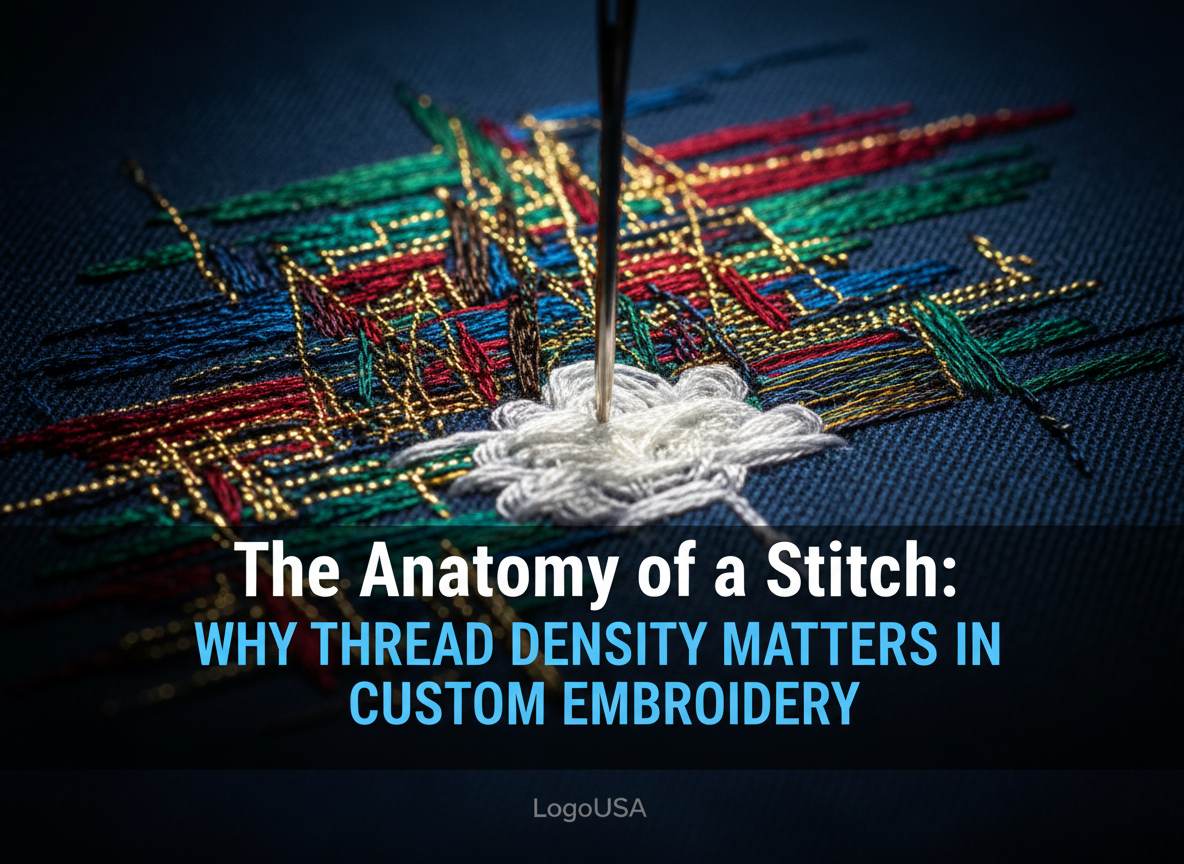
Imagine slipping on a company polo shirt, the embroidered logo crisp and vibrant against the fabric, exuding professionalism with every glance. Now picture that same logo after a few washes: faded, puckered, or fraying at the edges. What went wrong? Often, it’s not the design or the thread quality—it’s the embroidery stitch density. This subtle yet crucial element can make or break the longevity and appeal of your custom apparel. In this deep dive, we’ll explore the intricacies of embroidery stitch density, why it matters for businesses like yours, and how mastering it can elevate your branding game. Whether you’re outfitting a team for corporate events or creating promotional merchandise, understanding this “anatomy of a stitch” is key to achieving durable, high-quality results.
As a leader in custom embroidery since 1997, LogoUSA specializes in transforming your vision into wearable art. Our in-house production ensures every stitch aligns with your brand’s standards. Ready to stitch success into your apparel? Let’s unravel the details.
What Is Embroidery Stitch Density?
At its core, embroidery stitch density refers to how closely stitches are packed together in a design. Measured typically in millimeters between stitch rows or stitches per inch (SPI), it’s the spacing that determines the “fullness” of your embroidered pattern. Think of it as the thread’s blueprint: too loose, and your logo appears sparse and unfinished; too tight, and it risks distorting the fabric or becoming stiff like a bulletproof vest.
In machine embroidery, density is influenced by the digitizing process—where artwork is converted into stitch instructions for the machine. Standard densities range from 0.4 mm (a balanced, everyday choice) to 0.2-0.3 mm for intricate details or 0.5 mm+ for lighter, more flexible applications. For custom projects, this isn’t a one-size-fits-all metric. It varies based on fabric type, design complexity, and intended use. For instance, a dense stitch on a lightweight cotton tee might cause puckering, while the same on sturdy workwear could provide impeccable coverage.
Why does this matter in custom embroidery? Density directly impacts the visual sharpness, tactile feel, and overall durability of the piece. It’s the difference between a logo that pops and one that flops—literally.
The Science Behind Stitch Density: How It Affects Your Design
Delving deeper, embroidery stitch density isn’t just about aesthetics; it’s grounded in the physics of thread and fabric interaction. When stitches are too dense, the thread builds up, creating excess tension that can warp the material. This phenomenon, known as puckering, occurs because the fabric can’t accommodate the concentrated pulling force. Conversely, low density might leave gaps, exposing the underlying fabric and leading to a washed-out appearance over time.
Consider the types of stitches commonly used in custom embroidery:
- Satin Stitches: These create a smooth, glossy finish ideal for borders and lettering. Optimal density here is around 0.4-0.5 mm to avoid bunching while ensuring solid coverage.
- Fill Stitches: Used for larger areas, like backgrounds in logos. Densities of 0.5 mm or higher prevent stiffness, allowing the fabric to breathe.
- Running Stitches: For outlines or underlays, lighter densities (0.6 mm+) keep things flexible without compromising structure.
The thread itself plays a role too. Thicker threads, like 40-weight polyester, require adjusted densities to avoid overcrowding, while finer 60-weight options allow for tighter packing without bulk. At LogoUSA, we use premium threads from trusted suppliers to balance these factors, ensuring your custom hats or polos maintain their integrity wash after wash.
Fabric compatibility is another critical layer. Delicate materials like silk demand lower densities to prevent tearing, whereas robust canvases like denim can handle higher ones for bold, textured effects. Ignoring this can lead to costly reprints or dissatisfied clients—something we’ve avoided in our 25+ years by tailoring density to each project’s specs.
For a deeper technical breakdown on how density interacts with thread weights and needle choices, check out this excellent stitch density guide from Madeira USA.
Why Thread Density Matters for Durability and Longevity
In the world of custom embroidery, thread density is the unsung hero of longevity. High-density stitching provides superior resistance to wear and tear, making it perfect for high-use items like uniforms or promotional gear. Studies from embroidery experts show that properly calibrated density can extend a design’s life by up to 50% through better thread interlocking and reduced fraying.
But it’s a double-edged sword. Overly dense designs can feel rigid, uncomfortable against the skin, and prone to cracking under stress—think of a logo on a flexing jacket sleeve. This is why industry standards cap densities at around 4-4.5 SPI for most applications, with underlay stitches providing foundational support without adding bulk.
For businesses, this translates to real ROI. A well-densitized embroidered cap not only looks professional longer but also reinforces brand recall. Imagine your team’s workwear enduring daily rigors without fading— that’s the power of optimized embroidery stitch density. At LogoUSA, our in-house digitizers fine-tune this for every order, from small runs to bulk corporate apparel.
Factors Influencing Optimal Stitch Density
Choosing the right embroidery stitch density isn’t arbitrary; it’s shaped by several interconnected factors. First, design size and complexity: Small logos (under 2 inches) benefit from higher densities (0.3 mm) for crisp details, while larger ones can afford looser spacing to save on thread and time.
Fabric weight is paramount. Lightweight knits, common in polos, require densities around 0.5 mm to avoid distortion, whereas heavier twills in outerwear can push to 0.4 mm for depth. Thread type also weighs in—rayon threads, with their sheen, often need slight density reductions to prevent shine loss from overcrowding.
Environmental factors can’t be overlooked. Apparel for outdoor use, like safety vests, demands durable, medium-density stitching to withstand UV exposure and laundering. Finally, machine capabilities: Modern embroidery machines at LogoUSA allow precise control, but older models might limit options, emphasizing the need for professional services.
To illustrate, here’s a comparison table of density levels and their applications:
| Density Level | Measurement (mm) | Best For | Pros | Cons |
| Low | 0.5+ | Large fills on lightweight fabrics | Flexible, breathable, cost-effective | Potential gaps, less detail |
| Medium | 0.4-0.5 | Standard logos on polos/caps | Balanced coverage, comfortable wear | Moderate durability in high-wear scenarios |
| High | 0.2-0.3 | Small text/intricate details | Sharp, professional look | Risk of puckering, stiffness |
This table highlights how selecting the right density aligns with your project’s goals, ensuring both quality and efficiency.
Common Mistakes in Embroidery Stitch Density and How to Avoid Them
Even seasoned pros can stumble here. One frequent error is ignoring underlay stitches—the foundational layer that stabilizes fabric before the top stitches. Without proper underlay, even ideal densities can fail, leading to shifting or incomplete coverage.
Another pitfall: over-densifying for “better” results. Novices often crank up SPI thinking it enhances quality, but this spikes stitch counts (and costs) while risking thread breaks. Solution? Test swatches. At LogoUSA, we provide proofs to visualize density before full production.
Scaling designs without adjusting density is a sneaky issue. Enlarging a logo might dilute its fullness unless density is recalibrated. Always collaborate with experts who understand these nuances.
For more on avoiding density-related issues in digitizing, this classic resource from LindeeG Embroidery.
The Role of Stitch Density in Branding and Customization
For brands, embroidery stitch density is a storytelling tool. It conveys quality—dense, even stitching signals premium craftsmanship, boosting perceived value. In employee uniforms, optimal density enhances morale by providing comfortable, long-lasting attire that employees wear with pride. As discussed in our recent post on Employee Uniforms: Enhancing Brand Identity and Employee Morale, this can foster team unity and customer trust.
Customization thrives on density tweaks. For event merch, lighter densities keep costs down for bulk orders, while corporate gifts might warrant higher for a luxurious feel. Explore our shop for embroidered options like polos that showcase this versatility.
Case Studies: Real-World Impact of Optimized Density
Take a logistics firm we partnered with: Their trucker hats featured intricate logos on mesh fabric. By opting for a medium 0.4 mm density, we avoided puckering while ensuring the design popped against the breathable material. The result? Hats that lasted through seasons of fieldwork, with zero complaints.
Another example: A medical center’s scrubs. High-density stitching on pockets provided durability for daily use, but we balanced it with underlays to maintain comfort. Feedback highlighted the professional look without the bulk—proving density’s role in functional branding.
These successes underscore why businesses choose LogoUSA for custom embroidery. Our expertise turns potential pitfalls into polished products.
Tips for Businesses: Selecting the Right Density for Your Projects
To harness embroidery stitch density effectively:
- Assess your fabric and usage: Consult pros for matches.
- Request samples: Visualize before committing.
- Budget wisely: Higher densities increase thread use but enhance quality.
For more on processes, check our FAQ.
Conclusion: Stitch Your Way to Superior Branding
Embroidery stitch density is more than a technical detail—it’s the foundation of exceptional custom apparel. By understanding its anatomy, you ensure designs that endure, impress, and convert. At LogoUSA, we’re committed to perfecting this for your brand.
Ready to elevate your embroidery? Contact us for a free quote today.
Popular Blogs
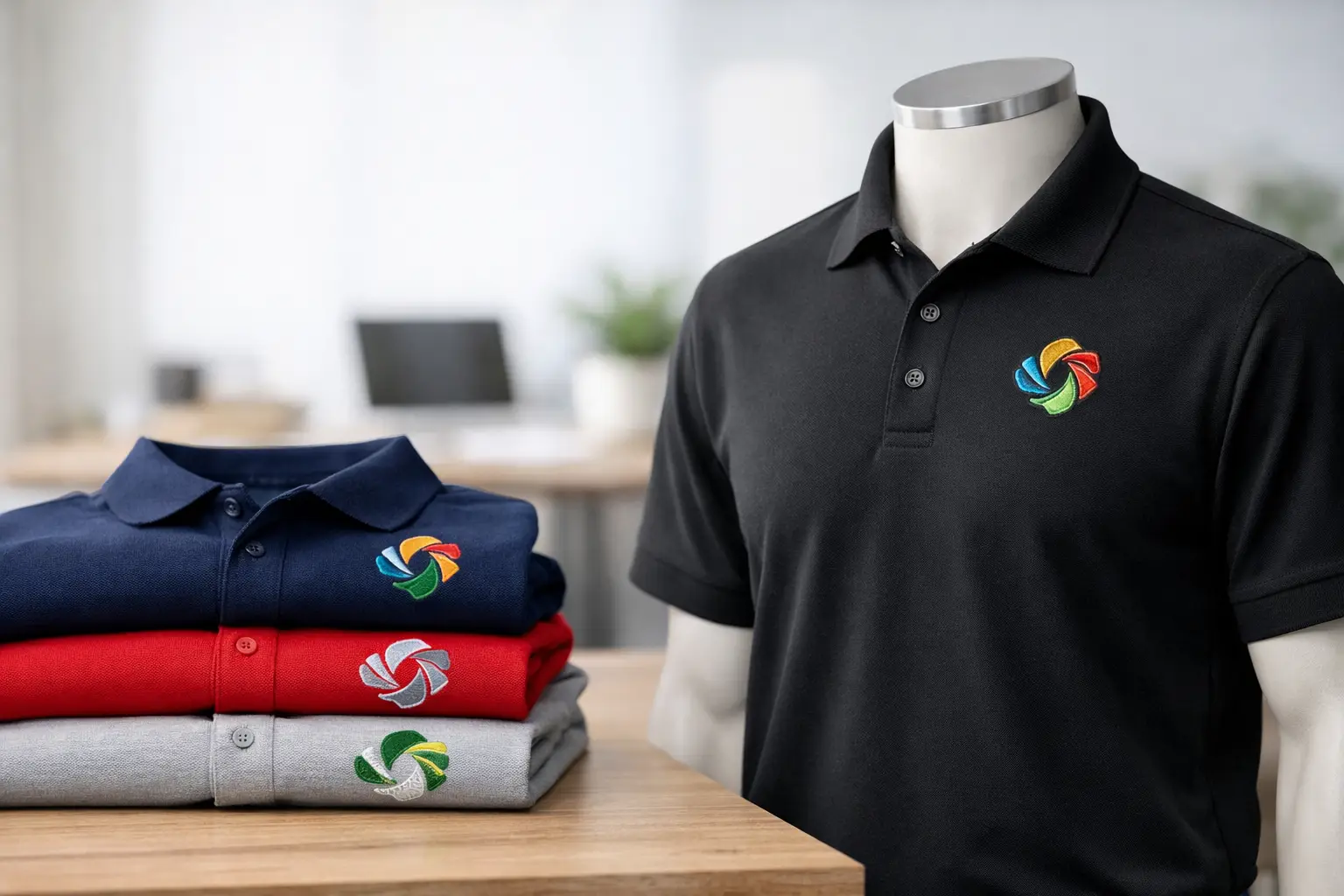
Embroidered Polo Shirts for Businesses
April 5, 2026