DTF vs. Embroidery: Solving the Color Complexity Crisis
- February 22, 2026
- 10:00 pm
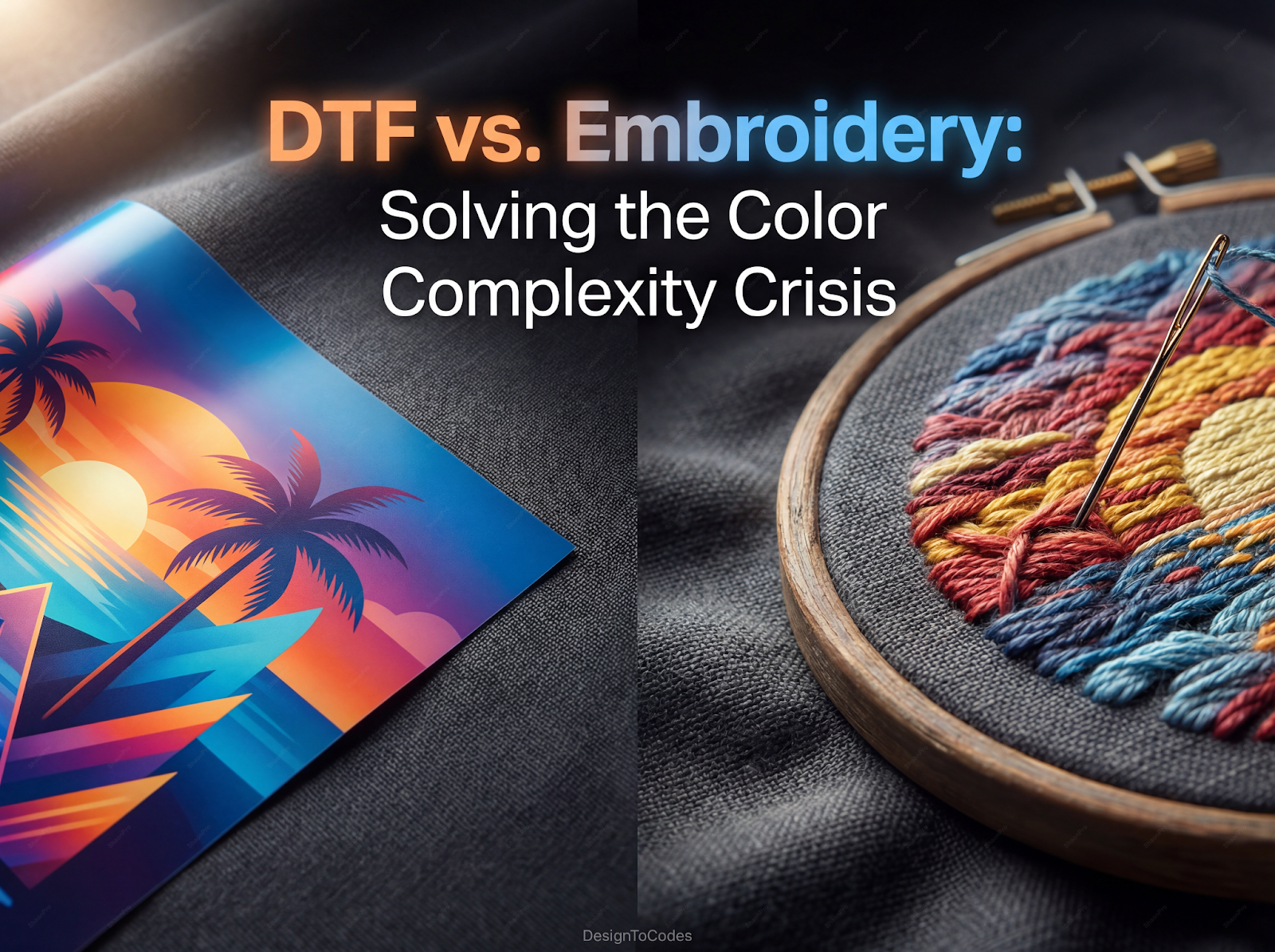
Brand complexity is no longer optional. Modern logos feature gradients, layered shadows, neon accents, and intricate fine lines that were impossible twenty years ago. What once worked for simple two-color designs now struggles under the weight of high-definition branding. The debate between dtf vs embroidery has become central to every marketing decision involving apparel.
Traditional stitching offers prestige and texture, but it faces physical limits when artwork becomes too detailed. Digital printing, on the other hand, handles complexity effortlessly but introduces new considerations around feel and durability. Choosing the correct method is no longer about preference. It is about protecting brand integrity while matching the decoration method to the garment’s structure and intended use.
Understanding where each method excels ensures your logo looks intentional, professional, and technically sound on every piece.
Understanding Traditional Embroidery: The Gold Standard
Custom embroidery remains the top choice for a premium, high-end look. It uses a mechanical process with high-speed needles and durable polyester thread. This method adds a physical dimension and a unique sheen to your apparel. The texture feels substantial and signals a level of corporate prestige. Many high-end brands still prefer this classic “stitched” finish for their executive teams.
It signals longevity because the thread is literally woven into the fabric itself. However, every stitch adds weight and tension to the garment. You must consider the garment’s weight and weave before choosing this path for lightweight items. Embroidery is best for heavy cottons, outerwear, and structured garments that can support the stitch density.
What is Direct-to-Film (DTF)? The New Contender
The DTF vs embroidery debate is changing the modern print shop landscape. Direct-to-Film technology uses a unique digital process to bypass traditional screen printing or stitching. We print your logo onto a special clear PET film using specialized inks. Then, we apply a unique TPU adhesive powder to the wet ink. A high-temperature heat press bonds the design permanently to the garment fibers.
This method disrupted the custom shirt industry by offering incredible detail. It makes high-color, high-detail designs affordable even for very small-batch orders. You get crisp, photorealistic images without the heavy setup costs of older methods. DTF is now the primary solution for logos that were previously “impossible” to decorate.
The “Thread Limit” Problem Explained
Embroidery faces a hard ceiling when it comes to intricate color palettes. Most commercial machines can hold only a limited number of spools at a time. This limitation forces designers to reduce their color counts and flatten their artwork.
Why do more colors equal more cost in embroidery?
- Labor Time: Each color change requires the machine to stop and reset.
- Trimming: The mechanical trimmer must cut and pull the thread between sections.
- Thread Inventory: Shops must stock hundreds of physical spools to match art.
- Production Speed: A 15-color logo runs much slower than a 2-color logo.
The physical constraints of the embroidery hoop
Most commercial machines hold only 15 needles per head. Your logo cannot easily exceed this physical color limit without a manual re-thread. We must simplify complex art to fit these specific machine specs. This often waters down your original brand identity and artistic intent.
The “Bulletproof” effect of high stitch counts
Too many thread colors in a small area create a thick, heavy patch. This makes the garment feel stiff and very uncomfortable against the skin. It can even cause the fabric to tear or sag over time. This is especially problematic for activewear and light summer clothing.
Color Physics: CMYK vs. Physical Thread Spools
The DTF vs embroidery choice involves a deep dive into color physics. DTF printers use a digital CMYK+W ink system similar to a desktop printer. This system creates millions of distinct colors and smooth shading effects. Conversely, embroidery relies on physical spools of pre-dyed thread.
The challenges of thread matching
- Dye Lots: Thread colors can vary slightly between different production batches.
- Pantone Matching: Digital ink offers much better color accuracy for brand guides.
- Limited Palette: You can only use what the thread manufacturer currently stocks.
Digital ink advantages
- Fluorescents: DTF can handle neon and bright digital colors with ease.
- Shading: Digital printing allows for soft glows and realistic drop shadows.
- Transparency: You can create “fading out” effects that the thread cannot.
- Vibrancy: The white ink underbase makes colors pop on dark fabrics.
The Gradient Battle: Why Thread Can’t Fade
Does your logo include soft shadows, glows, or layered backgrounds? Thread cannot produce true photographic fades because it is a solid medium. The jagged blending effect, often called “stepping,” makes gradients appear outdated on modern apparel.
In high detail logo printing, digital transfers outperform stitching in every test. DTF captures seamless transitions, soft glows, and subtle transparency effects without flattening artwork. This allows brands to maintain their full visual identity instead of simplifying it to meet mechanical limits.
Fabric Compatibility: When Weight Matters
The relationship between the decoration and the fabric is critical for comfort. A heavy design on a light shirt creates a poor fit and bad drape.
Heavy Embroidery vs. Performance Polos
- Stitch Tension: Heavy designs pull on light, stretchy performance fabrics.
- Puckering: The fabric bunches up permanently around the dense logo area.
- Skin Irritation: The shirt’s thick backing can feel scratchy during movement.
DTF on Tri-blends and Ultra-thin fabrics
DTF transfers feel light and flexible on the skin after pressing. They do not distort the shape of your favorite shirt. Your garment maintains its natural drape and original comfort levels. This is ideal for yoga wear, gym shirts, and thin summer tees.
Heat sensitivity of synthetic fabrics
Some fabrics melt under high heat during the decoration process. We must adjust the heat press for DTF to protect delicate polyester. Embroidery avoids heat entirely but requires a very stable surface for the hoop. We evaluate every garment to ensure the heat does not damage the fibers.
Fine Lines and Micro-Text
Small details often fail in stitched formats due to thread thickness. We follow a strict “Stitch Minimum” rule for all embroidery designs. Text under 0.25 inches usually turns into a messy glob of thread. This ruins your legibility and professional brand image.
DTF vs embroidery comparisons favor digital for any micro-text. DTF maintains sharp edges on even the tiniest serif fonts. Your intricate designs stay clean and readable for the life of the shirt.
The limits of the embroidery needle
A physical needle has a specific width that limits the detail it can capture. It cannot sew a line thinner than the thread itself. This creates “closed” letters in fonts like Helvetica or Times New Roman. This makes your brand name look unprofessional and hard to read.
High-resolution digital printing
DTF prints at 1440 DPI or higher for maximum clarity. This allows for microscopic detail that thread simply cannot match. Your fine-line art stays perfectly crisp and professional at any size. This is perfect for complex crests and intricate tech logos.
Durability: Addressing the “Wash Test” Myths
Many people think thread lasts much longer than any type of print. Polyester thread is indeed nearly indestructible and bleach-resistant. However, modern DTF adhesives are now incredibly strong and resilient.
Best practices for longevity
- Turn Inside Out: This protects the print surface from friction caused by the agitator.
- Cold Water: High heat can eventually weaken the adhesive chemical bond.
- Low Heat Dry: Air drying or low heat is best for both types.
- No Bleach: Harsh chemicals will fade both ink and specialized thread.
Thread fraying vs. Print cracking
Embroidery can fray if it catches on zippers or sharp objects. Low-quality prints might crack if they are stretched too far. High-quality DTF from LogoUSA uses flexible resins to prevent this issue. Our prints move with the fabric to ensure a long-lasting finish.
Cost Analysis: Setup Fees vs. Unit Price
The cost structure between dtf vs embroidery varies significantly depending on complexity and volume. Embroidery requires digitizing, which adds upfront fees and increases labor time. Each additional thread color increases production complexity and cost.
For companies focused on custom logo printing with multiple colors or fine detail, DTF eliminates many of these entry barriers. You avoid extensive setup fees and can produce small-batch runs economically. This flexibility is especially valuable for startups, event merchandise, and seasonal campaigns.
Digitizing fees
Embroidery requires a special “digitized” map file for the machine. This process takes significant time and costs extra money upfront. You pay for the manual skill of a human digitizer. This fee can be quite high for complex or large designs.
Why DTF is the king of “No Minimum” orders
Digital printing has almost no setup barriers for our team. You can order one shirt with fifty colors at a fair price. This makes it perfect for startups, family reunions, and small events. You avoid the high entry costs associated with traditional embroidery.
Price scaling for large runs
Embroidery prices drop significantly as the total quantity increases. This is due to the efficiency of multi-head machines on long runs. DTF remains cost-effective but has a more linear pricing structure. We help you choose the method that fits your specific budget and quantity.
The Tactical Choice: Caps and Outerwear
Embroidery still reigns supreme for certain heavy-duty items like hats. It creates a bold “3D Puff” effect that stands out. This look is iconic in the headwear market today.
Structured vs. Unstructured caps
- Structured: Better for heavy embroidery and high-profile classic looks.
- Unstructured: Perfect for DTF transfers and a relaxed, soft fit.
Difficult placements for branding
DTF vs embroidery is shifting for unique or small placements. DTF works better on sleeves, pockets, or near zippers. These areas are often impossible to fit in a standard embroidery hoop. Use digital transfers for those unique placements to increase brand visibility.
Tactile Experience: “Hard Hand” vs. “Soft Hand”
Consider the physical feel of your finished garment against the body. A large stitched logo creates a thick “hard hand” feel. Some people find this scratchy or far too heavy for daily wear.
Why “Soft Hand” matters for comfort
DTF offers a much thinner and softer hand feel after the first wash. It stretches with the fabric during your daily movements and workouts. This is essential for athletic wear and soft, premium cotton tees. A soft print feels like part of the shirt rather than a patch on top.
The weight of the backing
Embroidery requires a “stabilizer” or backing material to hold stitches. This material permanently stays on the inside of the shirt. DTF leaves only the thin ink layer behind after the heat press. This results in a much more breathable garment for the end user.
Speed of Production: Meeting the Deadline
Manual labor drives the embroidery production timeline in most shops. Workers must hand-hoop every single garment with precision. This process is very slow for large, complex multi-color orders.
Automated digital workflows
DTF vs embroidery speed tests always favor the digital workflow. We print transfers quickly on large rolls and press them in seconds. This allows for much faster turnarounds on multi-color projects. Your order moves through the shop with fewer manual touchpoints.
Same-day potential for rush orders
DTF technology allows for much faster “on-demand” production. We can print the film today and press it tomorrow for local clients. Embroidery often requires days of digitizing and machine setup before sewing begins. We use DTF to meet the industry’s tightest deadlines.
Sustainability and Waste in Apparel Decoration
Our industry is moving toward much greener practices every year. We track our waste more closely than ever before to protect the environment.
Reducing the environmental footprint
- Thread Waste: Embroidery produces excess thread and stabilizer scraps.
- Ink Efficiency: DTF printers use precise amounts of water-based ink.
- Chemicals: Modern TPU powders are non-toxic and solvent-free.
- Energy: Digital heat presses use less power than large embroidery banks.
Water usage in production
Digital printing uses significantly less water than traditional screen dyeing. We aim to minimize our liquid waste in every production cycle. By choosing DTF, you support a more modern and efficient manufacturing process.
Technical Specifications Comparison
To make the best choice, you need to understand the technical limitations. This table breaks down the specific constraints of DTF vs embroidery.
| Technical Metric | Traditional Embroidery | Direct-to-Film (DTF) |
| Max Color Count | 15 Solid Colors | Unlimited (Photographic) |
| Minimum Text Size | 0.25 inches | 0.05 inches |
| Smallest Line Weight | 1mm | 0.2mm |
| Gradient Quality | Poor (Dithered) | Excellent (Continuous) |
| Best Garment Weight | > 6 oz (Heavy) | Any Weight |
| Setup Process | Manual Digitizing | Digital File Prep |
The Final Verdict: Which One Should You Choose?
The right choice depends on your specific artwork, garment, and goals. Use this guide to decide which path is right for your next project.
| Customer Priority | Recommended Method |
| Professional corporate look | Embroidery |
| Photographic or high-color art | DTF vs embroidery (Pick DTF) |
| Performance and athletic gear | DTF |
| Longevity on heavy canvas | Embroidery |
| Budget for multi-color logos | DTF |
| Small text and fine lines | DTF |
Case Study: A LogoUSA Transformation
One client had a stunning logo with twelve vibrant colors. Their previous shop simplified it into a dull, three-color version. They lost the vibrant energy and gradients of their original brand.
We used DTF to capture every detail and achieve a perfect glow. The client was thrilled with the soft, retail-quality result. We saved their brand integrity without forcing them to change their art. Don’t let thread limits hold back your creative vision.
Ready to Bring Your Multi-Color Logo to Life?
Choosing between dtf vs embroidery requires more than comparing price tags. It demands an understanding of artwork complexity, garment weight, intended use, and long-term durability expectations. The right method protects your brand identity without forcing compromises in color, texture, or comfort.
At LogoUSA, we evaluate every project individually to determine whether stitching precision or digital accuracy best supports your goals. From high-color retail graphics to executive-level embroidered apparel, we align the decoration technique with your brand strategy and garment type.
When your logo deserves to look exactly as designed, selecting the correct method ensures clarity, consistency, and professional impact from the first wear to the fiftieth wash.