Nike vs. Adidas vs. Under Armour: Best Custom Performance Shirts for Your Logo
- January 27, 2026
- 10:00 pm
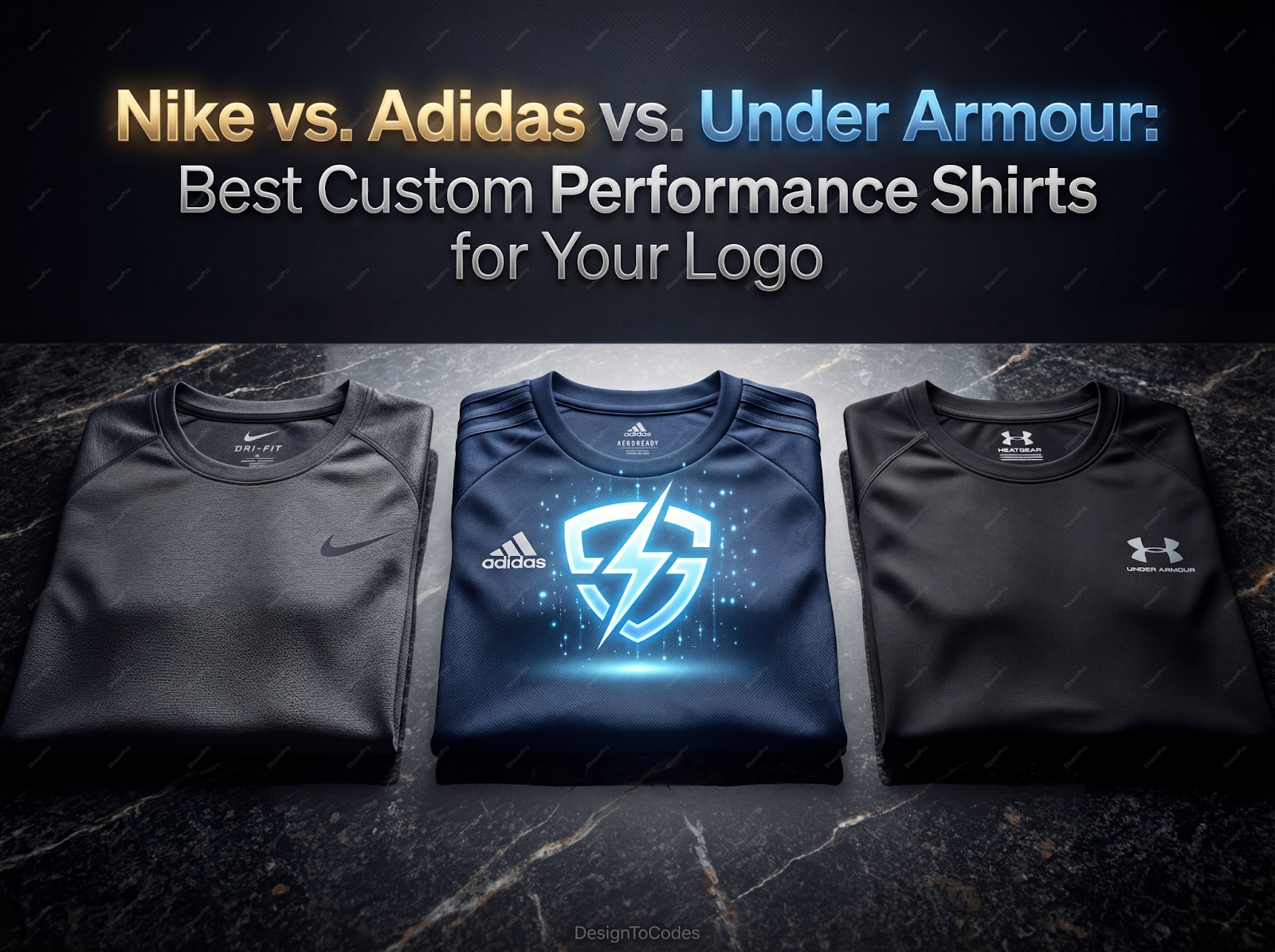
Your company logo does more than identify your team. It represents credibility, attention to detail, and professional standards in every environment. Choosing the right custom performance shirts directly affects how clients, partners, and competitors perceive your organization. A premium logo placed on the wrong fabric can peel, crack, or distort after a few washes, weakening your brand presence instantly.
Performance fabrics are engineered for sweat control, breathability, and stretch. But those same advanced properties make decoration more complex. Synthetic fibers resist ink absorption, react aggressively to heat, and can reject standard adhesives. Understanding how Nike, Adidas, and Under Armour engineer their materials is critical before committing to bulk corporate apparel.
This guide breaks down how each brand approaches performance fabric construction, logo compatibility, durability, and long-term return on investment for professional teams.
Understanding the “Big Three” Fabric Philosophies
Every major athletic brand engineers its clothing with a specific goal in mind. These philosophies dictate how the fabric feels against the skin and how it accepts your corporate logo.
- Nike: They focus on elite athleticism and extreme weightlessness for high performance.
- Adidas: They balance classic streetwear style with modern recycled sustainability initiatives.
- Under Armour: They build gear with a “built-for-battle” durability mindset for rugged, daily use.
Understanding these philosophies helps you pick the best branded corporate apparel for your specific needs. Nike prioritizes speed and breathability, while Under Armour focuses on physical strength and fabric resilience. Adidas sits in the middle, focusing on versatile style and environmental responsibility. Each brand uses a unique weave that affects your final logo placement and overall quality. Selecting the wrong brand for your environment can lead to employee discomfort or premature garment failure. Now, let’s look deeper into the technical science that impacts logo application on these fabrics.
The Science of Moisture-Wicking and Logo Adhesion
Moisture-wicking fabrics use capillary action to pull sweat away from the skin’s surface and transport it outward. This same process can interfere with decoration if the wrong materials are used. When applying logos to moisture wicking polo shirts, decorators must account for non-porous synthetic fibers and stretch resistance. Smooth polyester creates a slippage factor that requires specialized bonding agents to ensure adhesion.
- Synthetic fibers are non-porous and resist liquid penetration by design.
- Standard inks need special catalysts or bonding agents to adhere to polyester.
- High-stretch fabrics require flexible logo materials to prevent cracking or “spider-webbing.”
- Hydrophobic coatings on some fabrics actively fight against water-based adhesives.
Specialized adhesives and controlled curing temperatures are essential for maintaining the integrity of custom performance shirts over time.
Nike Dri-FIT: The Gold Standard for Executive Apparel
Nike Dri-FIT remains the top choice for C-suite executives and luxury clients today. The microfiber polyester construction provides a sleek, professional aesthetic that commands immediate respect. It feels silky against the skin and drapes perfectly on any body type without looking boxy. This fabric sets the standard for high-end promotional clothing in the corporate world.
Executives appreciate the prestige of the iconic Nike swoosh on their sleeves or chests. It works best for elite golf outings, high-stakes international board meetings, or premium client gifts. The lightweight nature requires a delicate touch during the customization process to avoid damaging the weave. When you wear Nike, you signal that your company values peak performance and premium aesthetics. To ensure lasting results, it’s important to understand the unique requirements of decorating Nike apparel.
Decoration Spotlight: Managing Nike’s Heat Sensitivity
Nike fabrics are incredibly sensitive to high temperatures during the logo application process. If a decorator uses too much heat, the fabric will suffer permanent physical damage.
The Risk of “Scorching”
High heat often leaves a permanent “shiny ring” on expensive Nike fabrics. This ruinous mark occurs when the heat press melts the delicate synthetic microfibers. It happens instantly at temperatures above 300 degrees Fahrenheit. Many inexperienced printers ruin entire orders by using standard cotton heat settings on Nike gear. Our team uses low-heat techniques to keep your custom performance shirts looking flawless and free of marks.
Digital Stretch Transfers
Digital stretch transfers serve as the “secret sauce” for high-end Nike gear. These transfers bond at low temperatures around 275 degrees to protect the fabric’s integrity. They maintain the shirt’s natural stretch so the logo does not feel like a stiff plate. This method ensures your custom logo gym wear stays flexible and bright for years. It allows for full-color gradients that traditional screen printing simply cannot achieve on thin Nike mesh. With Nike covered, next we’ll see how Adidas balances innovation and sustainability for company branding.
Adidas AEROREADY: Sustainability Meets Style
Adidas AEROREADY combines athletic performance with a modern, tailored fit for the corporate office. It transitions easily from a morning run to a casual afternoon marketing meeting. Many buyers choose Adidas for its strong, public commitment to the global environment. The brand uses recycled materials without sacrificing the softness of the performance fabric.
- Feel: Soft, cotton-like texture that appeals to traditionalists.
- Fit: Usually offers a more “regular” fit compared to Nike’s “slim” fit.
- Ethics: Primegreen materials help companies meet their sustainability and CSR goals.
This makes it a leader in the sustainable custom clothing market for eco-conscious firms. The knit pattern provides a stable surface for various decoration styles and methods. Adidas gear often features the iconic three stripes, which adds a layer of sporty sophistication to your brand.
The “Green” Challenge: Branding on Recycled Polyester
Working with recycled fibers, such as those used in Adidas Primegreen, requires a specific set of technical skills. The chemical makeup of recycled plastic reacts differently to heat and to ink than that of virgin polyester.
Dye Migration 101
Recycled polyester often suffers from “bleeding” or technical dye migration. A white logo might turn pink on a bright red Adidas shirt during the drying process. This happens when the fabric dye turns into gas and enters the ink layer. It is a common problem that ruins thousands of corporate shirts every year. We monitor temperatures and use carbon-based blockers to prevent this common branding disaster.
Using Low-Bleed Inks
We use specialized low-bleed inks for the Adidas Primegreen sustainable line. These inks contain a “blocker” layer that stops fabric dyes from seeping into the logo. This keeps your custom performance shirts looking crisp, white, and vibrant. Your brand colors remain true regardless of the shirt color underneath. This is essential for maintaining brand guidelines and color accuracy for corporate logos.
Under Armour Tech™: The Durability Champion
Under Armour Tech™ fabric feels like soft cotton but performs like high-grade polyester. It is the undisputed champion of durability for active work crews and field staff. The material resists snags from equipment and maintains its original shape even after heavy wear.
This fabric works perfectly for rugged team uniforms in demanding physical environments, such as construction or logistics. It provides a relaxed fit that comfortably suits many body types without being restrictive. You get a professional look that stands up to daily physical labor without tearing or pilling. Under Armour has built a reputation on being the “toughest” brand in the athletic space.
Why Under Armour is the King of Corporate Embroidery
Under Armour garments provide the perfect foundation for high-quality needlework and heavy thread counts. The fabric density enables intricate designs that other brands cannot match.
Fabric “Body”
Under Armour has enough “body” to support heavy embroidery threads without failing or tearing. The fabric does not sag or pucker under a dense, multi-color logo. It holds over 10,000 stitches easily while remaining flat and professional. This makes it ideal for large, detailed corporate crests and emblems that require high stitch density. Your logo will look three-dimensional and premium rather than thin and flat.
The “Locker Tee” Advantage
The Locker Tee serves as the industry standard for embroidered staff shirts. It offers a clean, stable canvas for high-stitch counts on the left chest. Your logo stays centered and flat throughout the garment’s life. It resists the “frowning” effect where a heavy logo pulls the fabric down into a curve. For companies that prefer the look of thread over ink, Under Armour is the logical choice.
Direct Comparison: Fabric Weight vs. Logo Weight
| Brand | Typical Fabric Feel | Best Logo Method | Weight (GSM) |
| Nike | Ultra-Light / Silky | Heat Transfer | 130-150 |
| Adidas | Mid-Weight / Soft | Screen Print | 150-170 |
| Under Armour | Heavy-Duty / Textured | Embroidery | 170+ |
Matching the weight of your logo to the shirt’s weight is vital. A mismatch creates a garment that feels unbalanced and looks cheap to potential clients. A heavy, fully stitched logo on a light Nike shirt causes the shirt to sag forward. This makes the collar look crooked and feel uncomfortable for the wearer. We match the logo density to the moisture-wicking team gear weight for a perfect, balanced fit. This balance ensures the shirt hangs correctly on your employees during important presentations.
Weather Resistance: Branding on Outerwear and Quarter-Zips
Nike Therma-FIT traps heat, while Under Armour Storm repels heavy rain and wind. Decorating these technical outer layers requires extra care and specialized industrial tools.
- Nike Therma-FIT: This fabric is best for light, heat-applied reflective logos for visibility.
- UA Storm: This requires specialized embroidery backing to maintain water resistance.
- Adidas Jackets: These often feature textured panels that require a custom heat-applied patch.
Embroidery needles can create thousands of tiny holes in waterproof coatings during stitching. We call this the “Pin-Prick” problem in the professional apparel industry. To solve this, we use seam sealers or waterproof backing to protect the integrity of custom waterproof jackets. Your team stays dry while your brand stays visible, even in the worst weather.
Longevity Testing: 50 Washes Later
Our team conducts regular tests to see how different brands age over several years of use. A logo must look as good on the five-hundredth day as it did on the first day.
- Nike: Shows excellent color retention but requires cool water to prevent heat-press peeling over time.
- Adidas: Offers superior shape retention because the recycled fibers stay very strong even after high-heat drying.
- Under Armour: Remains the best for logo durability, with embroidery threads that stay tight and professional.
Choosing the right long-lasting corporate wear saves your company significant money in the long run. Proper care instructions, like washing inside out, help your logo survive fifty or more industrial wash cycles. Always avoid fabric softeners, as they clog the fabric’s moisture-wicking pores and compromise its performance.
Price vs. Value: The B2B ROI Calculation
Nike products carry a higher price tag due to global brand equity and executive appeal. Adidas provides sustainability-driven value for modern recruiting initiatives. Under Armour delivers unmatched durability for physically demanding environments.
When evaluating branded athletic apparel, companies must consider wear frequency, garment lifespan, and perceived prestige. A shirt worn weekly for three years delivers significantly higher ROI than one worn twice and retired. Selecting the right brand for your team’s daily demands ensures your investment in custom performance shirts supports both image and longevity.
Troubleshooting: What to Do When a Fabric Rejects a Logo
Some performance fabrics reject traditional inks due to their slick chemical coatings or tight weaves. We have developed a three-step process to solve these branding challenges for our clients.
- Step 1: We test the fabric for “scorch” potential under a controlled heat press.
- Step 2: We apply a carbon sub-blocker layer to prevent dye migration issues.
- Step 3: We switch to a high-definition silicone or woven patch for maximum adhesion.
We use specialized “sub-blocker” adhesives to force a bond on difficult, slippery synthetic materials. If printing fails to meet our standards, we pivot to a high-definition woven patch for a premium look. These patches work incredibly well for custom performance shirts with complex, ribbed, or honeycomb textures.
The Expert Verdict: Which Brand Should You Choose?
Selecting the right brand depends entirely on your specific corporate goals and your team’s daily environment. Each of the “Big Three” offers unique technical advantages for your brand.
Best for Golf Outings & C-Suite
Nike wins for high-level networking events and premium executive gifts. Its lightweight feel is perfect for a long day on the golf course or traveling between meetings.
Best for Trade Shows & Eco-Conscious Events
Adidas is the top choice for modern and sustainable brand activations. The soft texture keeps your staff comfortable on their feet during long, grueling trade show days.
Best for Field Work & Athletic Training
Under Armour remains the best option for durable athletic uniforms. It handles physical stress, friction, and frequent washing better than any other major athletic brand.
Ready to Elevate Your Team’s Look?
Selecting premium custom performance shirts requires more than choosing a recognizable athletic logo. Fabric construction, logo method, stitch density, heat tolerance, and long-term durability all influence the final result. A mismatched decoration method can compromise even the most prestigious garment.
At LogoUSA, we specialize in matching performance fabric technology with the correct branding technique. Whether your priority is executive polish, sustainability alignment, or field durability, we guide you through the technical considerations that protect your logo and preserve garment integrity.
When performance, presentation, and long-term value matter, precision decoration ensures your team looks consistent, professional, and confident in every setting.