
Custom Logo Design for Apparel That Works
- April 13, 2026
- 3:00 am
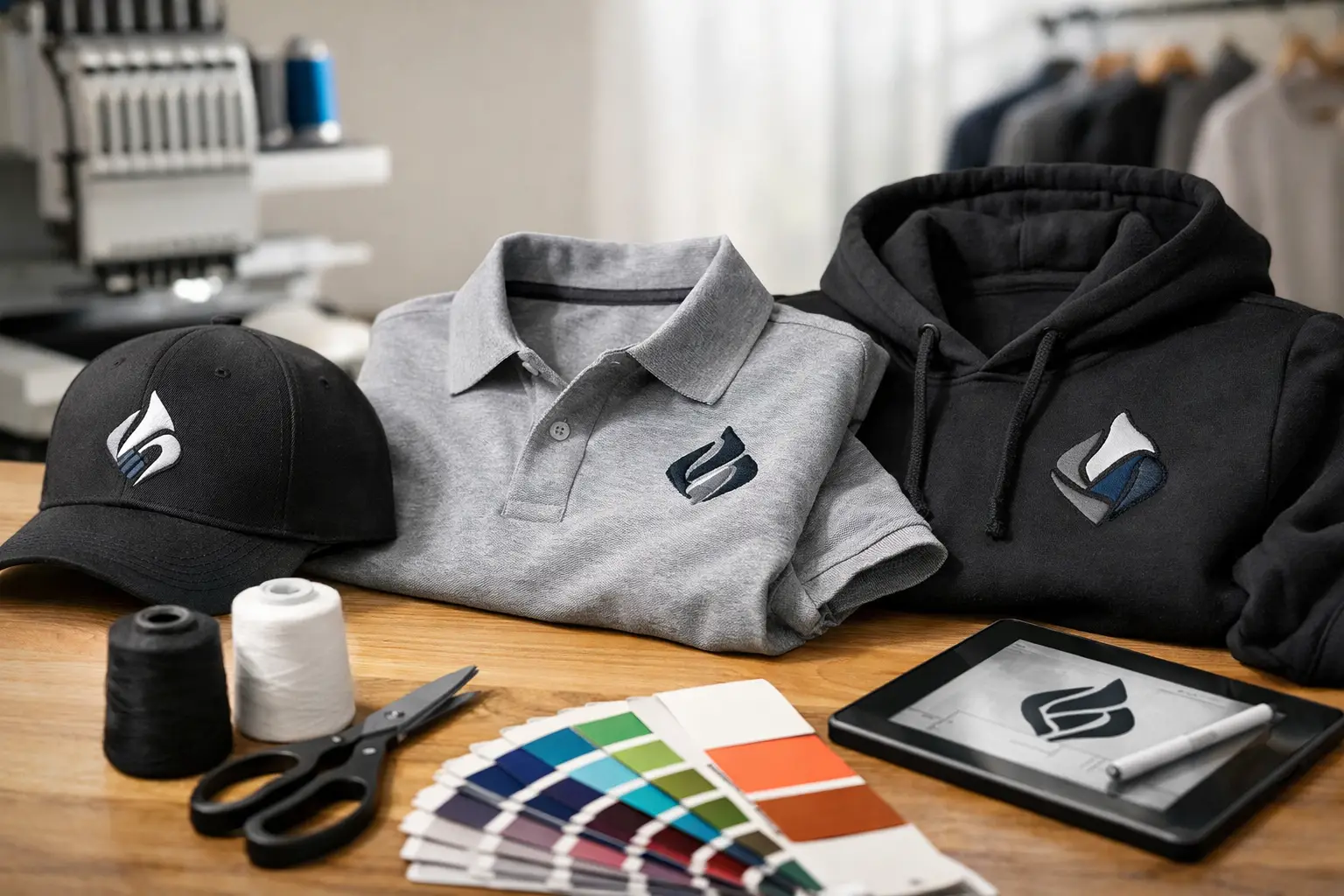
A logo can look sharp on a website and still fail on a polo, cap, or work jacket. That is where custom logo design for apparel matters. When your mark is built or refined for embroidery and print, it holds its shape, stays legible, and delivers a cleaner, more professional result across every piece your team wears.
For business buyers, that difference shows up fast. A logo that stitches well on a left chest and prints clearly on a t-shirt does more than decorate apparel. It supports brand consistency, improves presentation in front of customers, and reduces costly rework when you need uniforms, event apparel, or company merchandise on a deadline.
Why custom logo design for apparel is different
Apparel decoration has real production limits. Thread has width. Fabrics have texture. Screen printing handles detail differently than embroidery. A logo that relies on tiny text, thin lines, gradients, or layered effects may look polished on screen but break down once it moves to a stitched or printed format.
That is why apparel-ready artwork is less about making a logo look flashy and more about making it perform. The strongest designs account for stitch paths, ink coverage, placement size, and garment type from the start. A clean logo on a soft shell jacket needs a different level of control than the same logo on a promotional tee.
This is also where many businesses run into trouble. They may have a brand file from years ago, but not one that is set up for production. The art exists, yet it is not optimized for caps, polos, fleece, and uniforms. Custom logo design for apparel closes that gap by adapting the brand for real-world decoration without losing brand identity.
What makes a logo work on apparel
A successful apparel logo is clear, scalable, and durable across multiple decoration methods. In most cases, simple wins. Bold shapes, readable type, and controlled color usage tend to hold up better than intricate details.
Size is a major factor. A full back print gives you room for more information, but a left chest embroidery area does not. If your logo includes a tagline, secondary text, or fine icon details, those elements may need to be removed or rearranged for smaller placements. This does not weaken the brand. It makes the brand usable.
Color matters too. Thread libraries and print methods can reproduce many brand colors, but not every effect translates equally well. Gradients, shadows, and subtle tonal shifts often need to be simplified. The goal is not compromise for its own sake. The goal is a finished piece that looks intentional, premium, and consistent from garment to garment.
Fabric also changes the outcome. A logo on a structured cap behaves differently than the same design on a stretch performance polo. Heavier garments can support certain applications better, while lightweight or textured materials may require cleaner artwork and thoughtful placement. Good design decisions happen before production begins, not after problems appear.
Embroidery and print require different thinking
If your program includes multiple apparel types, your logo may need more than one approved version. That is normal, and often the smartest path.
Designing for embroidery
Embroidery adds texture, dimension, and durability. It is a strong fit for polos, hats, outerwear, work shirts, and uniforms where a polished, long-term look matters. But stitching has limits. Very small type can close up. Thin outlines can disappear. Dense fills can affect how the garment lays.
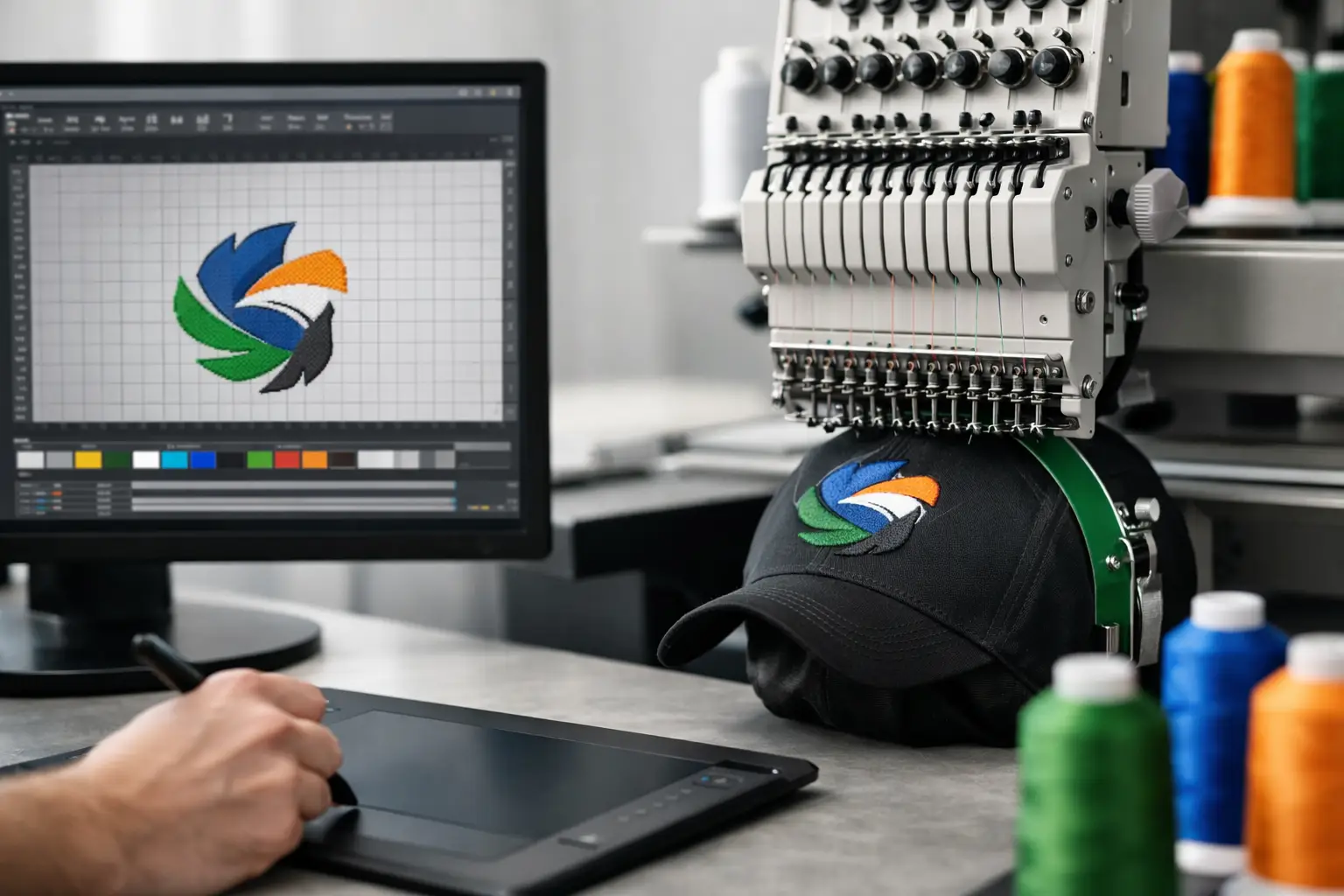
Artwork for embroidery usually benefits from stronger line weights, simplified shapes, and careful color separation. Digitizing then turns that art into a stitch file, which is a technical step that affects the final look as much as the art itself. When the artwork and digitizing are handled correctly, embroidery looks crisp and balanced rather than bulky or uneven.
Designing for screen printing
Screen printing allows for larger graphics, stronger coverage, and excellent visibility on t-shirts, sweatshirts, and event apparel. It is often the right choice for team shirts, promotional runs, and bold front or back graphics. Still, print has its own constraints.
Artwork needs to be prepared with clean edges, practical color counts, and enough contrast for the garment color underneath. Fine detail can print well, but only if it is sized and separated properly. If a logo was designed without considering fabric color or print method, the result can feel muddy or hard to read.
The best decision is not always embroidery or always print. It depends on the garment, the brand standard, the use case, and the quantity. A dependable production partner will help you match the logo treatment to the product instead of forcing one method onto every order.
When businesses should update their logo for apparel
Not every company needs a full rebrand. Often, they need a production-ready version of the brand they already have.
If your logo was built for digital use only, has never been tested on uniforms, or becomes hard to read when reduced, it is a good candidate for apparel refinement. The same goes for logos with gradients, very thin serif fonts, tight spacing, or too many small elements packed into one mark.
You may also need an apparel-specific version if your team wears a wide range of products. A mark that works on a quarter-zip may not be the best choice for hats. A horizontal layout may fit a chest print but feel awkward on a sleeve or bag. Creating approved variations keeps your branding flexible without making it inconsistent.
This is especially valuable for companies managing recurring orders across departments, locations, or events. A defined logo system reduces guesswork, speeds up approvals, and protects the look of your brand over time.
A practical process for custom logo design for apparel
The most efficient apparel programs start with clear requirements. Before artwork is adjusted, it helps to know what products you are decorating, where the logo will appear, and whether the finished look needs to feel corporate, promotional, rugged, or retail-inspired.
From there, the artwork should be reviewed for production readiness. Vector files are preferred for clean scaling, but file type alone does not solve everything. The layout, detail level, color structure, and size relationships all need to be checked against the intended decoration methods.
Next comes adaptation. That may mean removing a tagline for embroidery, thickening lines, simplifying color transitions, or creating alternate lockups for caps, sleeves, and left chest placements. For larger print graphics, it may also mean building a separate version that uses more space effectively while staying on brand.
Proofing is a critical step. Digital proofs help confirm placement, size, thread or ink colors, and overall balance before production begins. For business buyers, this is where confidence comes from. You can verify that the logo is not just technically usable, but visually right for your team and your brand standards.
At LOGO USA, this kind of support matters because decoration is handled in-house and tied directly to production. That creates better control over quality, faster problem-solving, and a smoother path from artwork approval to finished apparel.
What to ask before placing an order
If you are sourcing apparel for employees, an event, or an ongoing uniform program, ask a few practical questions early. Can the logo be optimized for both embroidery and print? Will you receive a proof before production? Is the team reviewing your artwork with garment type and placement in mind, or only checking if the file opens?
You should also ask about consistency on reorders. Many businesses are not placing one-time orders. They need the same logo treatment on polos this month, outerwear next quarter, and caps later in the year. A supplier with strong art control and domestic production oversight will usually deliver a more dependable result than one that treats every order like a fresh guess.
The real value is consistency you can wear
Good apparel branding does not call attention to the production work behind it. It simply looks right. The logo is clean, the placement feels balanced, and the finished garment supports the professionalism of your team.
That is the standard worth aiming for. Custom logo design for apparel is not just an art service. It is a practical step that protects your brand, improves decoration quality, and makes every polo, cap, jacket, or tee do its job with confidence.
When your logo is built for the way apparel is actually made, ordering gets easier and the end result looks stronger from the first piece to the hundredth.
Popular Blogs
Logo Digitizing for Embroidery Explained
April 12, 2026