
Custom Embroidered Work Shirts That Last
- April 1, 2026
- 8:22 am
A work shirt has to do more than carry a logo. It has to look professional at the front counter, hold up in the field, and stay consistent across every employee and reorder. That is why custom embroidered work shirts remain one of the smartest uniform investments for businesses that want a clean, durable brand presentation.
For operations teams, office managers, and business owners, the appeal is simple. Embroidery gives your logo dimension and staying power, while the right shirt creates a uniform standard your team can actually wear day after day. When both pieces are handled well, the result feels polished without being overdone.
Why custom embroidered work shirts still lead the pack
Printed apparel has its place, especially for short-term promotions or event wear. Work shirts are different. They are part of your everyday image, and they need to perform under repeat use, repeated washing, and constant visibility.
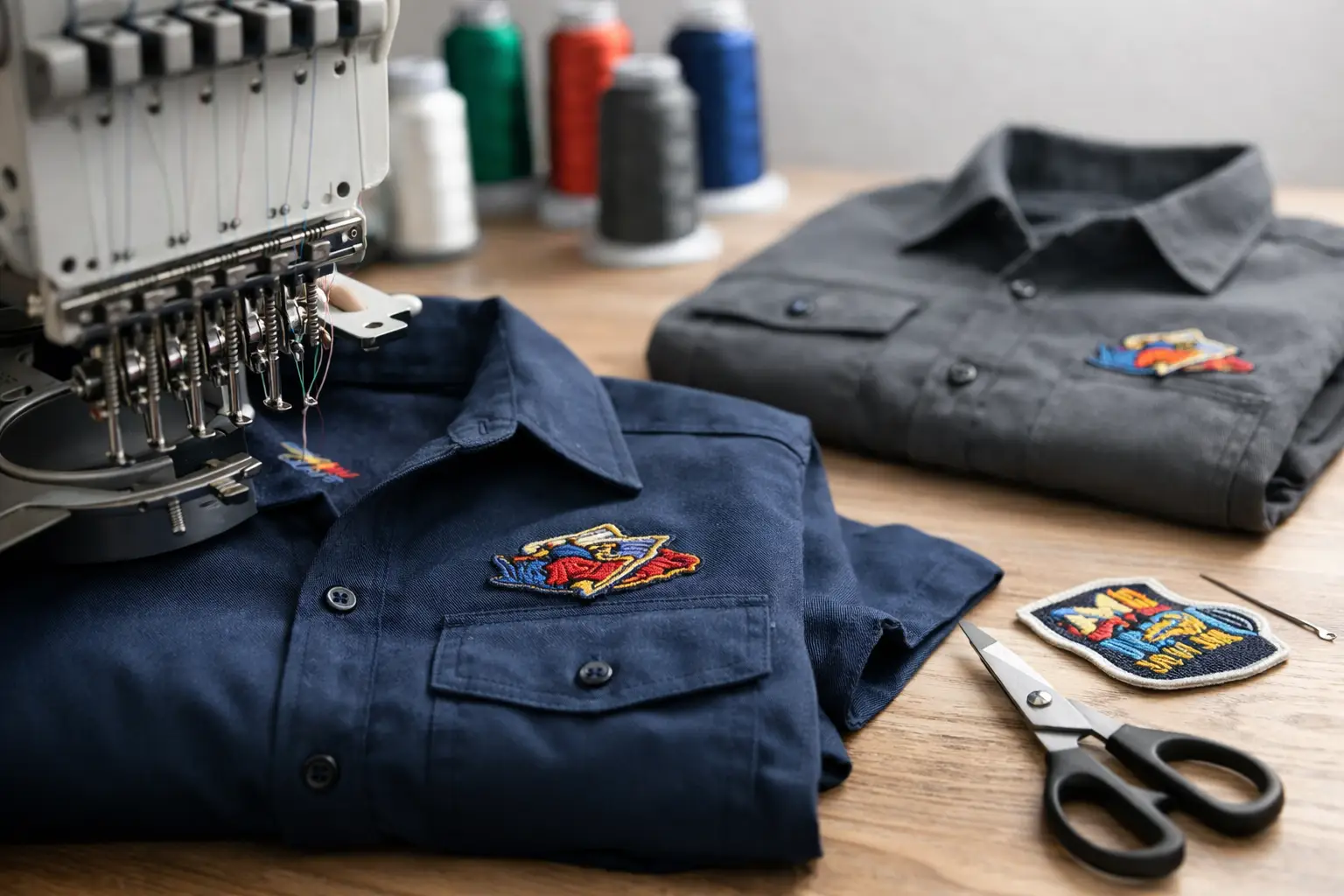
Embroidery brings a premium finish that works across industries. In customer-facing environments, it communicates professionalism. In industrial and service settings, it adds durability that often outlasts printed decoration. A stitched logo also tends to hold its shape and color better over time, which matters when your team is wearing these shirts week after week.
There is also a practical branding advantage. A uniform with embroidery looks intentional. It tells customers who they are talking to, reinforces your company name in the field, and helps teams look organized even when job sites, warehouses, or delivery routes are anything but orderly.
What makes a work shirt right for embroidery
Not every shirt is built the same, and not every fabric behaves the same under a needle. The best custom embroidered work shirts start with the right base garment. If the shirt is too lightweight, the embroidery can pucker or pull. If the shirt is overly stiff, it may hold up well but sacrifice comfort.
For most businesses, the sweet spot is a shirt that balances structure, comfort, and durability. Cotton blends are a common choice because they feel familiar and wear well. Performance fabrics work well for active teams that need moisture control. Heavy-duty workwear styles are often better for trades, transportation, and field service crews that need tougher construction.
Shirt style matters too. A button-down work shirt gives a more traditional uniform appearance and works well for maintenance teams, facility staff, and service technicians. A polo-style work shirt can feel more modern and approachable for office support, retail, hospitality, and event staff. The best option depends on how formal your team needs to look and what kind of movement the job requires.
Fabric, fit, and function all affect the final result
The logo may be the focal point, but the shirt determines whether employees actually want to wear it. A shirt that binds at the shoulders or feels too hot on the job will spend more time in lockers than on your team.
That is why fit range matters. Businesses ordering for a mixed team need inclusive sizing, consistent cuts, and styles that work across roles. Features like stain release, wrinkle resistance, and moisture wicking are not small extras. They can make a meaningful difference for teams in active environments.
Function should always match the job. Front desk staff may need a cleaner, lighter presentation. Install crews may need stronger fabric and room to move. Warehouse supervisors may want the durability of workwear without the bulk of a heavier jacket. Good uniform planning starts with the day-to-day reality of the role, not just the look of the shirt on a product page.
Logo placement is where branding gets practical
Most businesses default to left chest embroidery, and for good reason. It is classic, visible, and appropriate across nearly every industry. It gives the shirt a professional branded look without overwhelming the garment.
Still, placement is not one-size-fits-all. Some teams benefit from adding employee names, department identifiers, or sleeve embroidery. Service businesses often need shirts that help customers identify technicians quickly. Sales teams may want a cleaner look with just the company logo. Larger organizations may need logo standards that stay consistent across multiple apparel categories.
This is also where digitizing quality matters. Embroidery is not just a direct copy of your digital logo. The design has to be translated into stitches that hold detail, scale properly, and sew cleanly on the selected fabric. Small text, thin lines, and detailed gradients may need adjustment. A dependable embroidery partner will guide that process so the finished logo looks sharp in real production, not just on a screen.
Choosing custom embroidered work shirts for your industry
The best work shirt for a construction company is usually not the best work shirt for a medical office or a tech support team. Industry context shapes the right choice.
For trades and field service companies, durability comes first. Strong workwear brands, reinforced construction, and practical details like pockets or stain-resistant finishes can make more sense than softer retail-style shirts. These teams need uniforms that handle abrasion, movement, and regular laundering without losing shape.
For office, hospitality, and customer-facing teams, presentation often leads the decision. A smoother fabric, more tailored silhouette, or elevated brand name can help create a polished first impression. In these settings, embroidery adds a level of finish that reads as professional rather than promotional.
For large organizations, consistency across locations is often the bigger challenge. The right shirt is the one that can be reordered reliably, matched across size runs, and replicated with the same logo execution every time. That is where production control and proofing become just as important as the garment itself.
The ordering process should reduce risk, not add to it
Branded apparel orders can go sideways when there is too much guesswork. Wrong thread colors, inconsistent sizing, poor logo scaling, or delays in approval can all create avoidable problems. Businesses need a process that is clear from product selection through final production.
A strong ordering experience starts with choosing the right shirt for the application, not just the lowest-priced option. From there, logo review, digitizing, and proofing should be handled with precision so expectations are clear before production begins. That is especially important for first-time orders, multi-department rollouts, or companies standardizing apparel across teams.
Turnaround time matters too, but speed alone is not enough. Fast production only helps if the quality stays consistent. Businesses ordering uniforms are usually balancing deadlines with accountability. They need decorated apparel that arrives on time, looks right, and can be reordered without starting from scratch.
That is one reason many buyers prefer a partner with in-house production control. When decoration, proofing, and order management are handled under one roof, there is less room for miscommunication. For companies managing repeat apparel programs, that consistency saves time on every future order.
When price matters most, think beyond the shirt cost
Budget always matters, especially for larger teams or recurring orders. But the cheapest shirt is not always the best value. If a low-cost garment fades quickly, loses shape, or leads to employee complaints, the savings disappear fast.
A better way to evaluate cost is to look at wear life, presentation, and reorder consistency. A shirt that lasts longer and keeps your logo looking clean usually delivers more value than a lower-priced option that needs replacing sooner. The same goes for embroidery quality. Clean stitching, stable backing, and careful logo setup help protect the look of the garment over time.
This is where experienced guidance pays off. A business may not need the most premium option in every case, but it does need the right option for the use case. There is a difference between ordering shirts for a one-time event and outfitting a team that wears them five days a week.
Why the right production partner makes all the difference
Custom embroidered work shirts are not just another apparel order. They are part of your brand system, your employee presentation, and your day-to-day operations. That means the supplier matters as much as the product.
A dependable partner should help you narrow the right styles, prepare your logo correctly, confirm your proof, and produce the finished shirts with consistency. That matters whether you are ordering 24 shirts for a local service crew or building an ongoing uniform program across multiple locations.
At https://www.logousa.com, businesses can find trusted apparel brands, in-house embroidery expertise, and a streamlined process designed for repeatable results. The value is not only in customization. It is in knowing your apparel program is being handled with the same level of care you expect from your own team.
If your work shirts need to look sharp on day one and still represent your brand well months later, the smartest move is to choose garments and embroidery that are built for real use, not just a quick order.
Popular Blogs
How Employee Apparel Impacts Workplace Culture
March 20, 2026