
Custom Branded Outerwear for Employees
- April 6, 2026
- 3:50 am
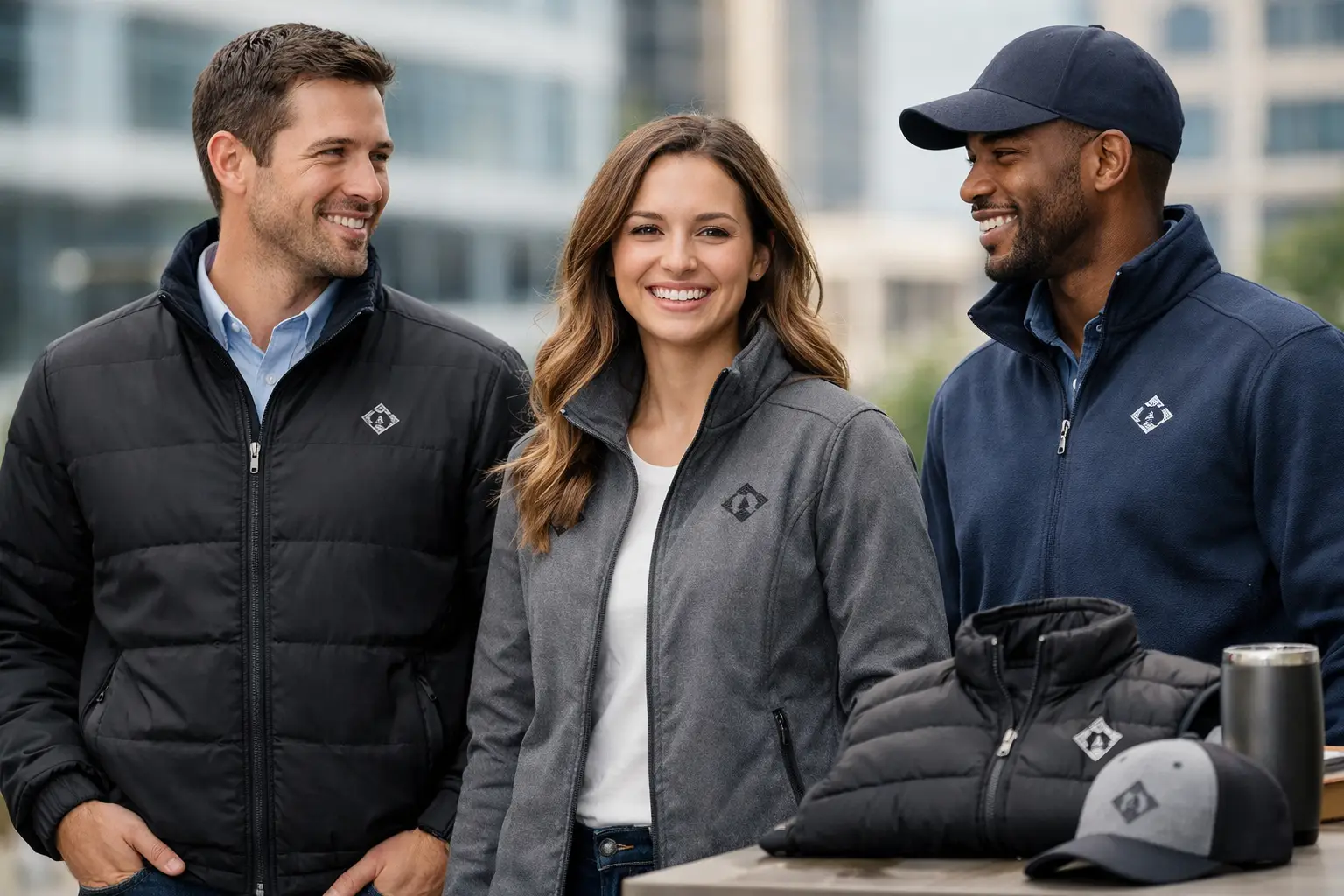
A lightweight jacket with a clean embroidered logo can change how a team is perceived before anyone says a word. Custom branded outerwear for employees does more than keep people warm – it creates a consistent, professional look across jobsites, offices, events, deliveries, and customer visits.
For business buyers, the value is practical. Outerwear extends your brand into real working conditions where polos and tees are not enough. It helps field teams look organized, gives managers and staff a more polished appearance, and adds comfort that employees will actually use. When the garment is chosen well and decorated with precision, it becomes part of the uniform, not an afterthought.
Why custom branded outerwear for employees works
Outerwear earns its place because it solves two business needs at once. First, it protects employees from changing weather and temperature shifts. Second, it keeps branding visible in settings where a basic uniform layer may be covered up.
That matters for companies with staff who move between indoor and outdoor environments, travel between locations, attend trade shows, or meet customers on site. A branded jacket or vest creates a finished presentation without asking employees to sacrifice comfort. It also helps teams feel equipped for the workday, which can improve wear rates compared with promotional apparel that stays in a closet.
There is also a brand consistency benefit. When different departments or locations order outerwear without a clear plan, the result is often a mix of styles, colors, and logo placements. That can make even a strong brand look fragmented. A coordinated outerwear program keeps the look aligned while still allowing for role-specific needs.
The best outerwear styles depend on the job
Not every company needs the same jacket. The right choice depends on where employees work, how often they wear it, and the image the business wants to project.
Soft shell jackets are a strong choice for many corporate teams because they strike a balance between function and appearance. They look polished enough for client-facing roles, offer light weather protection, and typically provide a smooth surface for embroidery. For sales teams, office staff, property managers, and service coordinators, a soft shell often covers the most ground.
Fleece jackets work well when comfort is the priority. They are popular for internal team wear, warehouse offices, campuses, and casual company settings. They are warm and approachable, though they may present a more relaxed image than a structured soft shell or performance jacket.
Insulated jackets are better for colder climates or outdoor-heavy roles. Construction supervisors, utility crews, transportation teams, and event staff working through winter conditions may need heavier protection. The trade-off is that bulkier garments can affect logo scale and placement, so decoration has to be planned carefully.
Vests are often underrated. They provide warmth without limiting arm movement and layer easily over polos, quarter-zips, or work shirts. For teams that need flexibility, especially in distribution, field sales, and light industrial settings, a branded vest can be one of the most wearable options.
Rain jackets and waterproof shells are worth considering for outdoor crews or companies operating in regions with frequent weather changes. They offer clear function, but not every waterproof material handles decoration the same way. It pays to choose products that are compatible with the intended logo application rather than selecting only by price.
What to look for before you order
The best-looking outerwear on a product page is not always the best option for your team. Business buyers should evaluate outerwear the same way they would evaluate any other uniform component – by performance, consistency, and ease of reordering.
Start with fabric and construction. A premium jacket should hold its shape, resist premature wear, and maintain a professional appearance after repeated use. Zipper quality, stitching, lining, and cuff construction all affect how the garment performs over time. If the outerwear is meant for daily wear, these details matter as much as the logo.
Next, think about logo placement. Left chest embroidery remains the standard for a reason. It is professional, readable, and compatible with most jacket styles. That said, some companies may benefit from adding a sleeve logo, back imprint, or secondary mark for visibility. The right choice depends on the garment style and the setting in which employees wear it. More branding is not always better. A clean, well-positioned logo often creates the strongest result.
Sizing is another area where small mistakes become expensive fast. Outerwear is layered over other garments, so fit expectations differ from t-shirts or polos. If employees need room for sweatshirts, button-downs, or safety layers underneath, order planning should account for that. A dependable supplier can help guide sizing decisions before production begins.
Embroidery usually gives the most polished result
For outerwear, embroidery is often the best decoration method when the goal is a premium, long-lasting finish. It creates a professional appearance, holds up well over time, and pairs naturally with business uniforms and corporate apparel programs.
That said, the logo itself matters. Fine details, small text, and intricate gradients may need adjustment before embroidery will reproduce cleanly on outerwear. Good digitizing is what turns a logo file into clean stitching that looks sharp on the finished garment. This is where production experience makes a visible difference.
Screen printing can be appropriate for certain jackets and outerwear-adjacent pieces, especially lightweight event gear or promotional layers, but it is not always the best fit for every fabric or every use case. If your goal is executive presentation, everyday staff wear, or repeatable brand consistency, embroidery tends to be the safer choice.
Brand selection matters more than many buyers expect
When outerwear is part of an employee program, the brand on the garment affects both perception and wearability. Recognized names such as Carhartt, The North Face, OGIO, Port Authority, and TravisMathew carry different associations, from rugged performance to elevated corporate style.
That does not mean the most expensive option is automatically the right one. It means the garment should match your workforce and brand position. A field service company may get better long-term value from durable work-focused outerwear, while a technology firm outfitting client-facing teams may prioritize a more refined silhouette and lighter profile.
Consistency also matters for future orders. If one office receives a premium jacket and another gets a lower-tier substitute, employees notice. So do customers. Choosing a reliable product line from the start makes reorders easier and helps preserve a consistent look across departments and locations.
A smooth ordering process saves time and avoids rework
For most businesses, ordering custom outerwear is not just about picking a jacket and uploading a logo. It involves approvals, art preparation, color matching, sizing coordination, and production timing. A supplier with in-house control over digitizing, embroidery, proofing, and production can reduce delays and catch problems before they become expensive.
That is especially important when outerwear is tied to onboarding, seasonal rollouts, events, or multi-location uniform needs. Fast turnaround only helps if the finished product is accurate. Buyers need both speed and accountability.
A strong process should include product selection support, clear decoration guidance, digital proofing, and dependable production timelines. It should also support repeat business without forcing customers to start over every time they need to reorder. That is one reason many companies prefer to work with an experienced partner such as LOGO USA when building an apparel program that needs to scale.
When outerwear becomes part of your brand standard
The strongest employee apparel programs treat outerwear as a standard category, not a seasonal extra. That does not mean every employee needs the same jacket. It means there should be a clear plan for who gets what, which logos are approved, what colors are on brand, and how future orders will be handled.
For some organizations, that means offering one core soft shell and one heavier cold-weather option. For others, it means creating role-based selections for office staff, sales teams, warehouse employees, and field crews. The right structure depends on budget, climate, and workforce needs.
What matters most is that the outerwear feels intentional. When employees receive branded jackets that fit well, wear comfortably, and look polished, they are far more likely to use them regularly. That creates more brand visibility, a more unified team appearance, and a better return on the investment.
If you are choosing outerwear for employees, think beyond the logo and focus on the full result – how it wears, how it represents your business, and how easily you can reorder when the next new hire starts.
Popular Blogs
Embroidered Polo Shirts for Businesses
April 5, 2026