Embroidery Minimum Quantities for Business Orders
- November 7, 2026
- 2:52 am
A five-piece order for embroidered polos can be exactly the right choice for a new manager team. A 250-piece order can be the smarter move for a growing field service company. Embroidery minimum quantities are not a one-size-fits-all rule – they are a production consideration that affects unit price, setup efficiency, apparel selection, and the long-term consistency of your brand.
For business buyers, the goal is not simply to order the fewest garments possible. It is to order the right quantity for the people wearing them, the schedule you are working against, and the impression your logo needs to make. Understanding how embroidery orders are priced and produced helps you make that decision with confidence.
Do Embroidery Orders Have Minimum Quantities?
Some custom apparel providers set a firm minimum order quantity for embroidery, while others can produce small orders but charge for the setup and labor that a larger run spreads across more pieces. The answer depends on the supplier, the garment, the design, and whether your logo has already been prepared for embroidery.
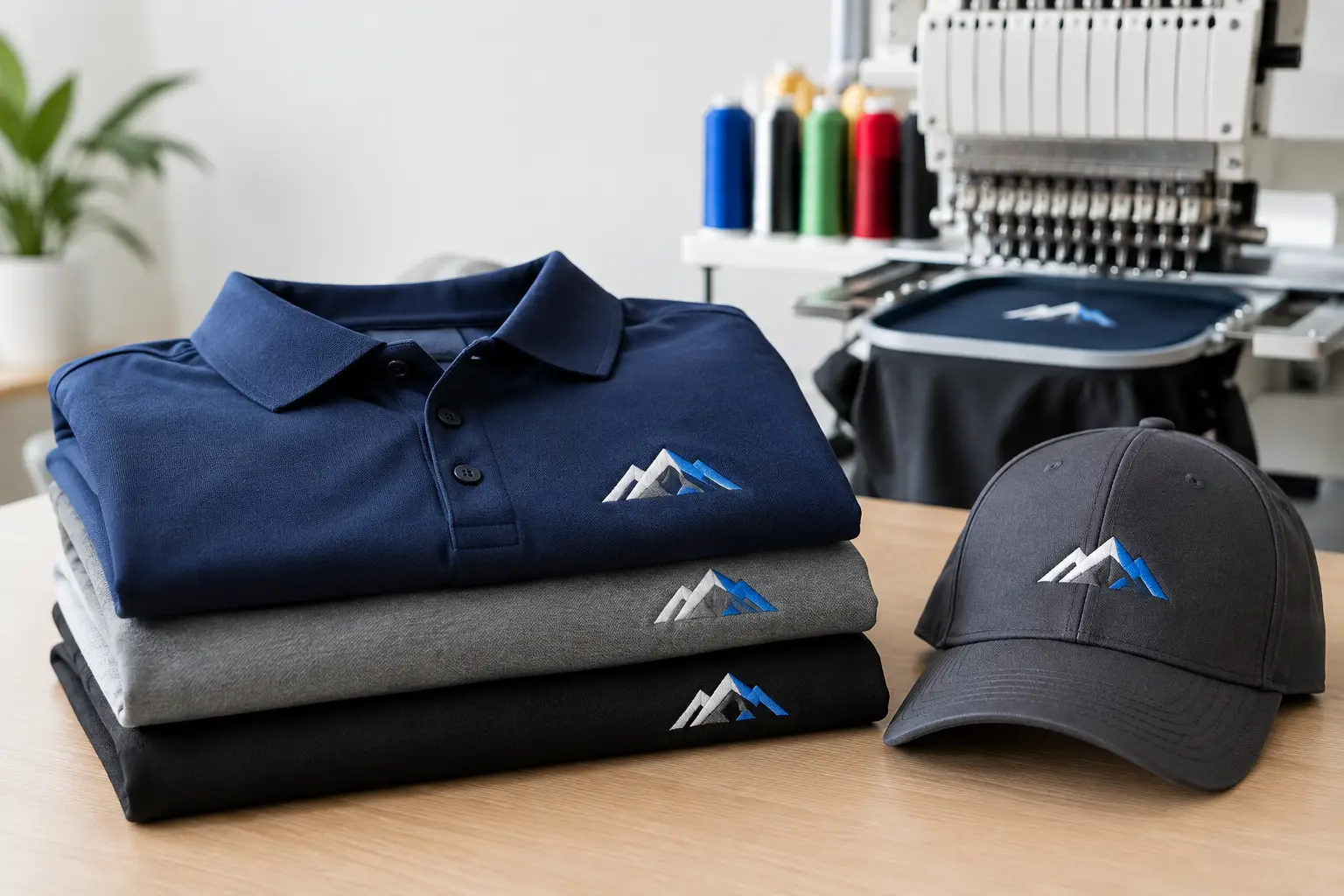
This distinction matters because embroidery is a production process, not just an added design option. Before stitching begins, artwork must be converted into a digitized stitch file. The embroidery team then hoops each item, loads the correct thread colors, positions the design, and performs quality checks throughout the run. Those same foundational steps are required whether you need six caps or 60 quarter-zips.
That is why a small order may have a higher cost per item even when no stated minimum applies. It is not a penalty for ordering less. It reflects the real time and craftsmanship required to produce polished, durable branded apparel.
For many businesses, a practical embroidered order starts with outfitting a defined group: office staff, sales representatives, supervisors, a trade show team, or new hires. Larger quantities often make more sense for uniform programs, seasonal crews, franchise locations, company stores, and recurring events.
What Drives the Cost Behind Embroidery Minimum Quantities?
Quantity is only one part of the estimate. A dependable embroidery partner should help you understand the factors that shape your final price before production begins.
Logo digitizing and stitch count
Digitizing translates your logo into instructions an embroidery machine can read. It determines stitch direction, density, layering, color changes, and other details that influence how the finished logo looks on fabric. A clean, simple wordmark generally requires fewer stitches than a detailed multicolor emblem with fine lines and shading.
Stitch count affects production time. More stitches take longer to run, which can raise the decoration cost per piece. A skilled digitizer can make an enormous difference here. The objective is not merely to reproduce artwork, but to create a crisp embroidered version that holds its shape on the selected garment.
A logo that looks excellent on a website may need thoughtful adjustments for embroidery. Tiny type, hairline details, gradients, and photographic elements do not always translate cleanly into thread. Reviewing a digital proof before production protects your brand and prevents surprises.
Garment type and placement
A left-chest logo on a polo is a standard choice for corporate apparel, but the garment still matters. Lightweight performance polos, heavy work jackets, fleece, structured caps, safetywear, and bags all have different construction and hooping requirements.
Placement can also change the production approach. Sleeve embroidery, cap-front embroidery, and embroidery on thick outerwear may require additional handling compared with a conventional left-chest placement. If your order includes several garment styles, ask whether the same logo will be used at the same size and location across all items. Standardization often improves both efficiency and brand consistency.
Thread colors and design complexity
A logo with one or two thread colors is generally quicker to set up than a design with numerous color changes. That does not mean detailed logos are off limits. It means the project should be quoted accurately from the start.
For a professional result, choose thread colors that create enough contrast with the garment. Navy thread on a black jacket, for example, may be technically correct to your logo but difficult to read from a few feet away. A proof review is the right time to confirm that brand standards and visibility work together.
Order timing and repeatability
Short deadlines can limit available garment inventory or require production scheduling decisions that affect cost. Ordering early gives your team more product choices and more time to approve artwork carefully.
Repeat orders are often simpler once a logo has been digitized and approved. Keeping the same design, placement, and thread colors can make reorders more efficient, especially for companies that onboard employees throughout the year or replenish uniforms by department.
When a Small Embroidery Order Makes Sense
Small orders are a smart business decision when you need premium apparel for a focused group rather than broad distribution. Think executive gifts, leadership uniforms, client-facing staff, sample sizing, employee recognition, or a pilot program before a larger rollout.
The key is to select garments that earn their place. If you are ordering 12 embroidered jackets, durable outerwear from a trusted brand may deliver more value than a lower-cost item that wears out quickly. The same logic applies to polos and caps that employees will wear regularly in front of customers.
Small runs also allow you to test a new logo treatment. If your business is refreshing its identity, opening a new location, or introducing a service line, a limited order can confirm that the thread colors, placement, and garment choices meet expectations before you commit to a broader program.
However, avoid making an extremely small order solely to chase the lowest initial spend. If you know you will need 40 shirts over the next month, splitting the purchase into several tiny orders may cost more and create unnecessary variation in garment availability.
When Ordering More Is the Better Value
Larger embroidery orders spread setup and production labor across more garments, usually reducing the cost per item. They also make it easier to keep teams visually aligned. Employees in matching, well-made branded apparel present a coordinated image at customer sites, on the showroom floor, at trade events, and in everyday operations.
Consider ordering beyond your immediate headcount when the extra pieces have a clear purpose. A modest reserve for new hires, damaged garments, seasonal staff, or customer-facing event teams can prevent rushed reorders later. It can also help preserve consistency if a specific garment color or style becomes unavailable.
For companies with multiple locations or frequent staffing changes, an ongoing apparel program may be more efficient than placing one-off orders. A curated selection of approved polos, outerwear, workwear, caps, and bags gives employees appropriate options while keeping logo execution consistent.
There is still a trade-off. Do not overbuy just because the per-piece price looks attractive. Apparel sizes, job roles, climate needs, and employee turnover all affect what will actually be used. A good order balances unit economics with realistic demand.
How to Plan the Right Quantity for Your Team
Start with who needs apparel now, then look 60 to 90 days ahead. Include new employees who are expected to start, upcoming events, replacement needs, and any departments that may require different garment types. A sales team may need polished polos and lightweight layers, while a warehouse or field crew may need durable workwear and high-visibility options.
Next, decide how many pieces each person truly needs. One embroidered polo may work for a single-day event. Employees who wear uniforms several days each week often need multiple garments to maintain a professional appearance between laundry cycles.
Then standardize where it makes sense. Limiting an initial order to a few approved garment styles and colors simplifies sizing, purchasing, and future reorders. You can still offer role-appropriate choices without turning every order into a separate production project.
Finally, provide the cleanest logo file available and be ready to review the proof promptly. Artwork approval is a critical production milestone. Once the design, placement, colors, garment choices, and quantities are confirmed, your order can move forward with fewer delays.
Questions to Ask Before You Place an Embroidery Order
Before approving a quote, confirm whether there is a stated minimum quantity, whether digitizing is included or billed separately, and whether pricing changes at specific quantity breaks. Ask how your logo will be sized and positioned on each item, particularly if the order includes hats, jackets, polos, and bags.
It is also worth asking how reorders are handled. Will the approved digitized file be retained? Can you use the same design on additional products later? What happens if a garment is discontinued? These details matter to procurement teams and growing businesses that need a dependable branded apparel partner, not just a single transaction.
LOGO USA supports businesses with in-house embroidery, digital proofing, and USA-based production, helping teams move from product selection to finished apparel with clear production oversight. That kind of control is especially valuable when your brand needs to look the same across a few essential pieces or a large, multi-location program.
The best embroidery order is the one your team will wear with confidence and your business can repeat without guesswork. Start with a realistic count, choose garments suited to the work, and build enough flexibility into the order to support what comes next.
Popular Blogs
12 Employee Welcome Kit Ideas for New Hires
November 11, 2026