Embroidered Polos vs Printed Polos
- April 27, 2026
- 1:27 am
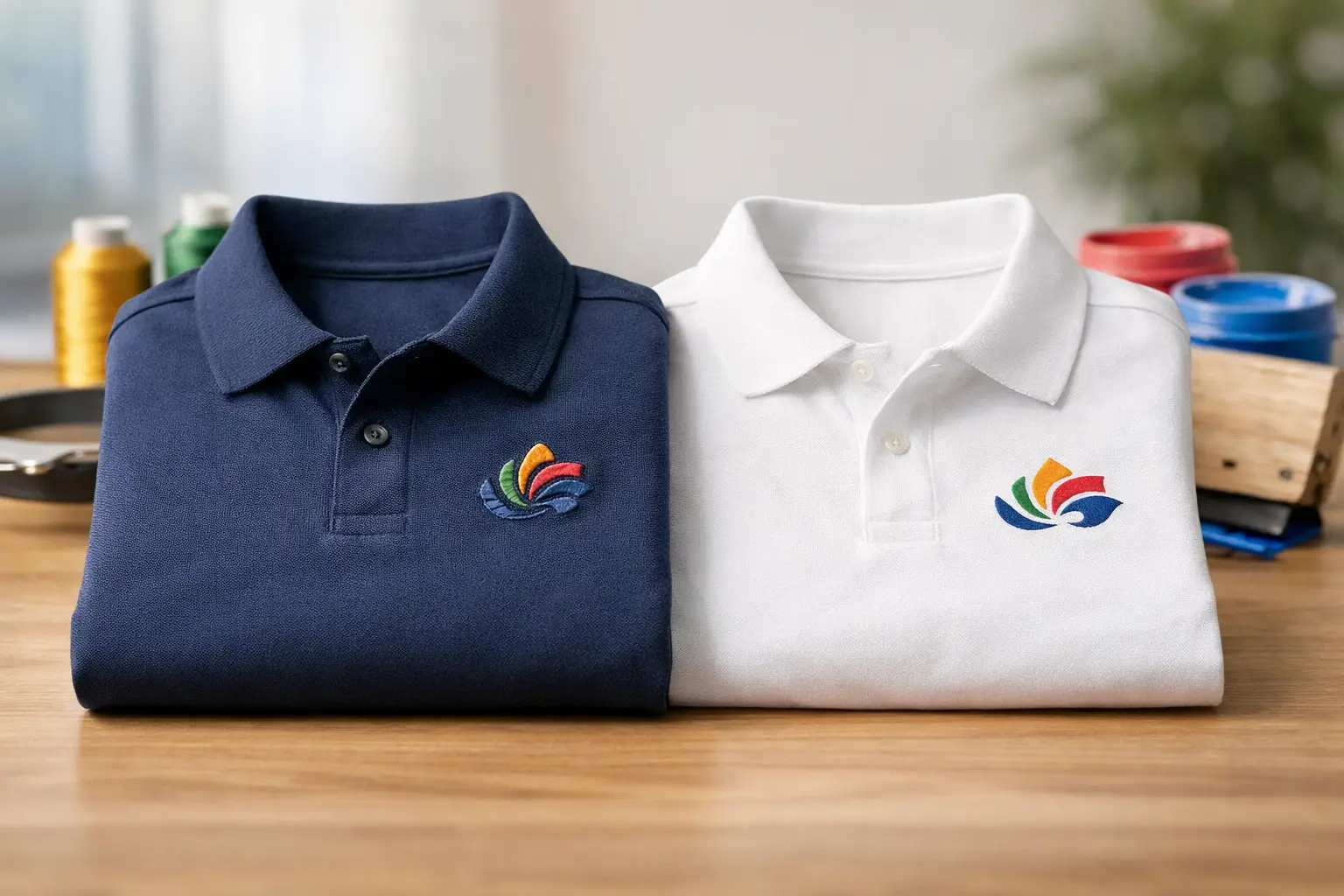
A polo with your logo on the left chest says a lot before anyone speaks. It can make a field team look established, give a trade show staff a more polished presence, or help a growing company look consistent across every location. When businesses compare embroidered polos vs printed polos, the real question is not which method is better in every case. It is which method fits your brand, logo, budget, and daily use.
For most business buyers, that decision comes down to appearance, durability, garment type, and the way the apparel will actually be worn. A clean office uniform has different demands than an event giveaway. A stitched logo on a premium polo communicates something different than a large printed graphic on a performance shirt. Both have value. The right choice depends on what you need the garment to do.
Embroidered polos vs printed polos: the core difference
Embroidery uses thread stitched directly into the garment to create the logo or design. It adds texture, dimension, and a more permanent decorated look. On polos, embroidery is the classic choice for left chest logos because it complements the structure of the shirt and gives the finished piece a professional, branded feel.
Printing applies ink or transfer material to the surface of the fabric. Depending on the decoration method, this can produce crisp logos, detailed artwork, gradients, and larger designs that embroidery cannot always handle well. Printed polos tend to feel more flexible from a design standpoint, especially if the artwork includes fine detail or multiple colors.
If your priority is a premium, corporate look, embroidery often leads. If your priority is graphic detail, larger decoration areas, or lower cost on certain runs, printing may be the stronger option.
When embroidery makes more sense
Embroidery is usually the first recommendation for employee polos, management uniforms, hospitality wear, golf apparel, and client-facing teams. There is a reason it remains the standard for so many businesses. It looks refined. It holds up well. And it aligns naturally with brands that want a clean, established presentation.
A stitched logo has visual weight. Even a small mark can stand out because the thread catches light and adds dimension. On quality polos from recognized brands, embroidery often feels like part of the garment rather than an add-on. That matters if your team is wearing these shirts in front of customers every day.
Durability is another advantage. Embroidered logos generally perform well over time when the garment is cared for properly. For uniforms that go through repeated wash cycles, that added resilience can make a difference. Many companies choose embroidery because they are not ordering for a one-time event. They are building a repeatable apparel program and want consistency across reorders.
That said, embroidery has limits. Very small text can become hard to read, and intricate artwork may need to be simplified before stitching. Thread colors are also more selective than ink reproduction, which can affect logos with gradients or highly detailed shading. On lightweight or very stretchy polos, embroidery can also add some structure to the fabric, which is not always ideal depending on the garment.
When printing is the better fit
Printed polos are often the better choice when the design is more complex than a standard corporate logo. If your artwork includes fine lines, tonal changes, multiple colors, or a larger imprint area, printing gives you more flexibility. It is also useful when branding extends beyond the left chest and into sleeves, full back designs, or event-specific messaging.
For promotions, team events, product launches, or campaign apparel, printing can create a more visible branded statement. A print can be bold, clean, and easy to reproduce across different shirt styles. It also works well for logos that simply do not translate cleanly into thread.
Cost can be another factor. Depending on the order size, design size, and decoration method, printing may offer a more economical path, especially for larger graphics. If you need polos for a short-term event or a high-volume program where visual impact matters more than a textured finish, print can be the practical solution.
The trade-off is that printing generally reads as less formal than embroidery on a polo. That does not make it lower quality by default. It just creates a different impression. For customer-facing uniforms in professional environments, some buyers still prefer the authority and polish that embroidery provides.
How your logo should influence the decision
The decoration method should support the logo, not fight it. This is where many purchasing decisions go wrong. A buyer chooses based only on price or habit, then discovers the artwork is not well suited to the method.
Simple logos with bold shapes, limited colors, and readable text usually work very well as embroidery. Think company names, monograms, shields, icons, and clean marks that can be scaled to left chest size without losing clarity. These logos tend to stitch cleanly and maintain a sharp, professional appearance.
More detailed logos often perform better in print. If your brand includes gradients, very thin outlines, small legal text, or layered artwork, printing can preserve those details more accurately. That is especially true if brand consistency is tightly managed and color accuracy matters across a national or multi-location program.
A good production partner will review the art before decoration and tell you where adjustments are needed. Sometimes the answer is not choosing one method over the other. It is using embroidery for employee uniforms and print for event polos or promotional runs.
Fabric, wear environment, and garment quality matter
Not every polo behaves the same under decoration. Cotton pique, performance polyester, blended fabrics, snag-resistant materials, and stretch polos all react differently. Embroidery tends to look especially strong on structured polos with enough body to support the stitching. Premium corporate styles often fall into this category.
Printing can be a strong match for smoother performance fabrics, especially when you want a lighter decoration feel or a larger logo placement. On athletic or moisture-wicking polos, that can be a meaningful benefit for comfort and movement.
You also need to think about where the shirt will be worn. Office staff, sales teams, hospitality employees, and supervisors often benefit from the more polished image of embroidery. Outdoor crews, event staff, or promotional teams may be better served by printed polos if visibility, graphic flexibility, or cost control matter more.
The polo itself plays a major role too. A premium brand polo with clean embroidery can elevate brand perception quickly. A lower-end shirt with the wrong decoration may do the opposite. Decoration quality and garment quality should work together.
Embroidered polos vs printed polos for budgets and reorder programs
Budget matters, but the cheapest decoration is not always the lowest total cost over time. If you are buying polos for long-term employee use, embroidery may offer stronger value because it supports a more durable, uniform-ready finish. For companies ordering the same styles again and again, consistency matters just as much as initial cost.
Printed polos can make excellent sense for seasonal campaigns, trade shows, recruiting events, or high-volume distributions where the goal is reach and brand visibility. In those cases, the flexibility of print may outweigh the more formal look of embroidery.
For recurring apparel programs, standardization is key. The same logo placement, thread colors, print dimensions, and approved garment styles help maintain a consistent brand image across departments and locations. This is where working with an experienced in-house decorator can save time and avoid costly variation from one order to the next.
At LOGO USA, many business customers choose embroidery for their core uniform polos and reserve print for campaign-based apparel or designs with more graphic detail. That approach keeps the everyday brand presentation polished while giving marketing teams room to create special-use pieces when needed.
Which option is right for your business?
If your polos are meant to represent your company day after day, embroidery is often the safer choice. It delivers a premium, established look that fits uniforms, client meetings, office environments, and branded apparel programs built for repeat wear.
If your design is more detailed, your logo needs more visual flexibility, or the polos are tied to an event or promotion, printing may be the better fit. It opens up more creative options and can be a smart solution for specific use cases.
The best decision usually comes from looking at the full picture: your logo, your garment, your audience, and how the apparel will be used after it leaves the box. A good branded polo should do more than carry your logo. It should support the image your business wants to put forward every time someone wears it.
When you are choosing between stitch and print, think past decoration alone. Think about the message your apparel sends the moment your team walks through the door.
Popular Blogs
What File Formats Does Embroidery Accept?
October 12, 2026